La Union, El Salvador – Jiquilillo, Nicaragua
Today’s story starts at 4 a.m.
I guess that’s when morning kicks off in these parts.
Or at least that’s what the local roosters think. They started their cock-a-doodle-dooing in full force at 4 a.m. And I think they must have been like six inches from our window – which wasn’t even open . . .
But, really, it’s not just the roosters . . . Shortly after 4 there was a series of explosions. Don’t be alarmed though. Explosions in Mexico and Central America are kind of like birds chirping in Minnesota. Just kind of part of the landscape.
We’ve never really understood the explosions. The closest we came to understanding was when we were on the volcano tour. There were several loud reports while us Silly Boys were on our extra Fuego trip, and, because it had been on our minds, I had Jairo ask Edwin – our guide – what they were.
His response?
“Those are from people having parties.”
I guess I don’t understand what that means. Did they blow up the house? Do they set off bombs at these parties? I guess they could be fireworks – but they would have to be more powerful fireworks than anything I’ve ever seen . . .
And I don’t see how this could explain the post-rooster 4 a.m. explosions in La Union this morning. The town didn’t seem that happening . . .
By 6 a.m. there were trucks driving down the street playing their pre-recorded advertising things on their megaphones:
”TAMALES – SINQUENTA DOLLARS; LECHE – TRES DOLLARS Y 50 CENTS. ETC.”
As if anyone is going to hear this at 6:05 a.m. and rush out the door to buy a tamale.
There are some things that should just be illegal . . .
We were supposed to be up early for our boat trip anyway – so we weren’t that upset about it – but let’s just say that no one is sleeping in in La Union unless they’re deaf or they have amazing ear plugs – or both . . .
But then again, I don’t think people sleep in in El Salvador anyway. They are too busy working their tails off.
Skipping ahead to our boat trip . . .
We’re heading across the Gulf of Fonseca. The Gulf has a series of beautiful islands. To the north is El Salvador. On the east – Honduras. And to the south – Nicaragua. Not sure on the distance, but think we’re talking 30 miles across.
There are twenty or so of us on the boat. Same basic makeup as on the volcano tour: eighteen or so twenty-somethings . . . and us. We confirmed the age gap later – but that story will have to wait . . .
Let’s talk about the boat for a minute. Remember, we are heading out onto the ocean. But this doesn’t really look like an ocean-going boat. It’s long and skinny with rows of seating in the middle – covered by a little roof designed to provide a wee bit of protection from the sun.
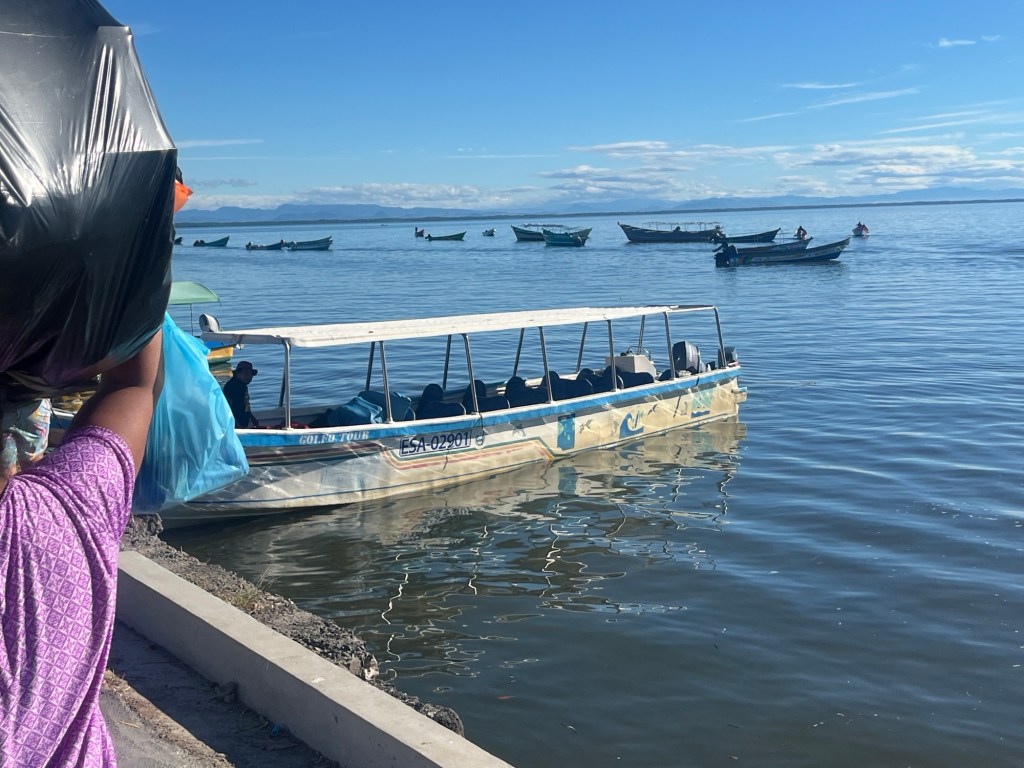
In the States I’m not sure this boat would qualify to go out onto Lake Superior – let alone the ocean.
But, here we are.
I guess we should have become concerned when, toward the beginning of the trip, they handed out life vests. Safety equipment like this is not exactly standard operating procedure in these parts. Think the volcano tour – where you could pretty much fall to your death at any moment. Or the mopeds zooming around with families of four, or carrying big loads of lumber. Or the people biking or motorcycling along carrying big razor sharp machetes – with no scabbard of anything . . .

If they’re handing out life vests there must be some pretty real danger . . .
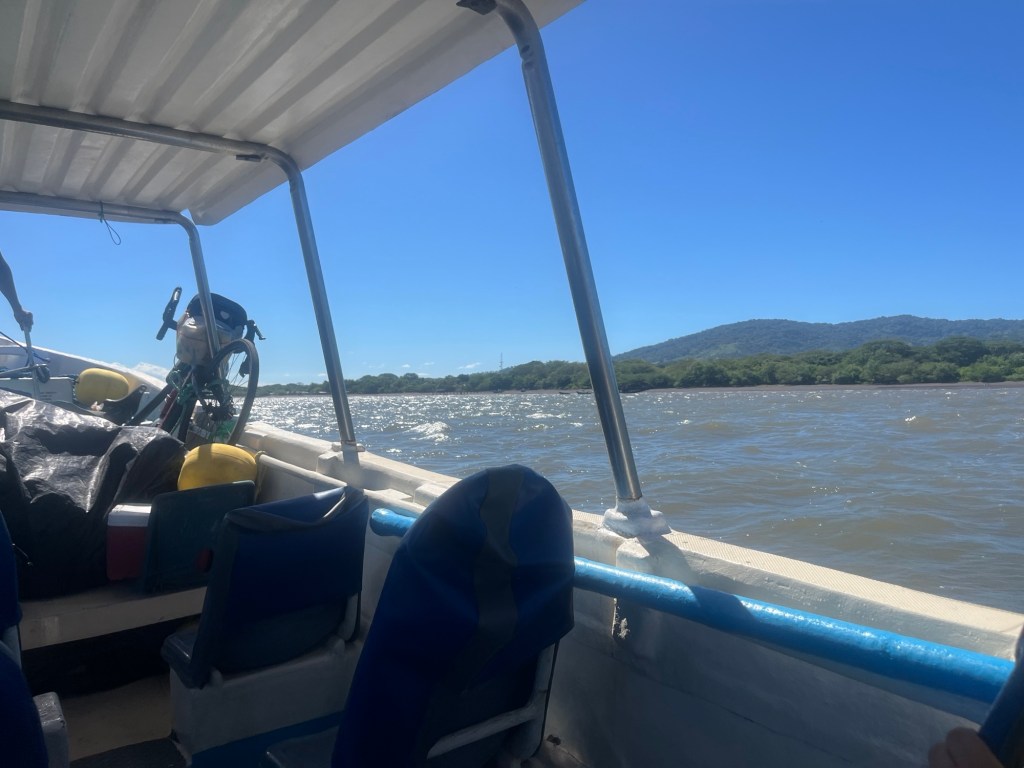
But whatever. The boat starts up and we’re cruising over calm waters – with green volcanic islands seeming to sprout up all around us.

We go on like this for maybe an hour. The Gen Z and Millenials behind us are mostly dozing.
They don’t know what they’re missing. The Gulf is about as beautiful as anyplace we’ve ever been. The only place that we’ve been that compares are the islands up by Vancouver in Canada.
But eventually, slowly, things change on the water. No longer placid, first a chop develops. Then the chop became swells, and finally those swells became serious.
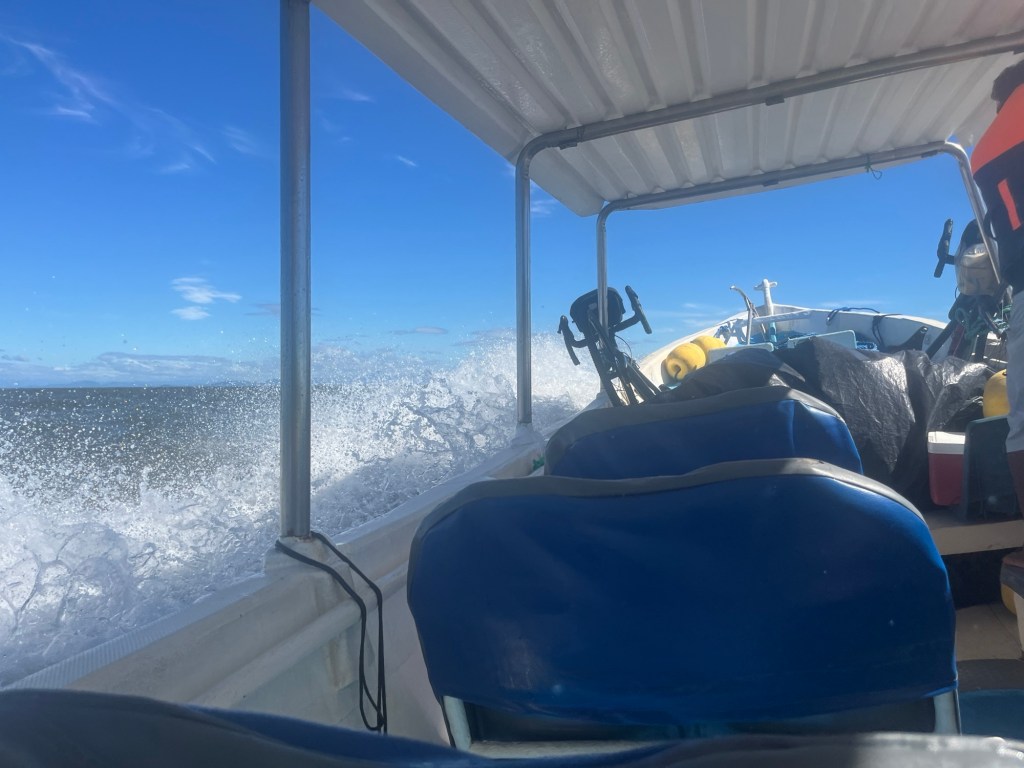
When the two man crew cuts the engine and starts handing out rain coats it starts to get kind of concerning. We’re rocking on the swells – way up, and then way back down. The woman next to us – an Hispanic woman who looks like the only non-tourist on the boat – starts to panic. Can’t understand what she is saying to the crewmember handing out the rain coats, but she is clearly worried.
After a lengthy conversation the crewmember says, “Kinse (15) minutos.”
I take it to mean that we have fifteen minutes of the rough seas coming up.
Once everyone is situated the crew starts up again. And now we are getting wet – really wet. Huge up and downs through the swells. Crashes of water spraying all around us.
This is the part where we confirm that there is no one else from our generation on the boat . . .
I turn to the British guy behind me and ask him – and everyone else – if they have ever heard of Gilligan’s Island.
Blank stares.
Seeming to say: “Okay Grandpa. Whatever. We have no idea what you’re talking about . . .”
I try to explain the premise – and even sing a few verses:
“The weather started getting rough . . . If not for the courage of the fearless crew the minnow would be lost . . .”
Still nothing.
The British guy – George – finally says something like: “So now you’ve jinxed us . . .”
Only half way kidding.
Cathartic for me though – because now I’m busy thinking how terrible it is that no one knows Gilligan’s Island. “How can this be?” (They need to make a movie or a video game so the different generations can at least relate a little bit. I mean, how can you carry on even half a conversation with people who have never heard of the Professor or Marianne?)
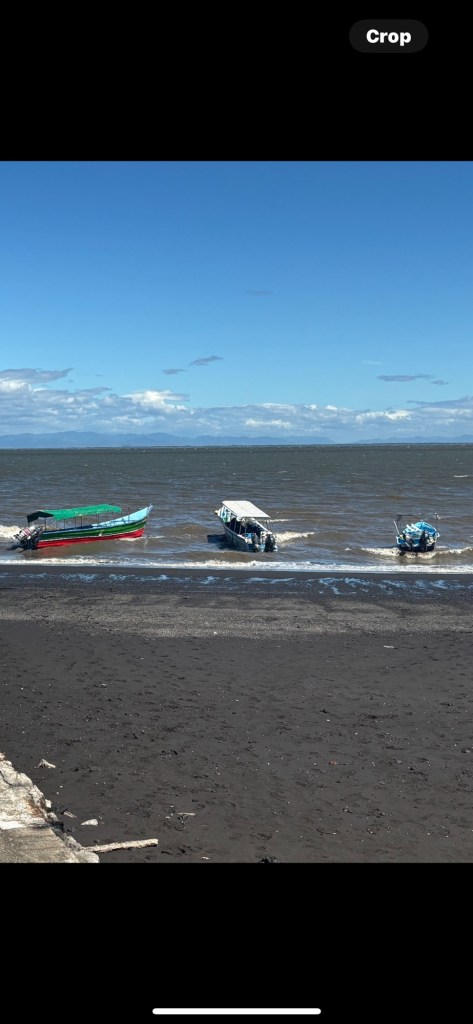
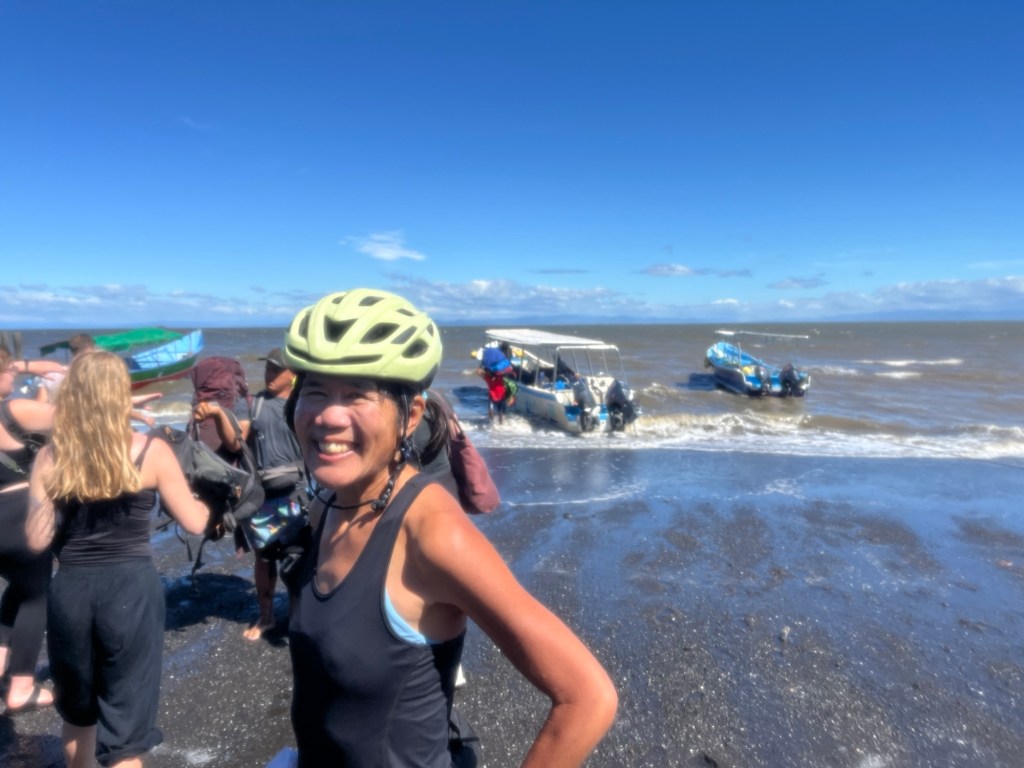
Eventually we make it though. I would say the majesty of Nicaragua – except what we’re looking at is two old piers, broken and dilapidated – jutting out from a lonely beach. There are two other boats – like ours – anchored just off shore. It seriously looks like we have gone back in time to Christopher Columbus days. We half expect pirates to appear at any moment . . .
We unload directly into the ocean and walk up onto the beach. The crew unloads the rest of the luggage, including the bikes, without getting anything the least bit wet. Like we keep saying, these people work hard!

Next? Nicaragua immigration.
What a farce! They go through this big show.
They hand out forms that we all have to fill out. What is your citizenship? What is your passport number? When were you born? What do you for work? Where are you going? What is the purpose of your visit? When are you leaving? Where are you staying?
They make us all open our bags, and then they half-heartedly make a show of looking them over. But you can tell they don’t really care what you have. It’s just a big charade.
Then we all go up to the official building – just beyond where about six horses are just wandering around – with no fences, no ropes – just wandering around. (I vaguely think about trading in Old Dan for a Nicaraguan stallion . . .)
And then we wait. It is not at all clear why we are waiting. Finally we are informed that if we didn’t fill out the ridiculous form in advance – and get a confirmation email back from the Nicaraguan government – then we have to pay $5 extra.
One of the Gen Zers produces a confirmation email from the Nicaraguan government.
Nope. Not good enough.
A long back-and-forth in Spanish ensues – because this Zer apparently knows Español very well. To no avail.
Diana and I are dying in the heat – and although Diana did her homework and we filled out these forms in advance and sent them in to the Nicaraguan government in advance – we are happy to pay the $5 and get out of there.
Finally . . . finally . . . they give us our passports back, let us pay, and we hit the road. And the funny thing is that they don’t even bother referencing either the form we filled out today or the one that we filled out in advance. It’s all just a ruse to give them an excuse to charge us more.
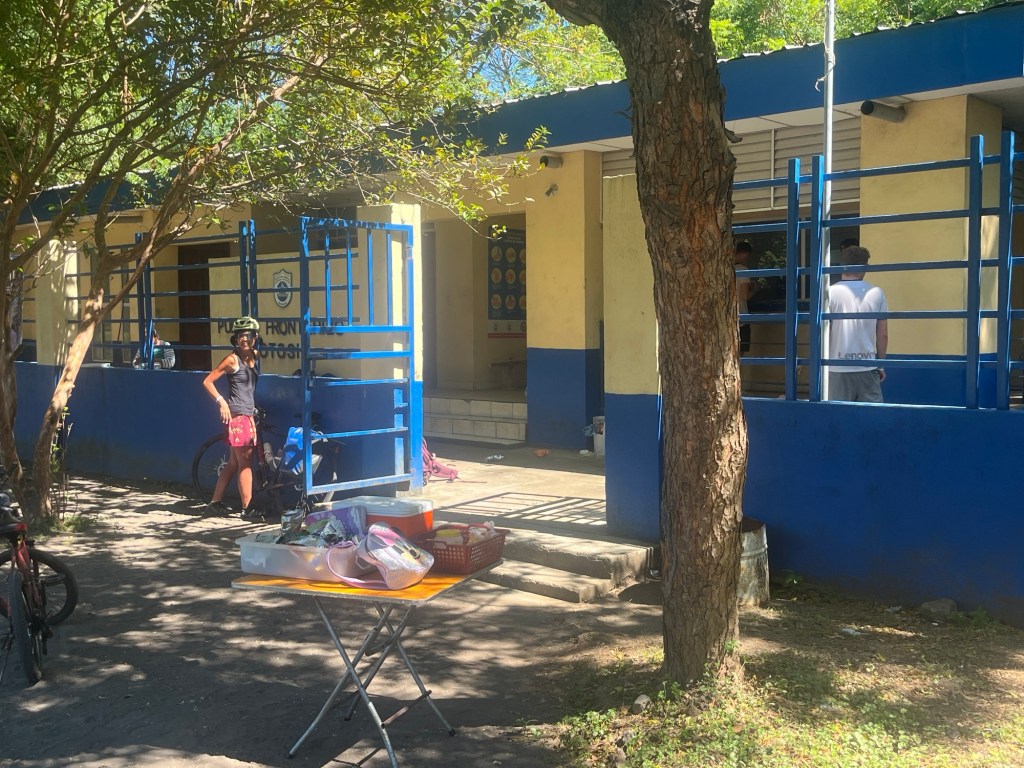
But, really, it’s obvious that these people are paid about $3/day to do this work. Who are we to begrudge them of a little bonus . . .?
Alright, with the preliminaries done, we can get on to our bike ride for the day . . . I won’t bore you with platitudes. I’ll just make a few points . . .
- We’re no longer in the mountains – so it’s hot!
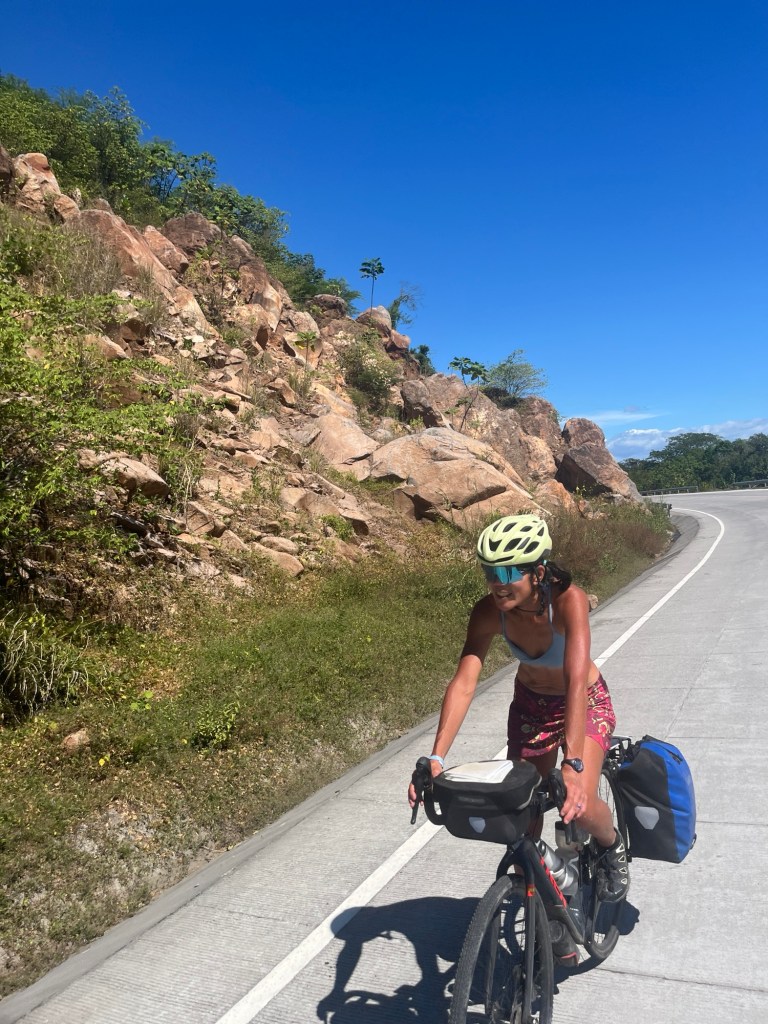
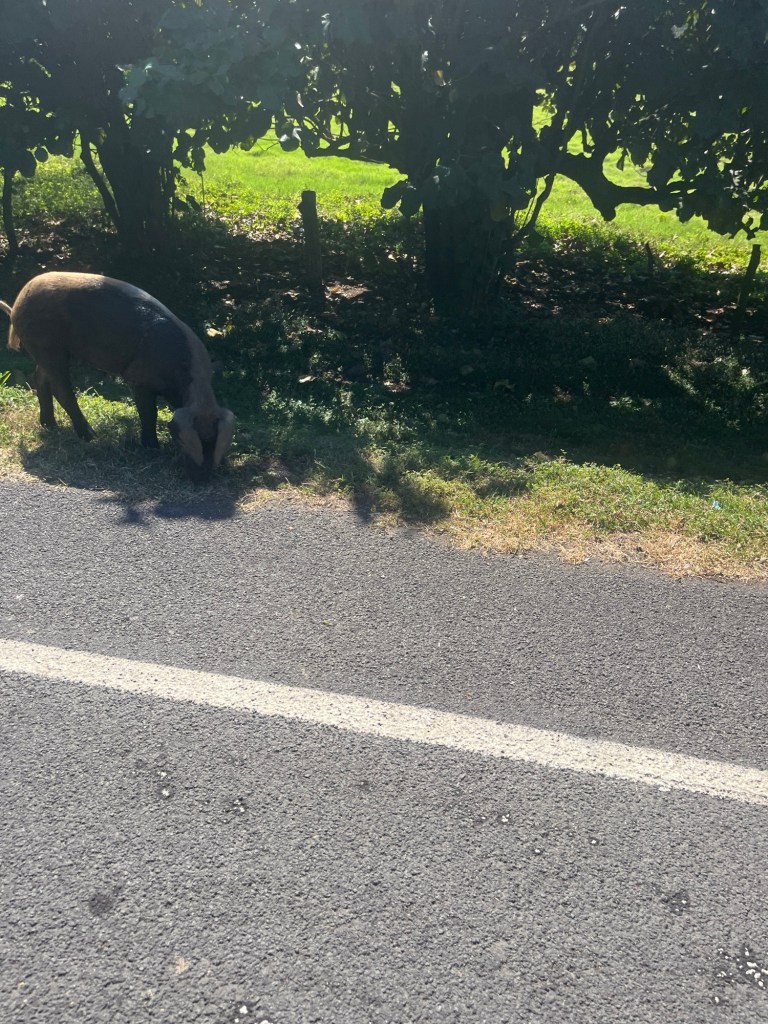
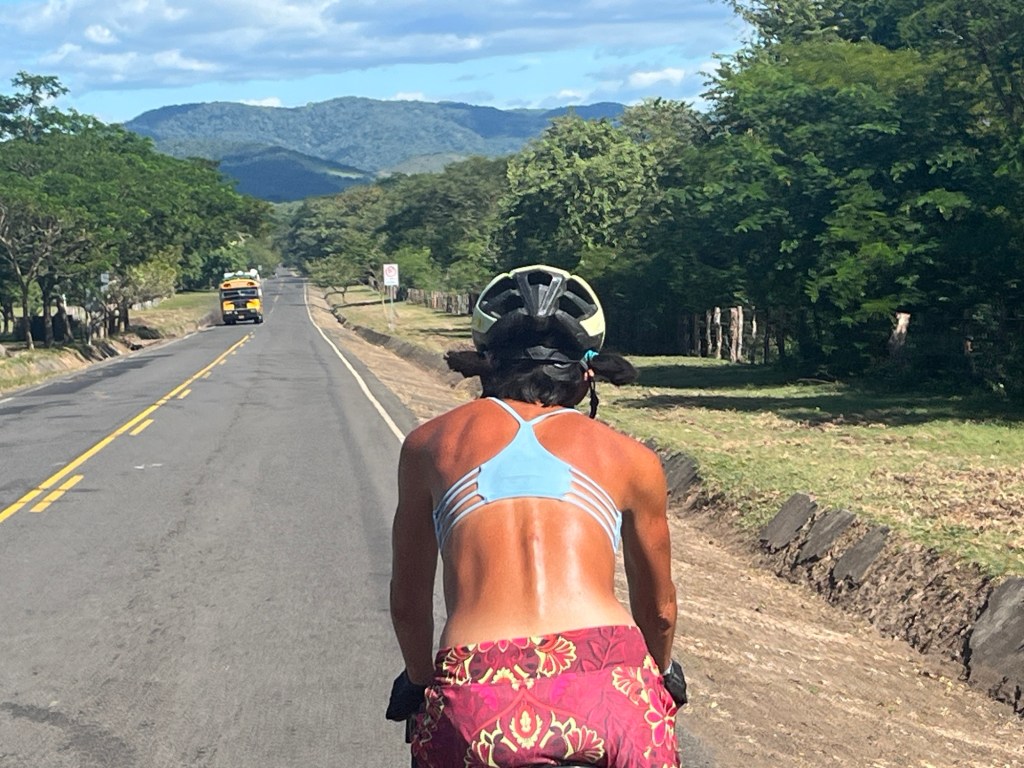
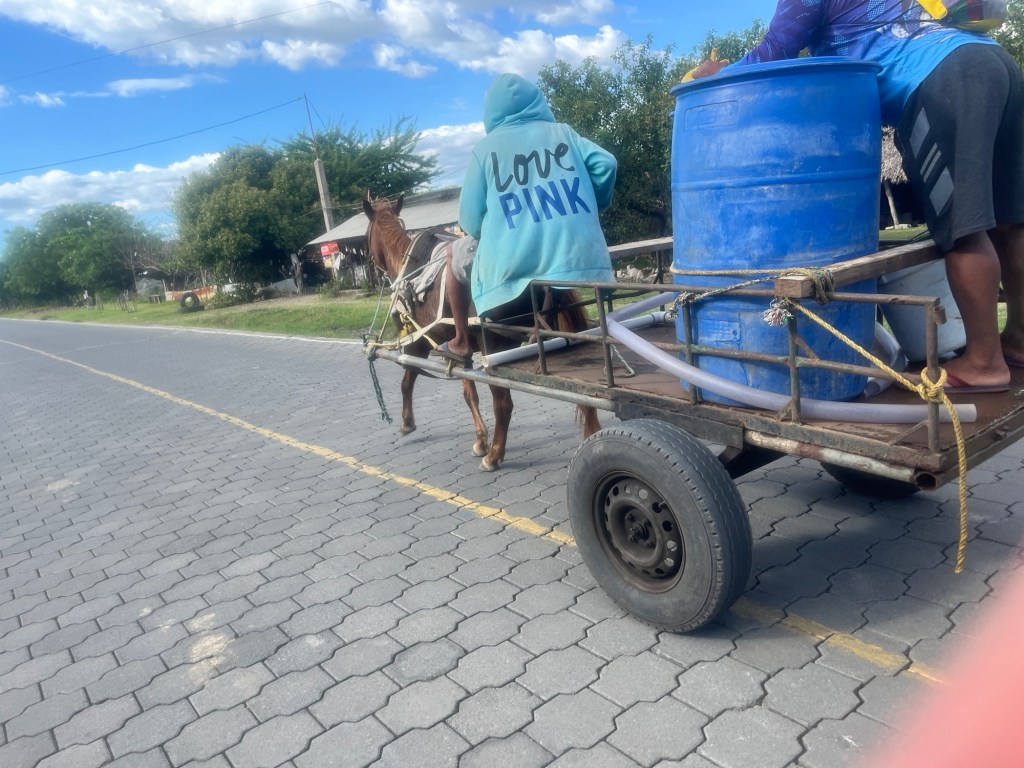
- Potosi – where we landed – is a tiny dead end town. So there is no traffic. There were literally more horses and cattle on the road than cars. But other than the horse manure dotting the pavement – the roads are absolutely beautiful.
- Nicaragua is yet another stunning country.
- And it is clear that there are not a lot of tourists like us coming through these parts. (The Zers and Millenials spend no time here – they immediately hop a “chicken” bus straight to Managua.) Kids and families are cheering us on as we bike by. People are saying “hi” and “good bye!”- obviously trying to practice their English. I’ll just say that it is pretty fun to be greeted so warmly.
We’re only going about 30 miles on the day – and it is pretty flat. So enjoyable. I honestly started to become sad as we neared the end of our ride – it was just such nice biking.
But, of course, this is still part of our bigger journey – so of course things had to change a little . . . We take our final turn – and what do we find? One of those HORRIBLE rocky roads.

Whatever though. It only lasts about three miles. And it’s enertaining. Horses and cattle wandering around. School children at the end of their days. Breadfruit orchards along the road. And, best of all, an ocean-side cabana waiting for us. At this very minute I’m sitting in a hammock about 100’ from the ocean – listening to the waves come in. I’m not about to let a little stretch of rocky road spoil my day . . .
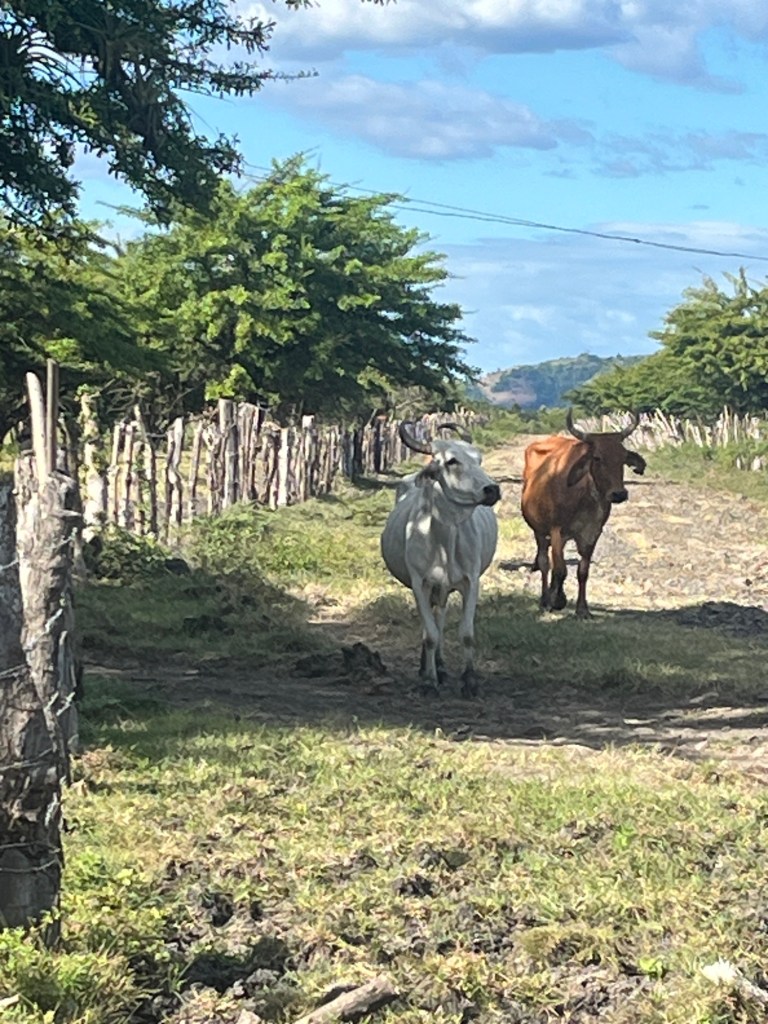
As for the dangers of Nicaragua? So far, on a scale of 1-10 for danger I would give this country about a zero. Everyone seems friendly and happy. People aren’t wandering around with guns and machetes (can’t say the same for the other Central American countries we have visited). And the stretch of road we biked on today was probably the safest riding we have done thus far on this trip . . . Unless you are maybe afraid of a stray horse running you over . . .
So that’s our first report from the land of lakes and volcanoes. Seriously – that’s its nickname. I guess they have about 40 volcanoes – about half a dozen of which are usually active at any given time . . .


Discover more from Diana & John's Biking Adventures
Subscribe to get the latest posts sent to your email.
 Diana & John's Biking Adventures
You’ve crossed the ocean already without even leaving Central America! Sounds like a bit of a rough ride-makes you appreciate what many of the migrants must go through, though their boat rides are likely less sea-worthy and more dangerous!
Enjoy Nicaragua!
LikeLike
Thank you for planning our next Central American vacation for us!
Laura B
LikeLike
I’m missing some sage wisdom from Diana…she is barely speaking.
Nevertheless, her smiles are endless. You’re looking good doc. Lynn
LikeLike
What a great adventure day, enjoy the beach and the early morning rooster call alarm. Yay for fresh seafood everyday!
LikeLiked by 1 person
Wow, the boat ride sounds like quite the adventure!! I had expected something a little larger than a water taxi for such a journey – thank goodness you made it safely! Were people barfing? People always seem to be throwing up on the Honduras ferry to Utila, up on the north side of that country, and those boats are considerably larger and more stable seeming than a water taxi. Also, can you please ask Diana where she got that awesome skort?! I love it.
LikeLike
I don’t think there was any barfing, but people were looking a little worried for sure. Diana says she got the skort at Athleta, but she says she thinks it’s been discontinued…
LikeLike