Zorritos – Mancora – ?, Peru
When we were in El Salvador I commented that if I was in charge of international investment I would put my money in that country. Yes, there were problems there. But it just seemed like a country that had it together – like a country that was going somewhere.
Based on what I’ve seen so far, Peru is not El Salvador. I won’t dwell too much on the garbage and the horrible smells – because I already mentioned those things in the last post. But, rest assured, these are terrible problems. And my sense is that they reflect a country that, collectively, has a sense of hopelessness. As if people feel like there is nothing that can be done about it – so why bother trying.
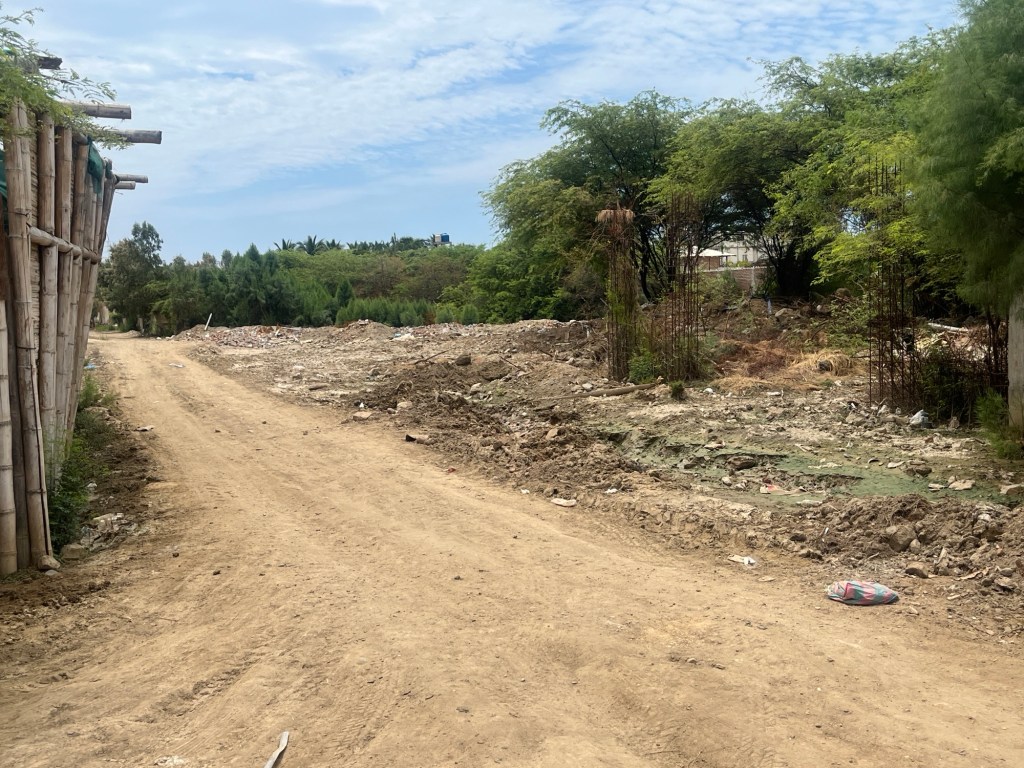
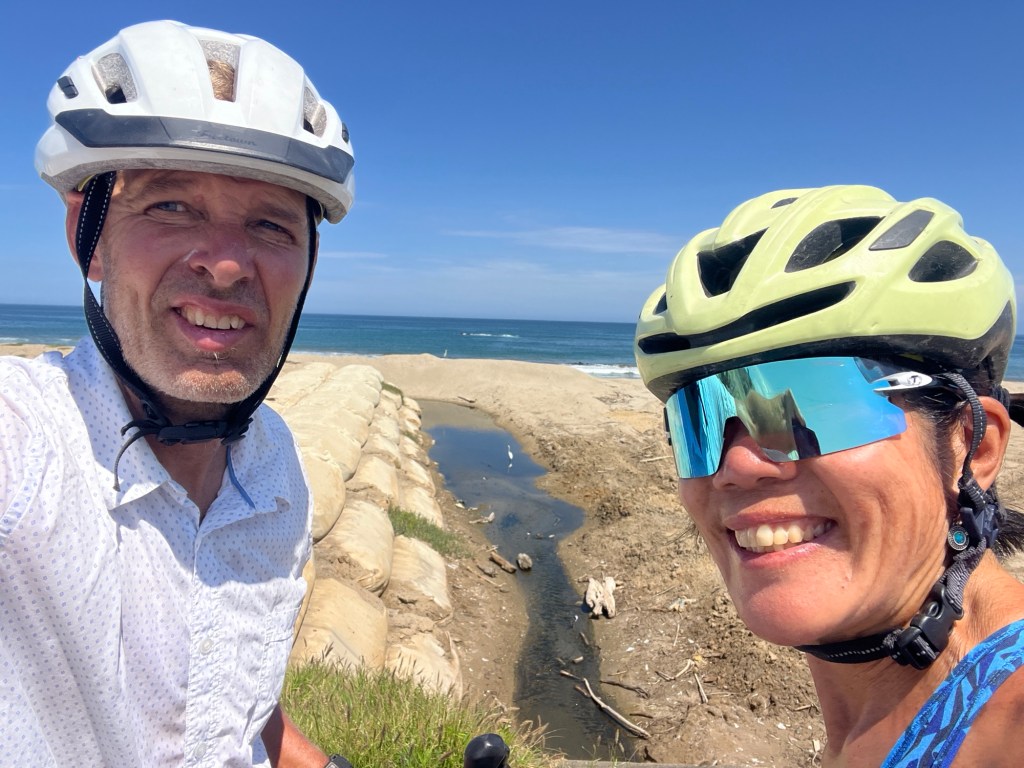
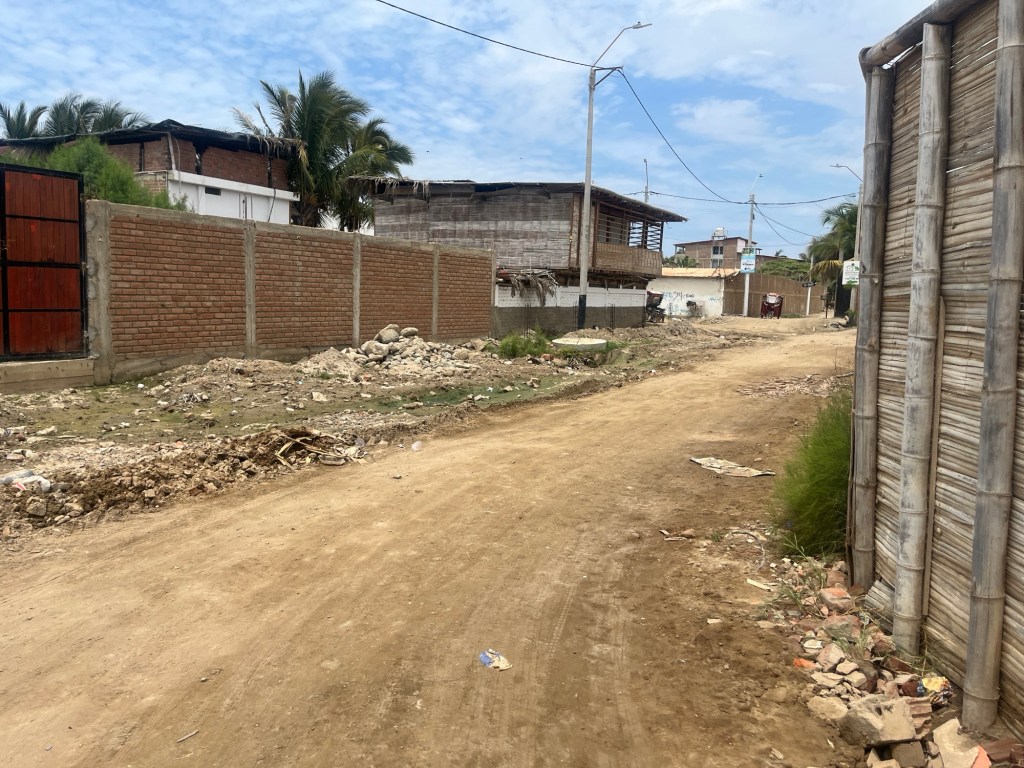
But it is not just the garbage and smells. It’s also the haphazard construction. The buildings literally falling down around people. The beaches that are beautiful when facing the water, but that look like war zones when you face the land. The open sewers. The dirt roads with huge mud holes to navigate around.
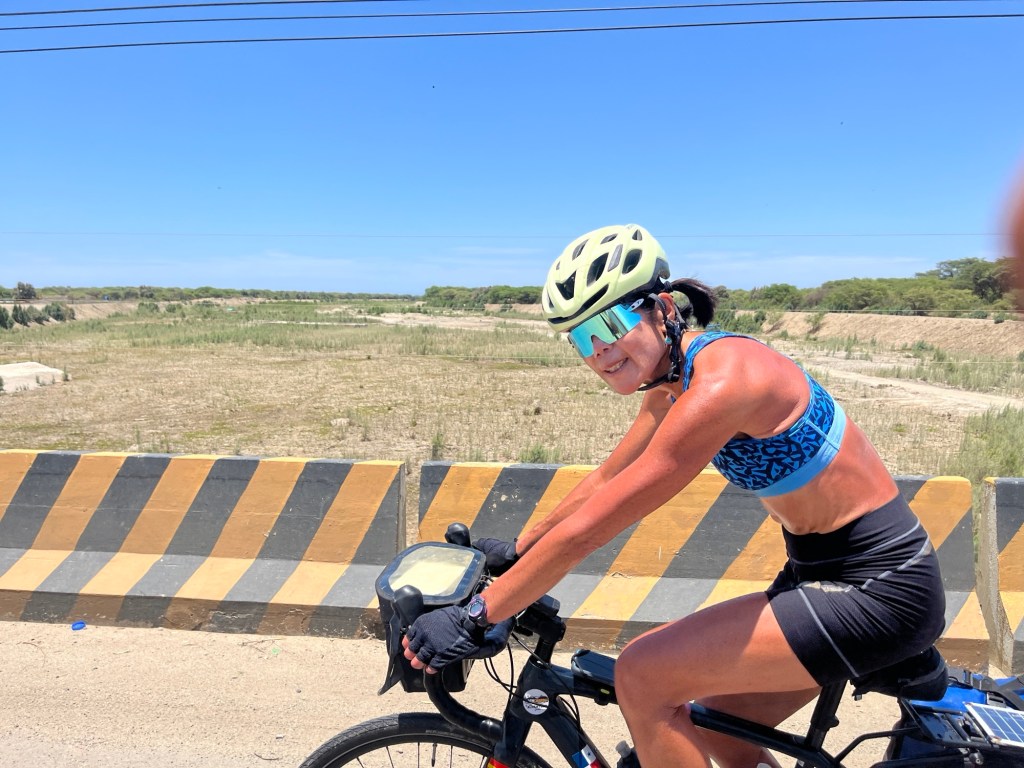
All of this, combined with the seemingly endless dessert, the relentless sun, and the brutal midday heat helped make our decision easy. You may remember our resolution of a few weeks ago – ostensibly to give up on going to Patagonia in order to reduce the pressure to go too far each day.
Well, it only took a few days after that decision before we started thinking about it. (It’s a terrible thing to think – leads to all kinds of problems). People have told us that Patagonia is the most beautiful place on Earth. I can’t remember who it was now – but someone told us that they have been to something like 45 countries and Patagonia was the most breathtaking place they have ever seen.
Do we really want to miss that?
On the other hand, after the mountains of Colombia and Ecuador we didn’t have much interest in the mountains of Peru – which, I think, are even higher and more harsh than the mountains of Ecuador. But if we’re not going through the mountains of Peru than we’re going down the coast . . .
One thing we have learned is that coastal areas – especially in the equatorial region – are often hot, humid, and kind of depressing. Worse, riding the coast of Peru is about 1,800 miles. So we started to wonder, did we really want to spend more than a month of our lives biking through an area we weren’t that excited about. Perhaps if we skipped Peru that would give us time to make Patagonia before real winter set in . . .
Well, we hadn’t made a decision – it was just something we were contemplating. And then we started biking through Peru. And this is where the garbage, the foul smells, the fall-down buildings, the desert, the heat, and the relentless sun really come in. It took about a day of this before we agreed that we would skip most of Peru.
So now we’re sitting on a bus – making our way through the desert.
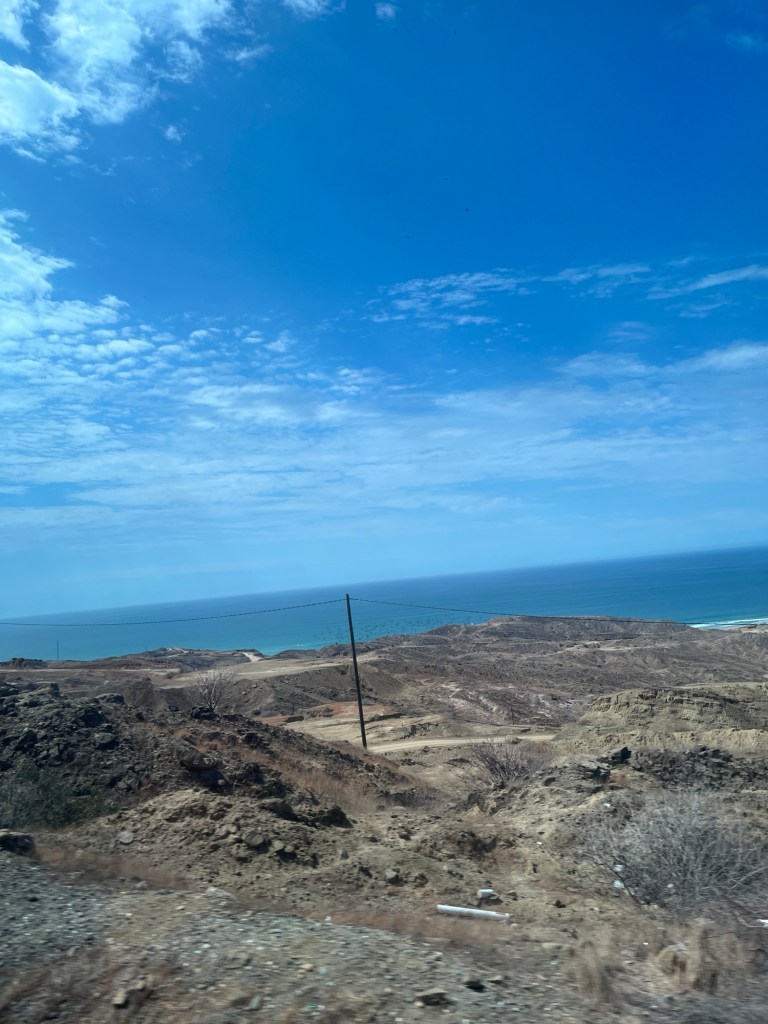
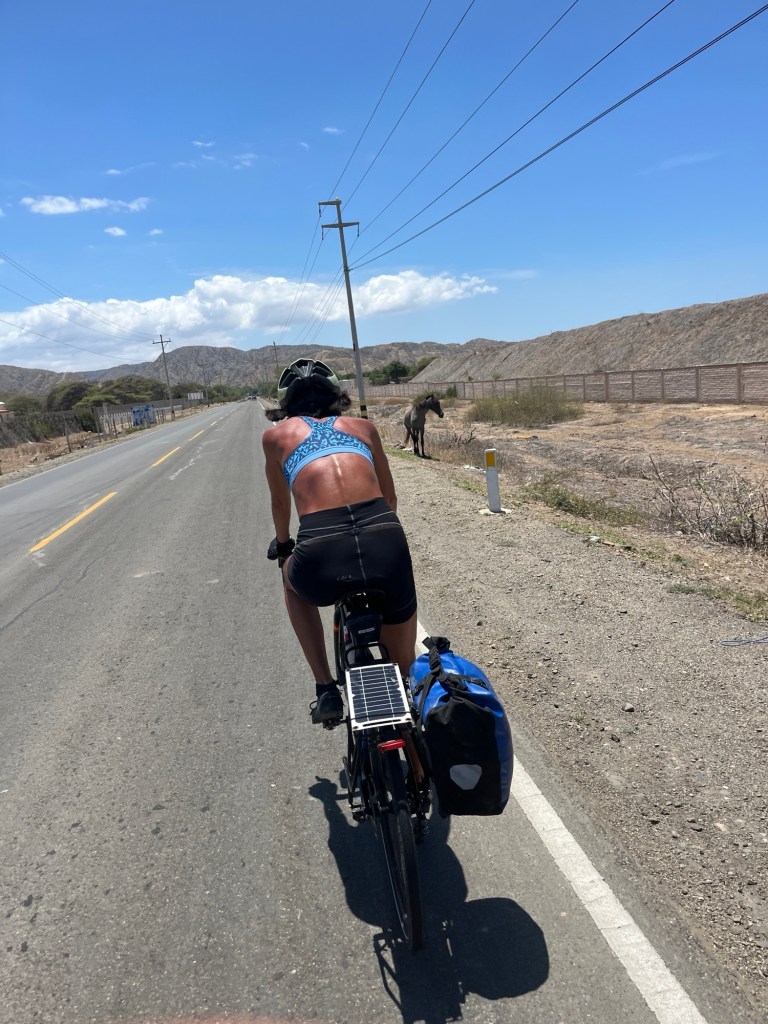
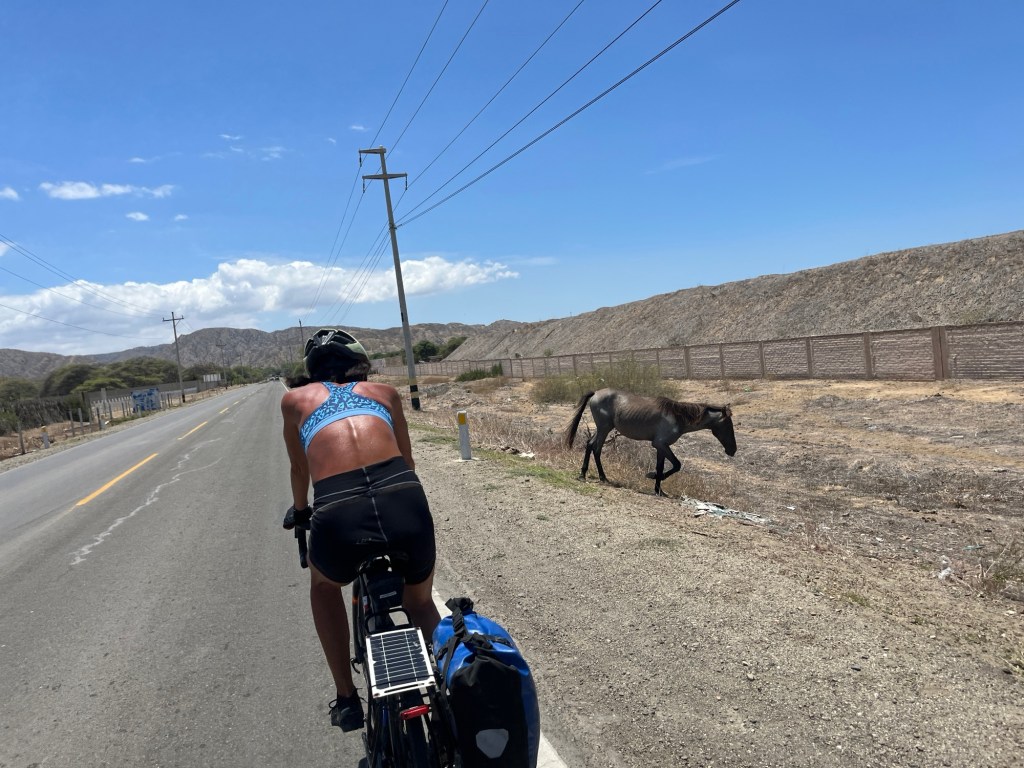
Now, some people like this type of terrain. We’re not big fans. It’s like the badlands of North Dakota. Almost no plants. No trees. Just broken earth stretching on for miles. And, worse, it’s not even dead flat. We’ve been in the bus about an hour now and we’ve gone over a few passes that would have been terrible on a bike in the heat of the day.
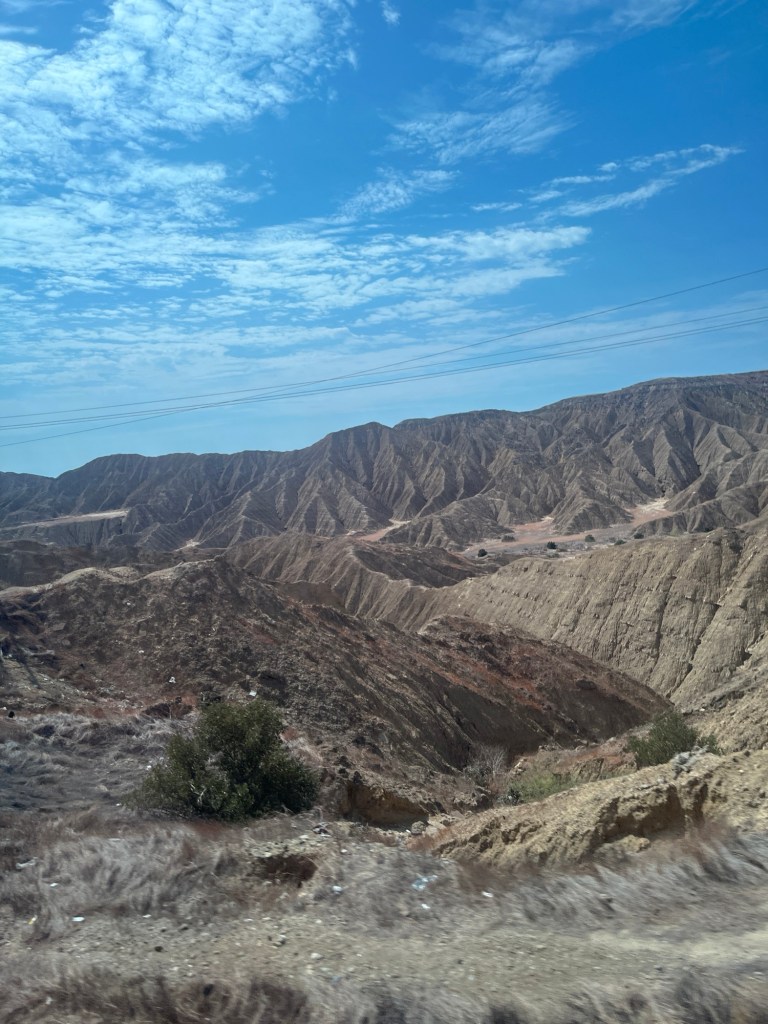
We’re cramped on a crowded bus – but, for now, anyway, we’re pretty happy about our decision. (That may change about 2 a.m. – some eleven hours from now – but at this moment (a big phrase for Latin Americans who learn English) we’re happy to be here . . .)
Destination? Lima, the capital of Peru. We haven’t heard much to recommend Lima – but it will hopefully provide a good break from the bus before we head out again on phase two of Escape from Peru – our ride to Arequipa.
From Arequipa we resume our biking – and it’s still 260 miles to Chile – even from there. Wow. Big country . . .
With this new plan we should arrive in Chile just as February – the August of the Southern Hemisphere – comes to an end. This will give us March and April – the September and October of the South – to make our way to Patagonia.
We’ll see.
A few thoughts on our travels the last day or two . . .
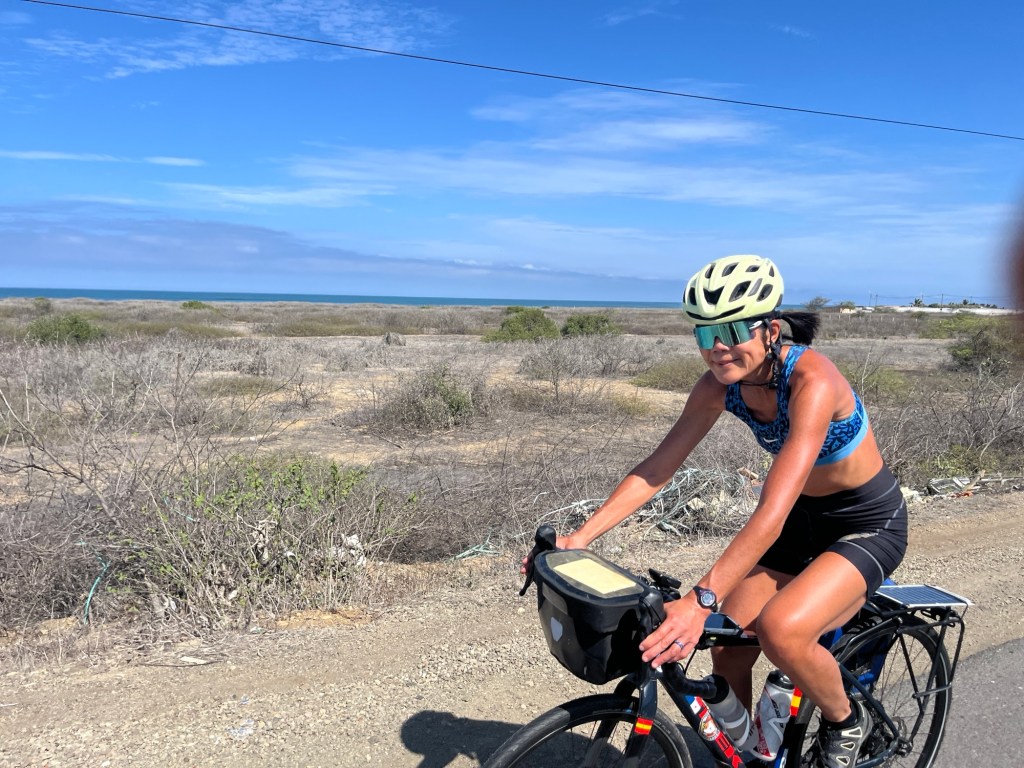
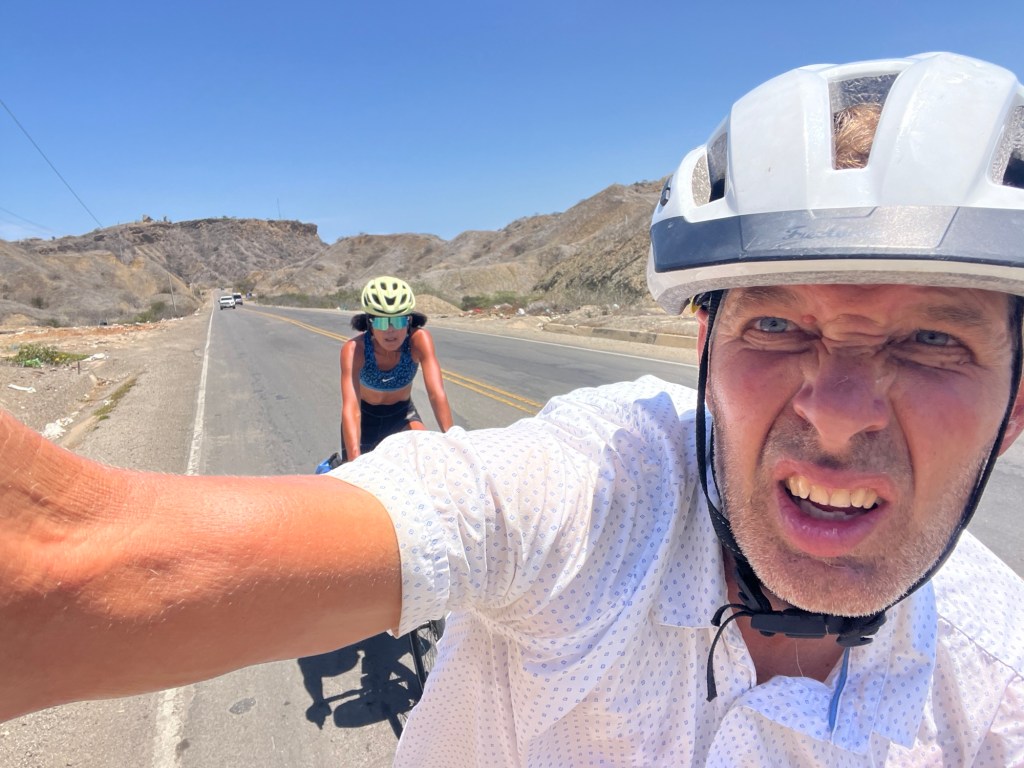
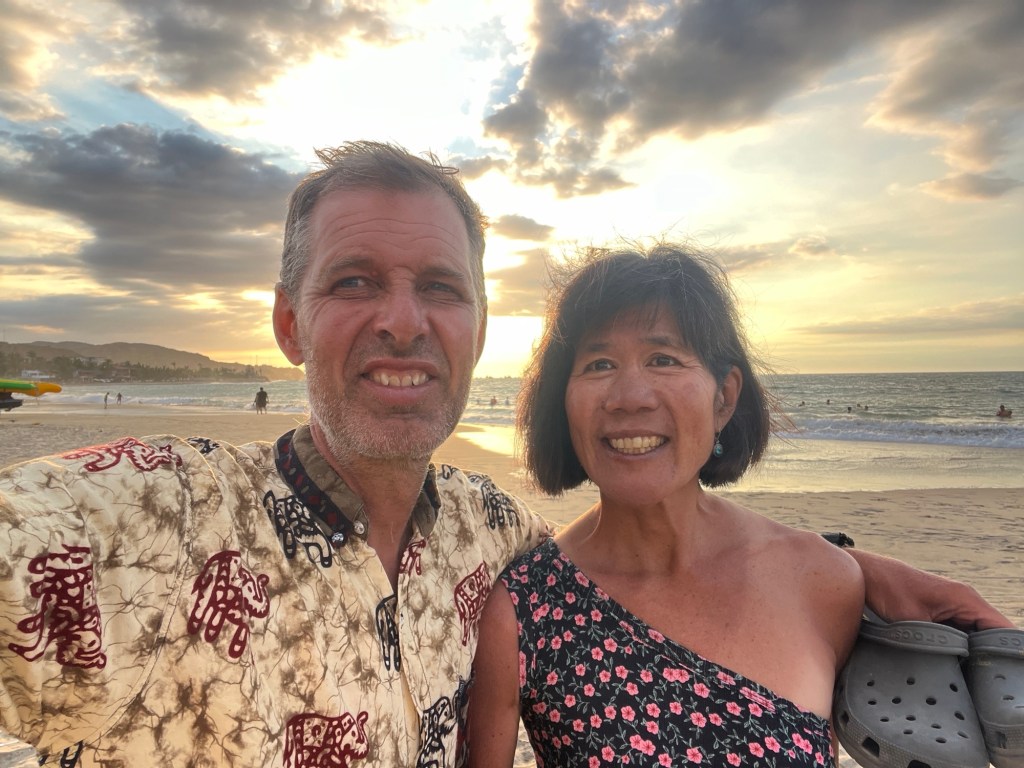
Yesterday we kind of put the hammer down trying to reach Mancora on time to take the bus. The flatter terrain helped, but we also encountered the worst headwind of our trip thus far. We had to work together – alternating leads – but we ended up making it with some time to spare. As it turned out there weren’t any seats left – but that was just as well as we enjoyed some beach time and were able to organize things a bit for the bus ride.
Pretty sure there is some corruption going on in Peru – and it’s obvious that money is scarce. Yesterday we purchased our tickets to Lima – complete with tickets for the bikes, or so we thought. We used our credit card as that is always our preference because we always end up paying a premium at the cash machines. Today, when we showed up we were informed that we hadn’t really paid for the bikes. Not that big of a deal, but when we went to pay, the clerk demanded that we pay cash. Kind of strange considering that we paid with our targeta yesterday. I guess it doesn’t matter to us. Bikes are on the bus – but pretty sure that money will be pocketed by staff . . . Why else would he refuse the credit card?
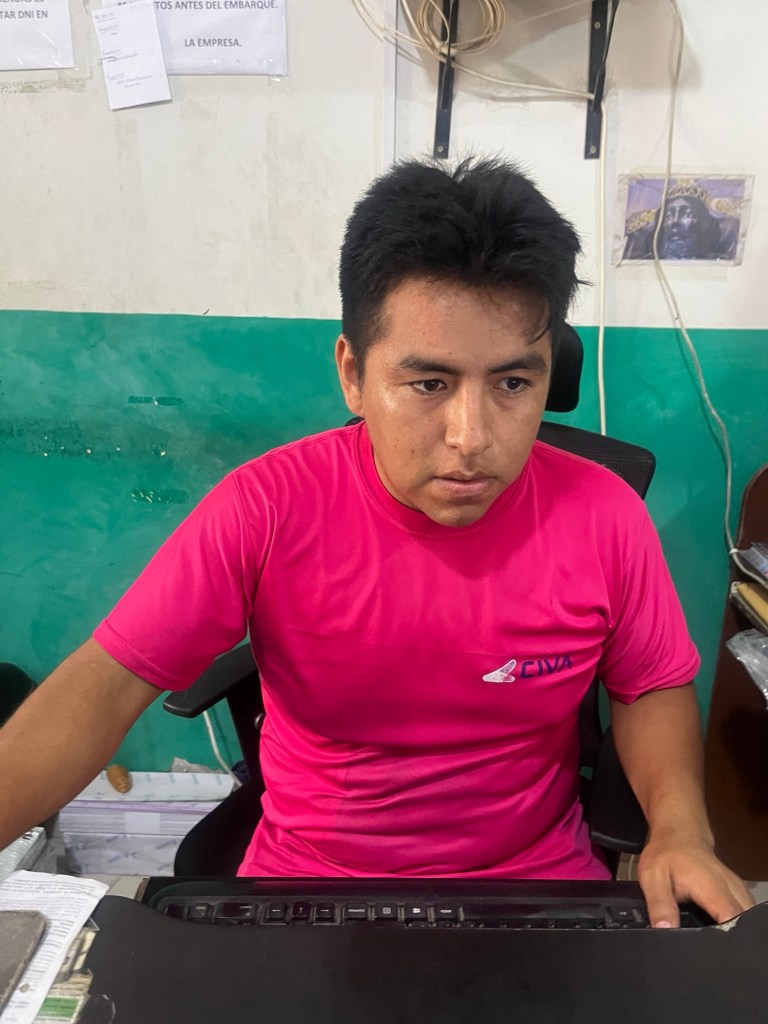
The other interesting interaction we kind of enjoyed . . . When we headed down to the beach this morning we immediately had a guy asking if we wanted to rent chairs and an umbrella for the day. No problem, we wanted to rent them.
“Cuesta?” I asked. (Translation: “How much?”)
”This way, follow me.”
”Cuesta?” I repeated.
”Follow me.”
We’re becoming irritated now, and I have no intention of following the guy until he tells us how much it will cost. (We might receive an honorary degree in Latin American Studies by the time this trip is done . . .)
Just then a woman appears.
“Vente,” she says. That’s Español for twenty – which is about $6.
I might have tried to argue her down a little – but now I’m just happy to have someone honest to deal with. We follow her.
But now the original guy is super mad. He starts yelling at the Vente Woman. She yells back. Quite the violent argument. Doesn’t matter to us – but it’s a pretty good indication of the state of things in Peru. People are at each other’s throats over one umbrella rental . . .
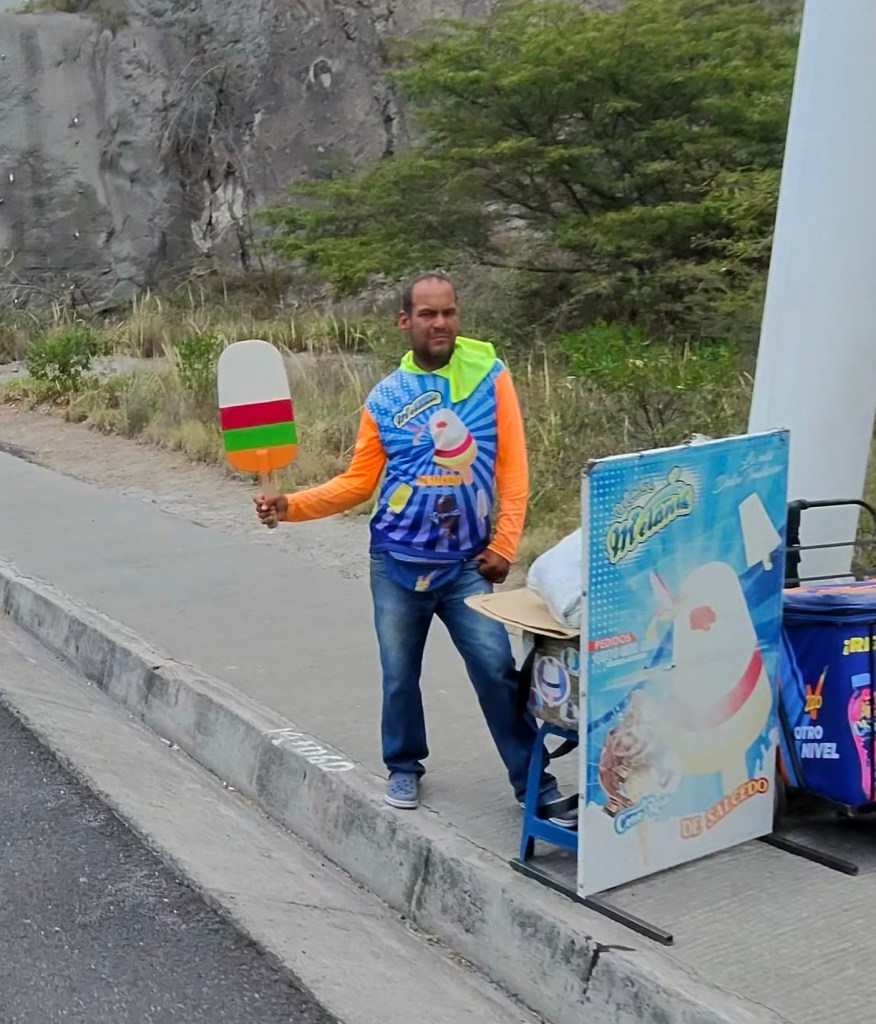
This leads me to something else I’ve been meaning to mention. From an American perspective it’s pretty incredible how much energy goes into Latin Americans selling things to each other. I mean, there is something good about being your own boss and all. But when you have grown-ups selling popsicles along the side of the highway I’m just not sure that is the best way to achieve a thriving economy.
We see a ton of that type of thing.
Okay, one last topic I’ve been thinking about. A few weeks ago I read part of an article in the Atlantic about how urban planning type ideas, zoning ordinances, and neighborhood pressure groups have been terrible for squelching the mobility of people in America. Mobility, entrepreneurship, and the mixing of people from different class and ethnic backgrounds. I guess people in the country used to move from place to place at an incredible rate – which led to more mixing, more entreneurship, and more of a sense, and a reality, that people could move up (or down) the economic ladder.
The thesis of the article was that a big part of this was facilitated by the ability to build cheap housing, to build what you wanted on your own land, to tear it down, and then to put something else up. But around about 1960 an architect in Manhattan wrote a book about new urbanism or something that really changed the landscape. After this book, the urban planning types of the world made a process out of everything. Want to re-paint your house? Hmm. We’ll see what the neighbors say, and whether this complies with the historical nature of the house, etc. You want to build something other than a single family home? Forget about it. That will wreck the fabric of our community.
All sounds so reasonable . . . But the end result is segregated communities. Less of an ability to move – especially to successful areas. Turns out that policies like this end up making successful areas much more expensive. Or, one point the article made was that the housing shortage in America is really more a matter of a shortage of housing in area where people want to live . . . Because those are the areas with all the rules that, inevitably, drive up the price of housing.
Our family has a a relevant story here. In the 1930s my grandparents up and moved from the Fergus Falls area in western Minnesota to Duluth because they thought it offered a better opportunity for their growing family. They bought a little piece of land and erected a shack to live in. I think my Grandpa rigged up an old bus engine to supply the heat fit the place. They eventually pieced together a gas station and did whatever they could to make ends meet. Kind of Latin American-esque really. People just making whatever they could work. This would never happen in today’s America. Bureaucrats from the City would never allow it. Which is kind of ironic because my Grandpa was a great liberal, but he himself had only a high school education and was a great champion of common sense.
This is the type of thing that I think has driven people into Trump’s arms. A bunch of “experts” telling people what they can and can’t build on their own land. And preventing people without a lot of means from moving to where the jobs are. Of course people are going to be frustrated.
Don’t worry. This all gets back to Latin America and what we’ve seen on this trip . . . Because, as we’ve seen in Peru, there needs to be some reasonable rules. People can’t just build houses right on the ocean. People can’t just dump garbage anywhere they want. There needs to be some rules anyway . . .
And this is where it gets difficult. Because someone has to draw a line. Yes, we can tell you really big things like you can’t build your house where an ocean swell can knock it down – causing everyone to suffer, and you can’t dump your garbage wherever you want, but we have to get away from most of our other rules. If people want to paint their house with purple and green and yellow stripes – that’s their business. If they want to do their plumbing themselves – that’s their business. And, yes, drawing lines like these will upset people like the historic designation crowd and the plumbers union. But, in my mind, Democrats can either start making tough decisions like this – being the adult in the room – or they can sit by and watch as the Trump-led Republicans tear the whole system down altogether.
Okay, you can tell that I have a lot of time to think about things while we’re biking. But I really think that this is the time for Democrats to pivot. Use this time with Trump in power to formulate a new approach – with less emphasis on the intelligentsia and experts telling everyone what to do – and more on setting really broad guardrails, but otherwise letting people do what they may. This will have the very good consequence of allowing the country to get back to the more mobile, less segregated society that we all say we want. And it will also mean winning future elections – assuming it’s not too late and there actually are future elections . . .
Alright, that’s enough for today. We have to leave some battery on the tablet for watching movies on the bus . . .
It’s going to be a long ride . . .
Discover more from Diana & John's Biking Adventures
Subscribe to get the latest posts sent to your email.
 Diana & John's Biking Adventures
Interesting thoughts in update today. Had similar thoughts over the past couple of weeks with new administration. Look forward to solving these problems on long mountain bike rides when get back. Safe travels.
LikeLike
Thanks Brad! Up early, as always… Brutal trying to sleep on the bus… Definitely look forward to long bikes or skis.
LikeLike
That was quite a day or so.
The uncleanliness and smells reminded me of my work in Nairobi where I came to realize that we in the U.S. forget that we are on the top of Maslow’s pyramid where we are privileged enough to get to consider and be sensitive to aesthetics.
That Atlantic article was a tough swallow. Never heard anyone go after Jane Jacobs before. But made some compelling arguments.
Glad to hear you’re pushing on through tough roads. We are doing the same here each day. It must be nice to know you have the power to make decisions that control your destiny. It would be nice to see those in our political and judicial arms of our government do the same. The person who’s driving our bus (Trump or Musk) is speeding us through rocky roads and we feel like we’re going to find ourselves beyond the guardrails we believed existed and down a cliff to obliteration.
LikeLike
Opps, not anonymous, just Steve Kotvis. (Guess I need to sign up.)
LikeLike
Thanks for the comments and thoughts.
You mention “privilege” a few times. For sure Diana and I have a ton of advantages, and the entire blog is really written from our upper-middle class American point of view. I’ve never tried to hide that. In fact, the blog could be called “Two Americans’ observations of Latin America . . .”
But I will say that I feel like pointing out that someone is or isn’t privileged is not super constructive. Just serves to put people on the defensive – I know I didn’t feel great when I read this – and is, again, the kind of thing that creates resentments and, in my mind, sends people into Trump’s arms. To me, the main purpose of mentioning this at all is to signal your own virtue: “I’m one of the good ones that really cares . . .”
Regarding the main thrust of your comment – that we have the “privilege” of worrying about aesthetics – I guess I really don’t agree that rampant garbage and sewage in towns and around homes is solely an aesthetic issue. This is how disease spreads. Yes, it looks bad and it smells bad. But what is really insidious about it are the public health problems that can result.
Peru is a poor country. But so is Guatemala. So is El Salvador. So is Ecuador. While there are certainly some garbage problems in all these places, none of them were anything like what we have observed in Peru.
I think it’s fair to call Peru out for this. Believe me, Peru has thousands and thousands of miles of desert. If they wanted to deal with this problem I think they could pretty easily find and create a dump.
Happy to chat more on these very interesting topics – but if you want to discuss more would be great if you could identify yourself.
Thanks.
LikeLike
Good decision! I thought you might find a section to skip, instead of missing out on Patagonia.
Thanks for all the effort you put into your posts, it’s fun following along.
Jon F
LikeLike
Good to hear from you Jon. How’s the new job going?
LikeLike
Since the 2008-2009 Great Financial Crisis affordable housing and therefore social/geographic mobility have come under ever more pressure…homebuilders slowed down on their building projects due to increased risk to their capital so there has been a chronic shortage of available homes…during the pandemic with remote work those who could afford to moved to highly desirable areas and drove up prices in those markets as well…not only are home prices exorbitant, but interest rates have remained persistently high. I fully understand the frustrations that many in the US have on this front, and this is why I am still a renter in NYC, which of course is always one of the most expensive markets in the US. While I agree with you that many who voted for Trump were unhappy with their economic situation (including housing/mobility, etc.), and they likely believed or at least hoped he would make things better, we both know he really couldn’t care less. He just basically dismantled the CFPB which is the watchdog for big banks, ie created after the GFC and tasked with preventing another financial crisis.
Anyway-enough of the serious stuff. Glad you guys decided to skip the drudgery in the deserts of Peru but will still get to explore Patagonia by bike! Enjoy the downtime on the bus-time to read, write, and plan the next stage of your travels!
LikeLike
Yeah, I don’t think many people are voting for Trump because of his policies. They just love poking the inteligencia in the eye, and Trump is fantastic at doing that. My point is that the democrats need to stop telling people how to live their lives. Save it for the really big things. But if people want to do things that only hurt themselves – or are just tangentially bad for others – like not mowing their lawns as an example – we need to let them do that…
This bus ride is brutal. 😳
LikeLike
I’m so glad to hear you are making travel decisions that may maximize the beauty and minimize the parts you are less fond of! I hope you enjoy the next stage!
Laura B
LikeLiked by 1 person