San Antonio Suchitepequez – Santiago Atitlin
It takes a little work to make it to Heaven.
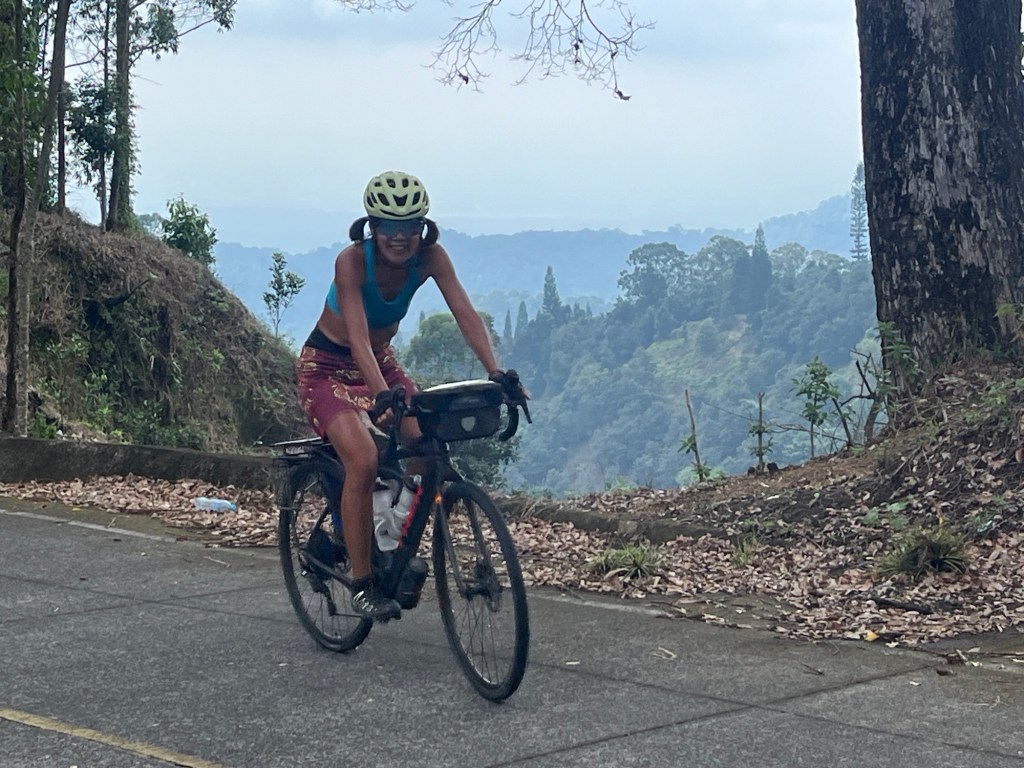
We found that out yesterday. In fact, it takes A LOT of work. About 5,955 feet of work, to be exact.
Okay, yesterday was particularly dramatic when it came to climbing. Wow. We only biked like 25 miles. The first 10 had a little up and down, but basically pretty easy. The last three weren’t too bad either. But that middle 12 . . . Absolutely crazy.
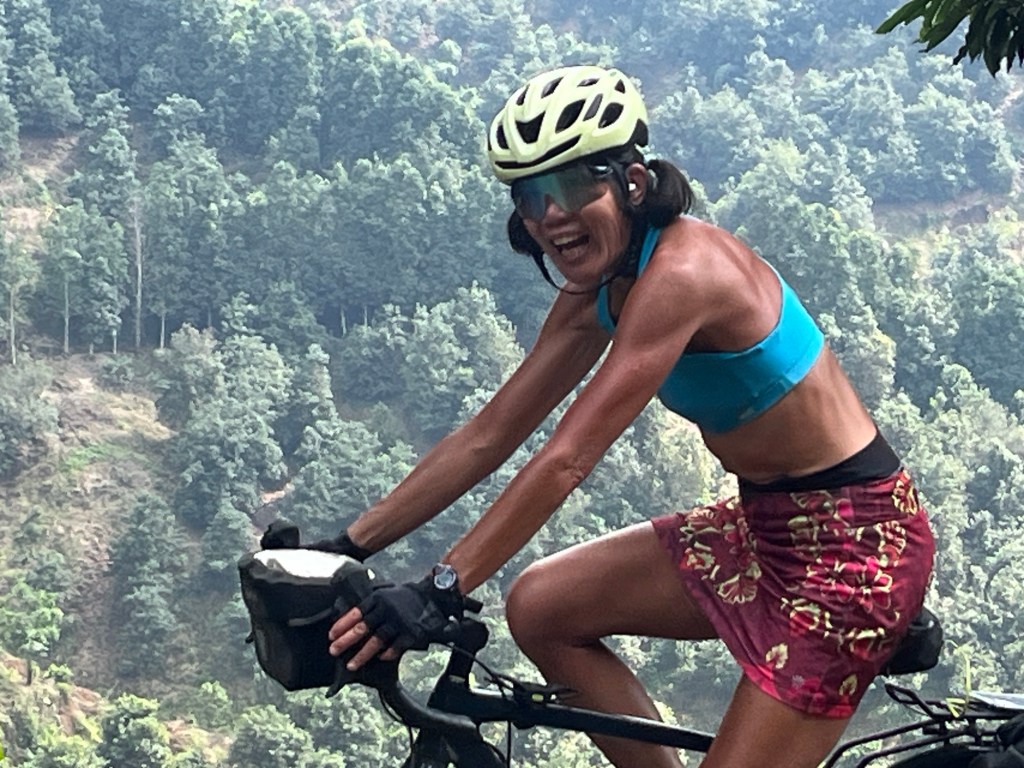
I don’t think I’ve ever biked straight up a mountain before. Usually you wind your way up to a pass. Or you might go up for 2-3 miles, but then you reach the top and all is good.
Yesterday? Straight up.
In general I don’t use low enough gears and don’t spin enough on my bike. For most hills I don’t ever use my bigger chain rings in back. Not the best form, but that’s how I typically do it.
Yesterday? Many sections were so steep I couldn’t even keep the bike upright without standing up while in first gear. I don’t how they even built the road. All the tools and the equipment must have been rolling down the hill all the time . . .
I think it took us about five hours of riding to go 25 miles.
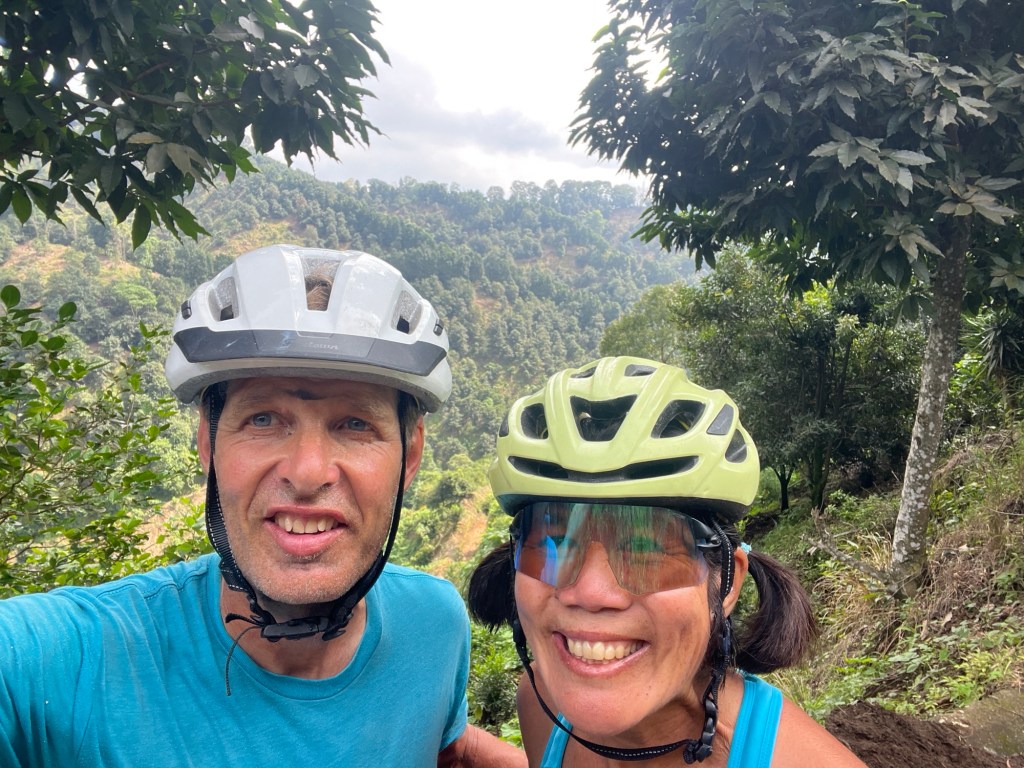
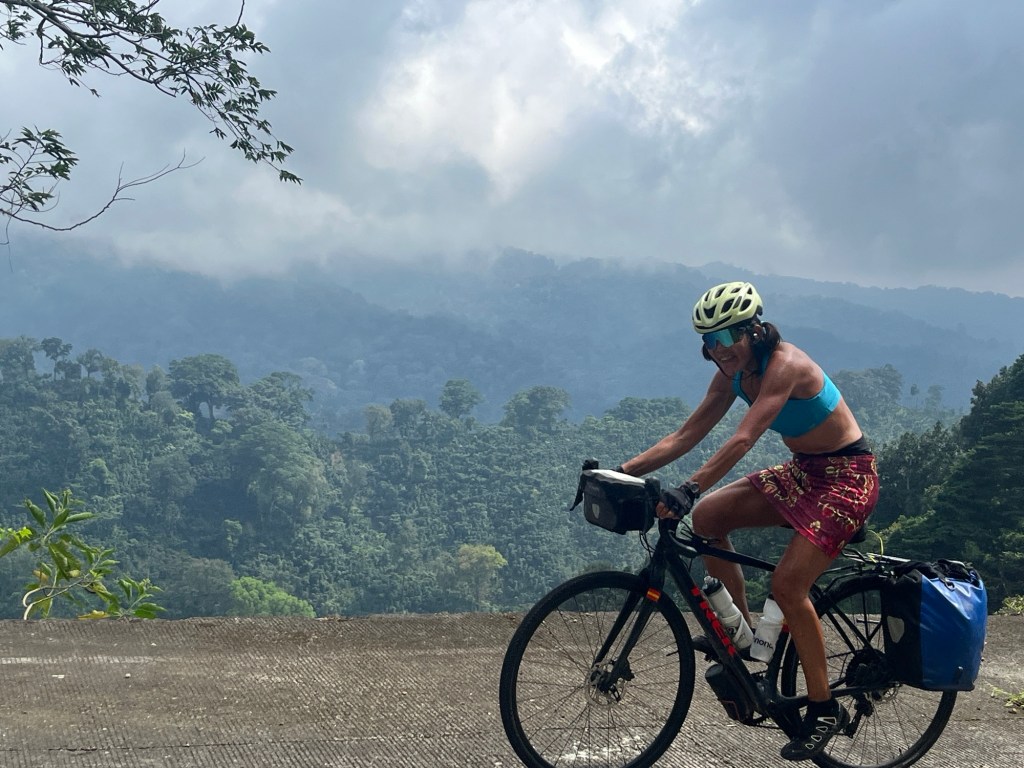
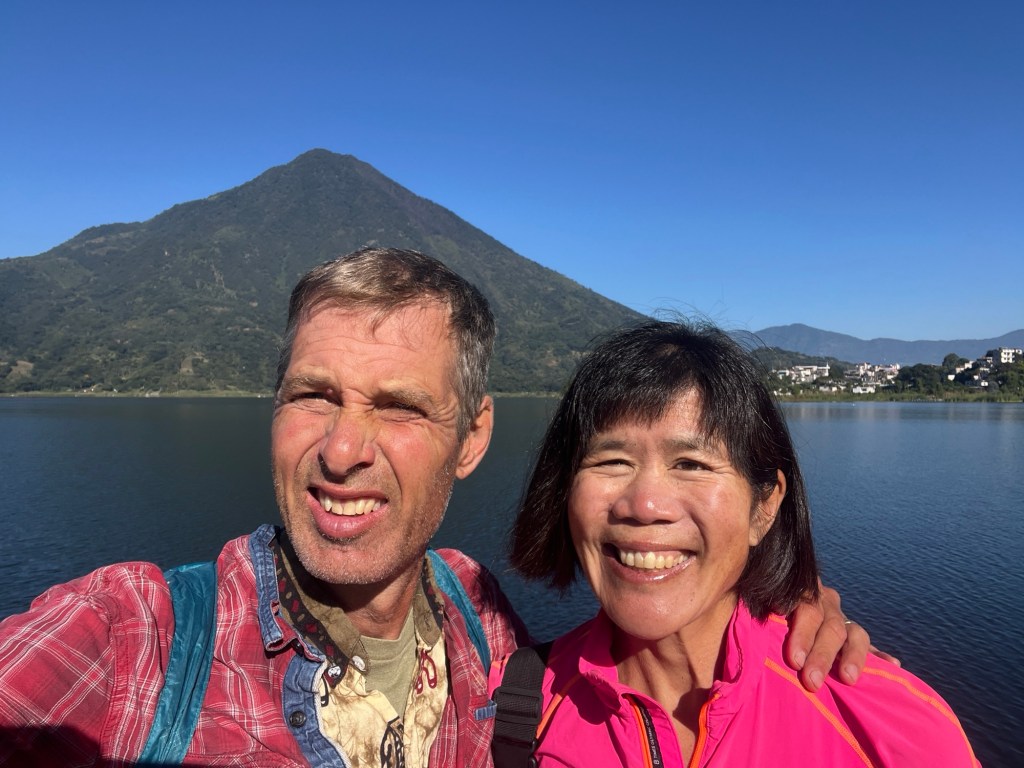
But when we reached the top of this giant bowl that is the Lake Atitlin valley – wow! I think we might have made it to Heaven. A beautiful mountain lake. Three volcanoes – reaching as high as almost 12,000 feet. Little villages surrounding the lake, complete with markets and local art. Right now I’m looking at the peak of a volcano that is just visible above a shroud of clouds.
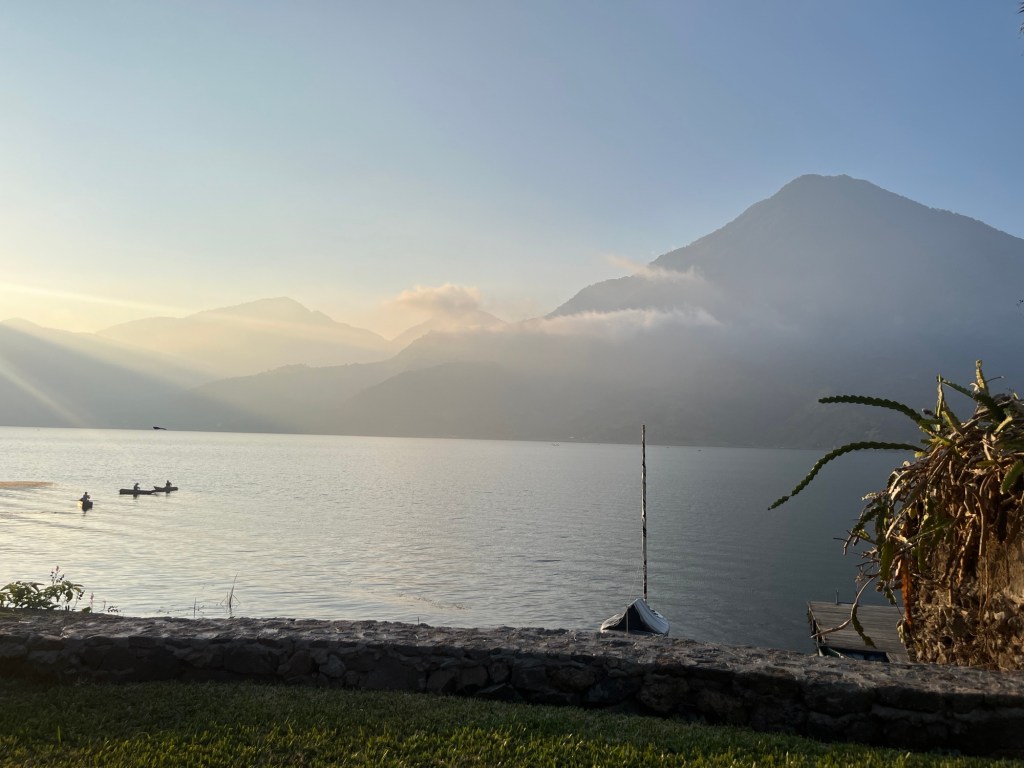
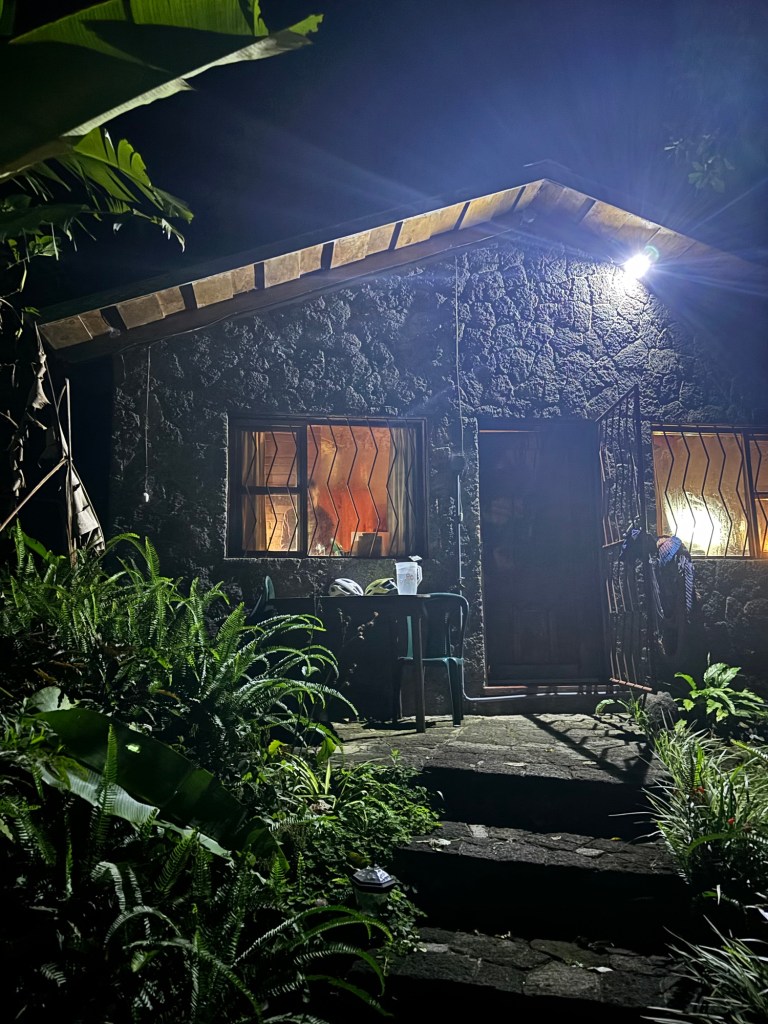
And Heaven isn’t even very expensive. I mean, it’s more than Mexico, but $60/night for a cozy stone cabin airbnb complete with a fireplace that includes lake access, canoes and kayaks to paddle around, pool, hot tub and a sauna isn’t bad . . . Our dinero won’t last for eternity or anything – but I’ve always thought that this lounge-around version of Heaven would get a little boring after a few eons anyway . . .
But back to our journey. Did I mention that it wasn’t easy? And it was made worse by the fact that there were no services along the way. Another one of my general rules down the drain . . . Was it yesterday that I pronounced that Guatemala seemed like one continuous town. Nope. Turns out that there aren’t too many people living on the side of the mountain . . .
I ran out of water about two miles into the climb – because sweat was pouring off of me like rain. (Another advantage to being up at Lake Atitlin – not as humid as the more low-lying areas). Seriously. I couldn’t even use my phone for navigation or anything because every time I would look down at it a river of sweat would come pouring out of my helmet onto the screen and then my fingers became useless for manipulating google maps because there was too much moisture on the screen . . .
But there were some upsides to all of this. Especially for you . . . Because I was all to eager to stop and take a break occasionally. The upshot, we did some pretty good exploring on the way up the mountain.
First stop: trees that people were tapping. Looks like they cut a big descending gash around each tree – a gash that ends with the tap. It looks like the “sap” (if that is the right word) kind of moves down along the gash until it come to the spline and then gathers and falls into the little cup they have hanging on each tree. The “sap” is pure white – looks like coconut milk. Not sure what it is that they are tapping for – but it looks like quite an operation.
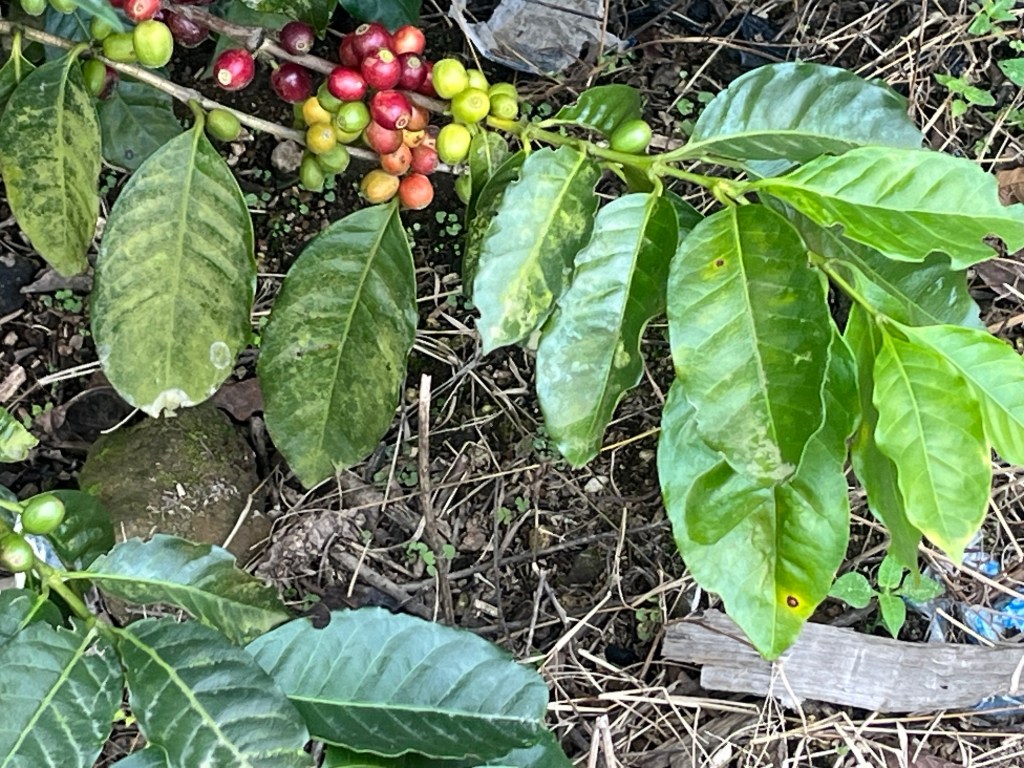
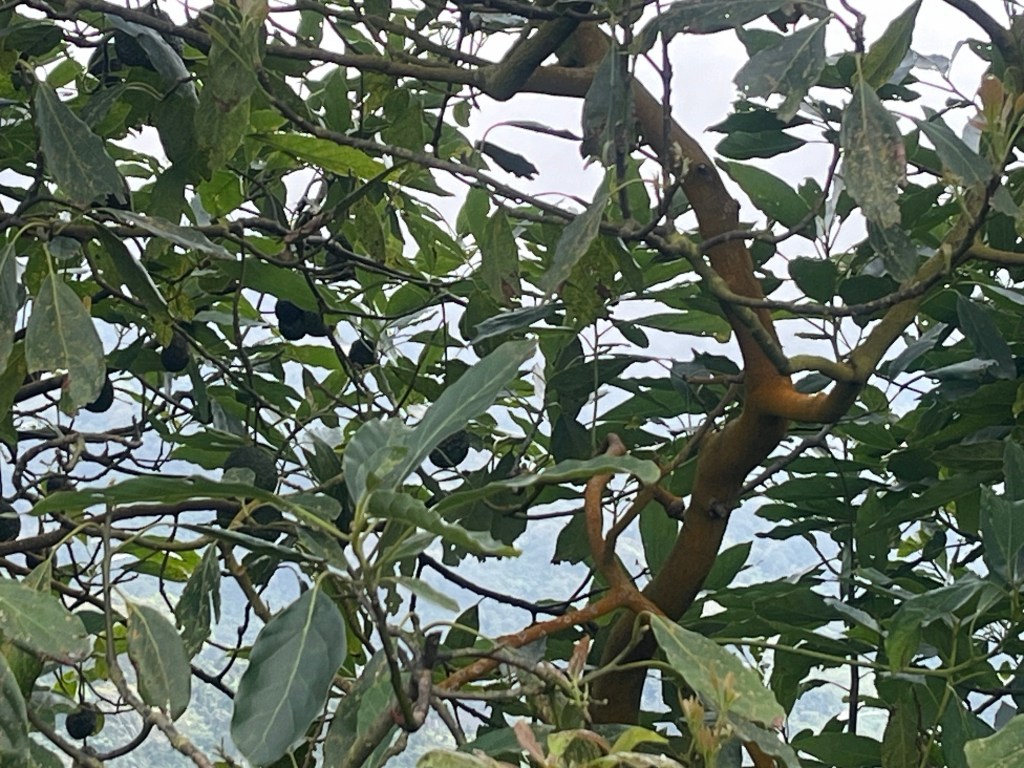
Then we found what we think are coffee plants and coffee beans, together with avocado trees. Avocado trees are so cool. Who knew that avocados grow on trees? I mean it makes sense. But if you had told me that they grow on vine type things like tomatoes I would have believed you . .
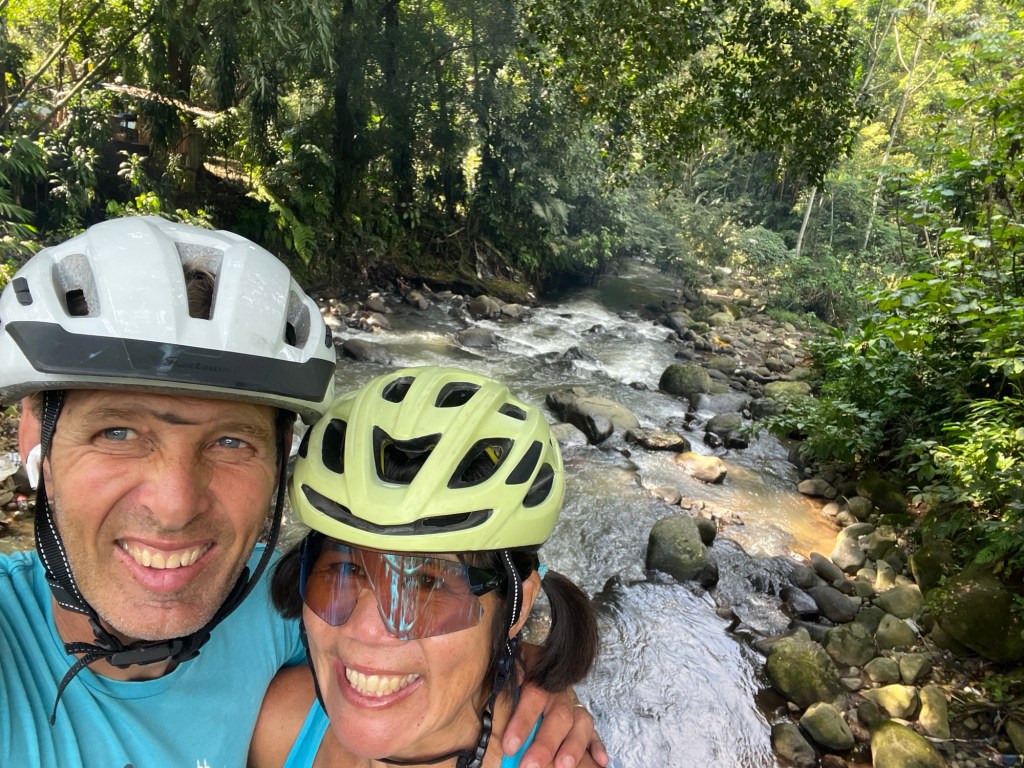
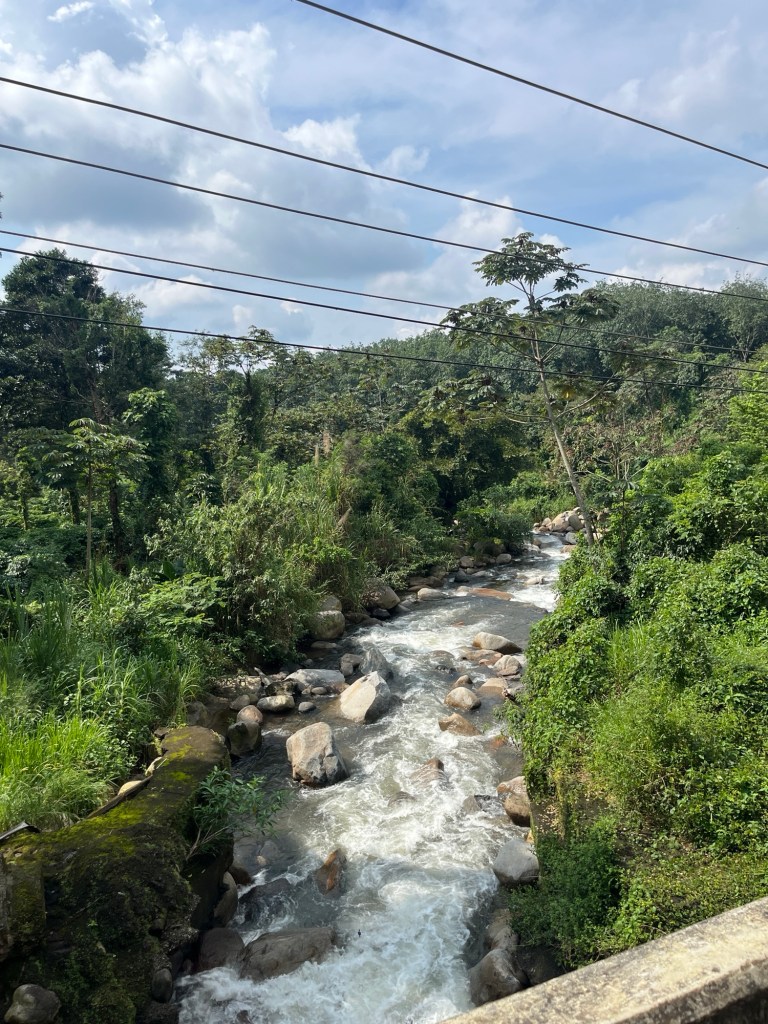
Incredible mountain streams and waterfalls all over the place. It’s like driving on the North Shore of Lake Superior only you don’t even need to leave the road to see Gooseberry Falls. And the rivers and streams come every mile or so. Amazing.
Sadly, not all good. There were a few sections where there had clearly been some mudslides or erosion or something. Just a sheer drop right along the edge of the road. Hopefully there is a better long-term solution coming – but the current plan seems to be to dump so much garbage over the edge that the mudslide area eventually stabilizes. One spot was particularly bad – with a full on garbage dump on the side of the mountain. And they were burning the garbage as well. Smelly. Smoggy. Ugly. Just kind of a bummer.
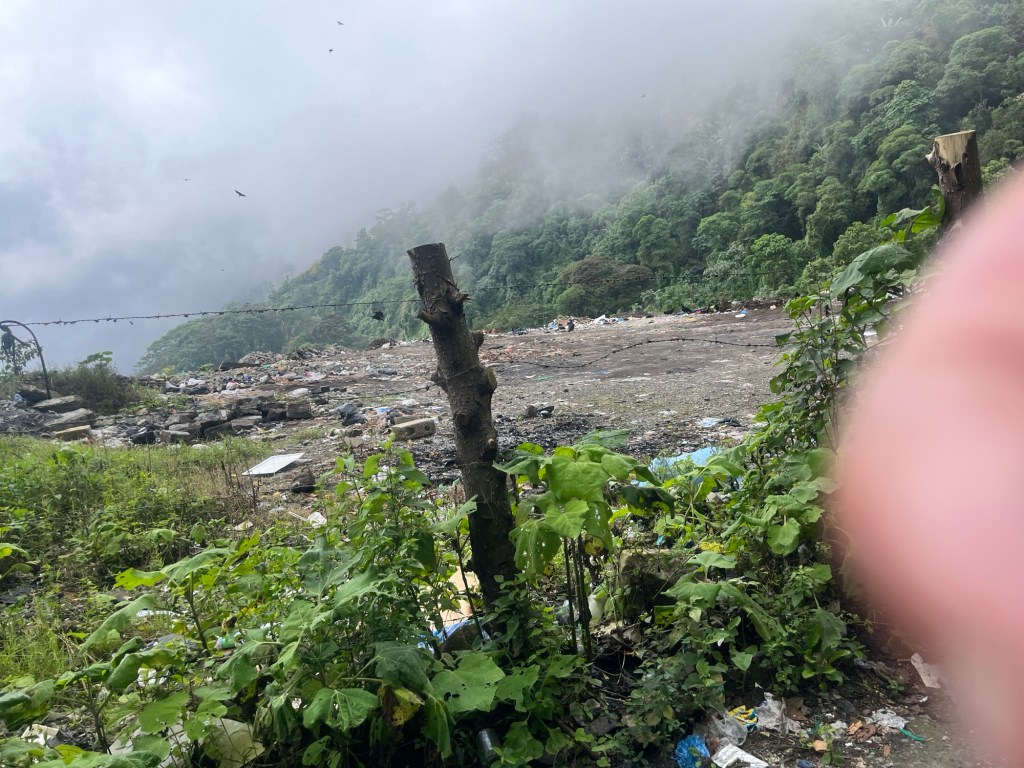
But maybe that’s all part of passing through Hell in order to get to Heaven. Isn’t there a song about that? (I looked it up. If you want to get to Heaven – by the Ozark Mountain Daredevils. Actual lyric: “If you want to get to Heaven, you’ve got to raise a little Hell . . .” Other relevant lyric in this song: “If you want a drink of water, you’ve got to get it from a well . . .” Considering that we biked through the Ozarks and that water has been a recurring theme, including on yesterday’s ride, we might have to revisit this song again later . . .)
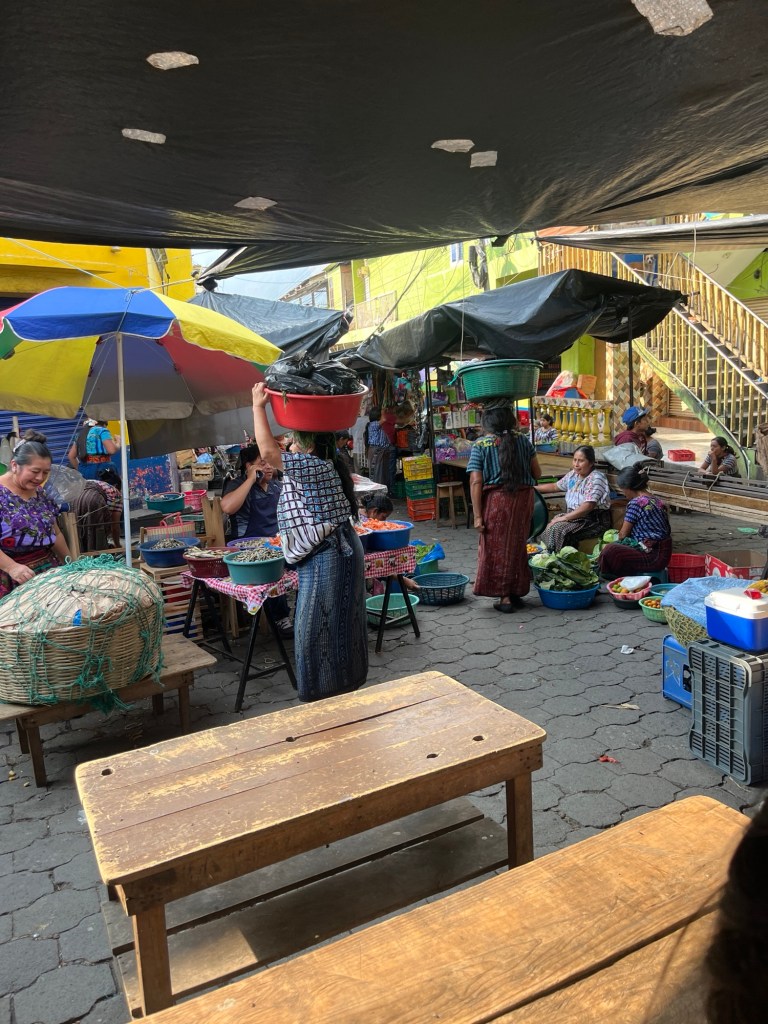
Anyway, we finally make it up to the top and head to town in order to buy stuff at the market for dinner.
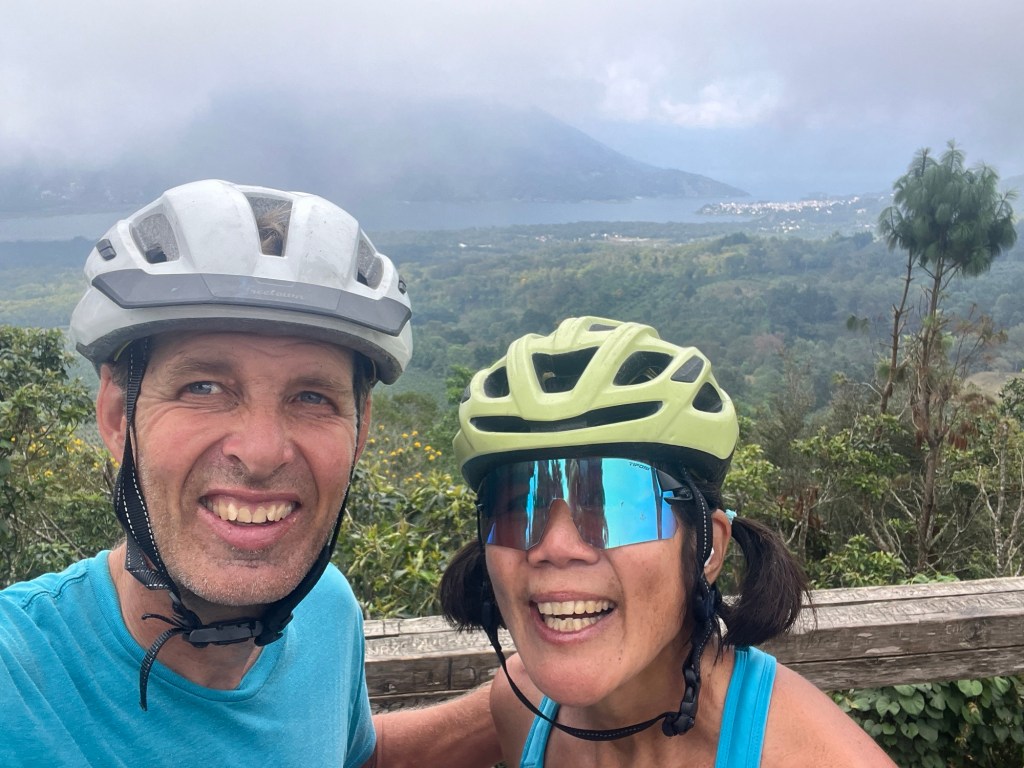
That was mostly fun – but some money issues kind of interfered. . .
Let me start by saying that one of my frustrations throughout Mexico was change. No, I don’t mean “change” like Barack Obama type change, or that change is hard – though it clearly is . . . No, I’m talking about things like nickels and dimes and quarters.
It seemed like every time I tried to buy something in Mexico I would run into this big dramatic thing about change. Remember, the exchange rate in Mexico is like nineteen Pesos to one Dollar. So a 500 Peso bill in Mexico is roughly worth $25. With the favorable exchange rate, maybe think of it as worth $30.
Anyway, here would be the transaction:
“Tres tacos, por favor.”
“Bueno. 80 Pesos.”
I would reach into my pocket, find a 500 Peso note and hand it to them.
You would think that I just gave them Kryptonite. They’re giving it back to me, talking rapidly (mas rápido) in Español. It took me a few weeks to recognize the problem. For some reason that I cannot comprehend, no one has small change in Mexico.
But it’s not like I just handed them a $500 bill in the U.S. As we discussed, a 500 Peso note is the equivalent of maybe a $30 bill. (I know we don’t have these yet – but I’m holding out hope that after we suggest this innovation Diana and I and Old Dan and Little Ann might be featured on the new note. Is that too much to ask?)
Here’s the thing. I have usually used all my smaller notes giving out tips to people. I’m trying to be nice – but then I only have the bigger notes left, and the Mexicans act like I’m trying to take their children. I don’t get it. Does the Mexican government only produce tiny amounts of change for the country – and everyone has to split it?
Okay, so with that background in mind, we’re back to the marketplace yesterday. I’m buying a cantaloupe from a vendor. I think it’s 10 Quetzals. I’m just going to hand her a 10 Quetzal note, when we decide to also purchase some avocados. Now the price is 17 Quetzals. Great. No problem. Here’s a 20.
“No, no, no.” And then some rapid fire Español that we don’t understand.
They look at me like I’m crazy.
I’m thinking that I don’t understand the number – dies-y-siete – so I have them write it down. Sure enough. 17.
So I hand them the note again. I mean I understand the change problem, but this is ridiculous. You don’t have three Quetzals? In fact, I’m thinking I’ll just let them keep the change.
”No, no, no . . .”
Finally we just buy the cantaloupe; we skip the avocados and I just give them a 10 Quetzal note. All good.
Later, we’re buying something else and once again I’m trying to pay with my twenty. Same type of reaction.
And then we realize: I’ve been trying to pass off my 20 Peso note. No wonder they don’t want it. 20 Pesos is like a dollar. 20 Quetzals is like $2.50 or $3. This isn’t a change issue. This is me being a confused gringo.
That decision not to change currency when we crossed the border has caused a lot of problems . . . Who knew?
A few more little anecdotes for you . . .
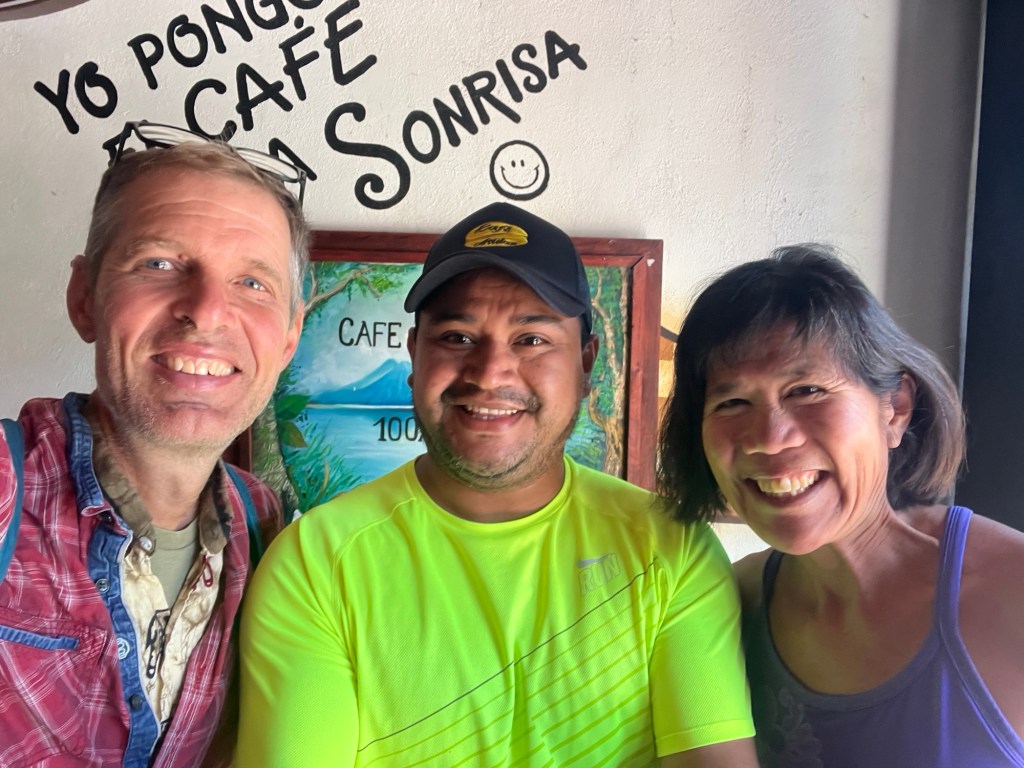
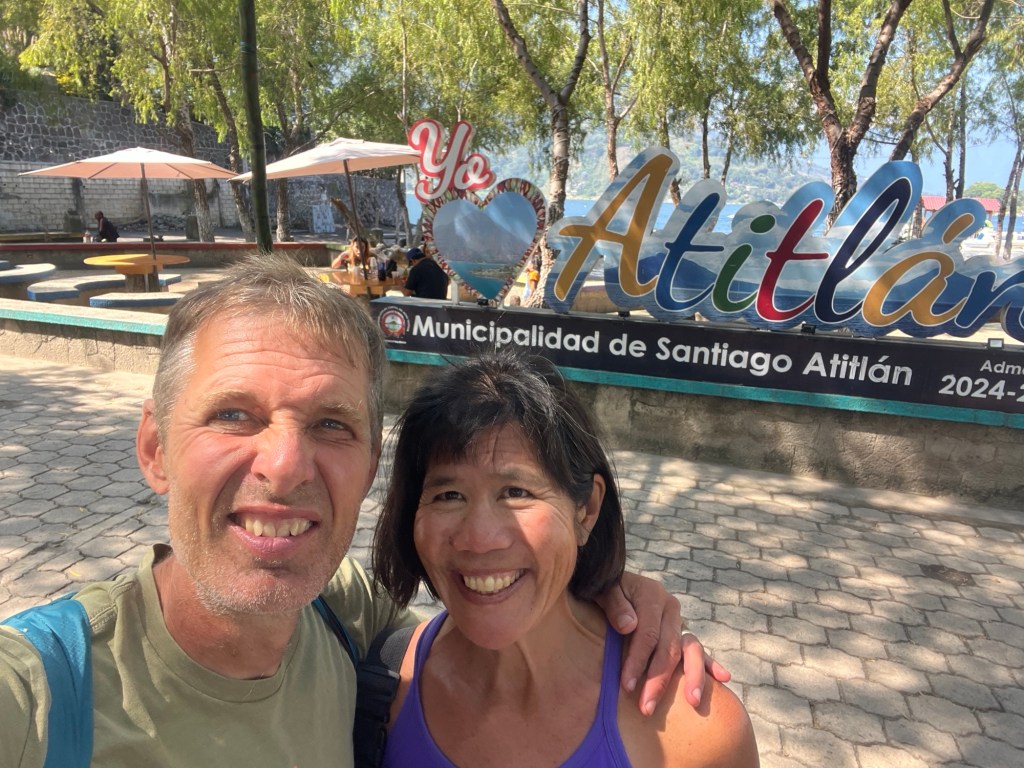
Today we took a water taxi to a town across the lake. Nice. While there we stopped at a coffee shop and met Bernard. When we told Bernard about our trip and biking through Mexico he asked about the narcos and the violence. Turns out that Guatemalans have the same negative attitude about Mexico that Americans have. They think of it as dangerous and they don’t love the military style policing.
On the way back we ended up going to the wrong launch point. The folks at the launch told us that the public water taxi did not run back to Santiago from there. The choices were to take a tuk tuk taxi to the right launch point and then wait there long enough to catch the public water taxi, or pay for a private boat from the launch we were at. They quoted us a price of 250 Quetzals – which is actually kind of expensive. Like $35. Compared to like 48 Quetzals for the public boat.
Some fun haggling ensued.
Diana: “They told us 200 Quetzels this morning.”
Them: “No, 250.”
Me: “Let’s just go to the public taxi.”
Diana – In English to me: “I don’t want to wait all afternoon . . .”
Them: “Okay, 225.”
Me: ”No. Let’s just go.” And we start walking away.
Them: “Okay, 200.”
Love it when we win a haggling war.
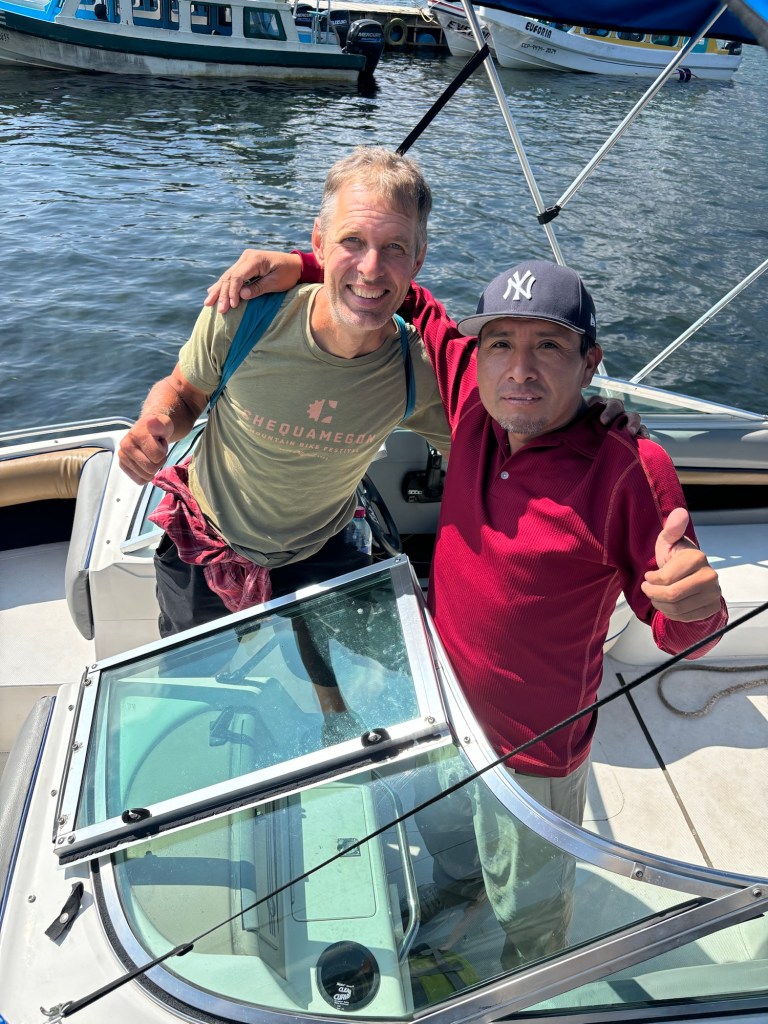
But the best part was yet to come. Our boat driver, Juan, was great. Juan is from San Pedro on Lake Atitlin. Turns out that we were haggling with his nineteen year old son back on the dock. Juan let me drive the boat, which is owned by Juan’s father. Big family enterprise. Diana commented that Juan had a good job – driving people around on this beautiful lake.
Which brings me to a reader question. Many times now we’ve mentioned that people we’ve met in Mexico and Guatemala either have gone, or want to go, to the United States. The latest was Glendy, whom we met as we were eating lunch a few days ago. The question was why these people want to come to the United States. Don’t they know that it can be a terrible place?
Again, I don’t want to stray too far into political territory. But I will offer a few thoughts and observations. First, I think it’s easy to romanticize these places.
“Oh, people live simply there. They don’t need a lot of material things. They are just happy with their families. They know what is important in life . . .”
I find myself doing this a lot. People in Mexico and Guatemala do seem pretty happy. And both countries seem like great places for childhood. I’ve caught myself thinking that to do over again maybe it would be better to raise children down here.
Sure, it would be great to take our American money and move down here. Live like kings and queens.
But I think it’s fair to say that many people in Mexico and Guatemala work REALLY hard and have very little to show for it. I did a little research. Average income in the U.S. – $77,463. Average income in Mexico – $16,685. Average income in Guatemala – $5,798.
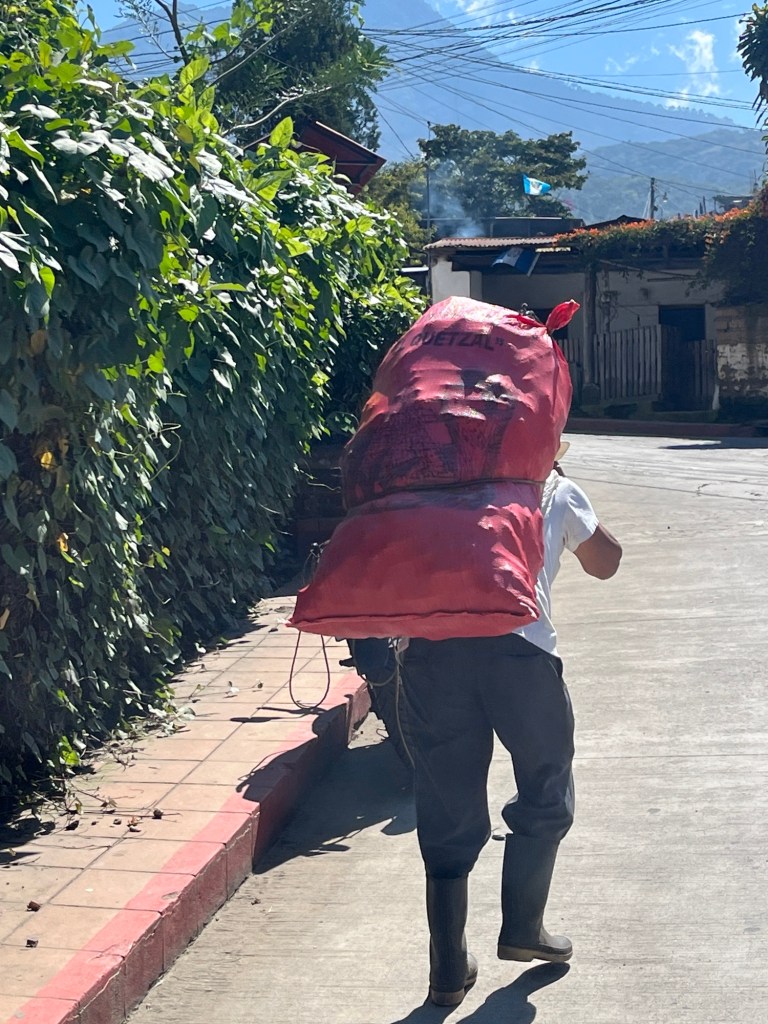
Even in a for-the-U.S. low wage job of $15/hour, you’re still making $30,000 per year. And that’s assuming that you are working 40 hours per week. My sense is that people in Mexico and Guatemala are working harder and longer and making MUCH less. So when Glendy says her dream is to go to the U.S. to make money for her kids I think that makes sense. She wants them to have a better future, and it’s hard to do in a place where your labor has so little value.
Part of the question was, I think, about happiness and mental health and such. I didn’t research this stuff. But I think these are concepts that are kind of reserved for those of us with enough resources that we can afford the luxury of pondering our feelings. When you’re making $6K per year and have an opportunity to make $30K-$40K for your family I don’t think you ask yourself about whether having Donald Trump as president is just too depressing. You just put your head down and do the work. At least that’s my sense . . .
Okay, I’m going back to observations. Too much thinking here . . .
Tomorrow? We head to Antigua – likely to be another big climbing day – where we have our volcano hike and then we have to figure out something for Thanksgiving.
We have seen and heard some turkeys along the way. Maybe we can scare one up . . . After all, if we want to get to Heaven (a good turkey dinner would be like Heaven right about now), I guess we’ve got to raise a little Hell . . . (whatever that means – maybe we need to kill the turkey ourselves?)
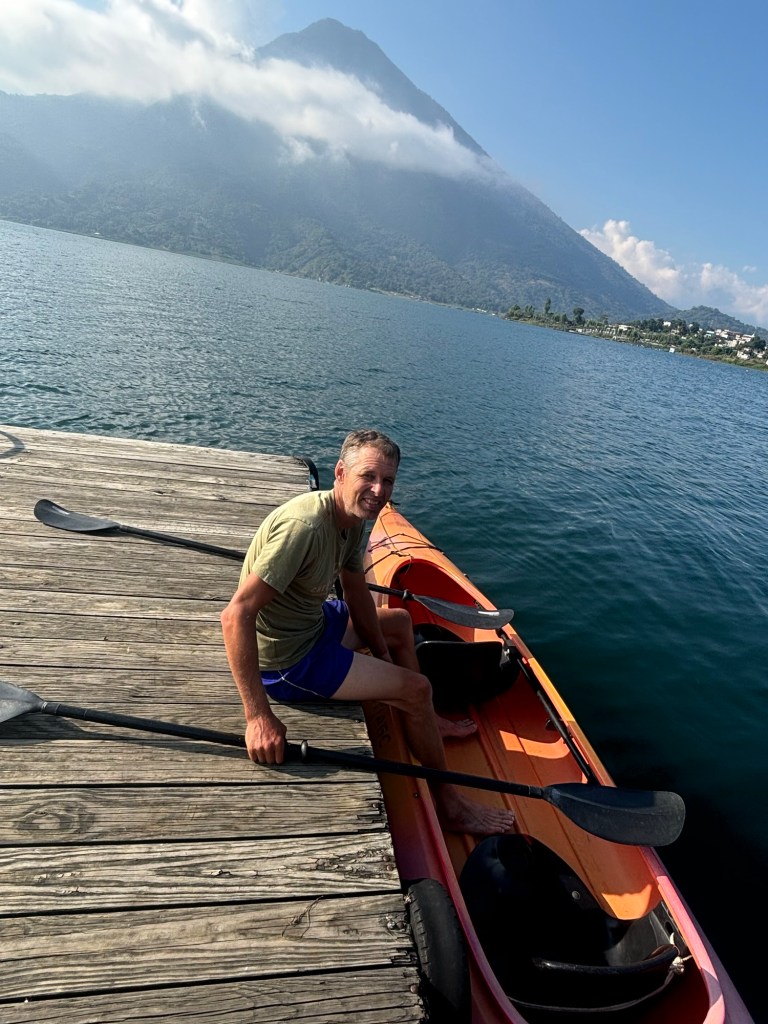
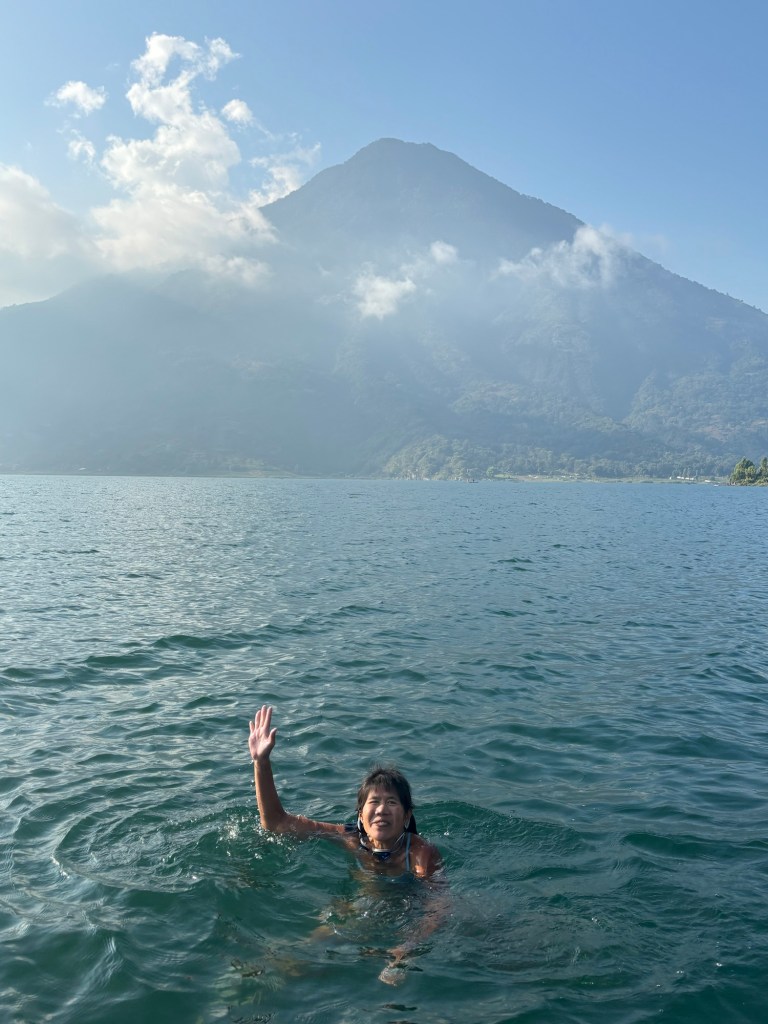
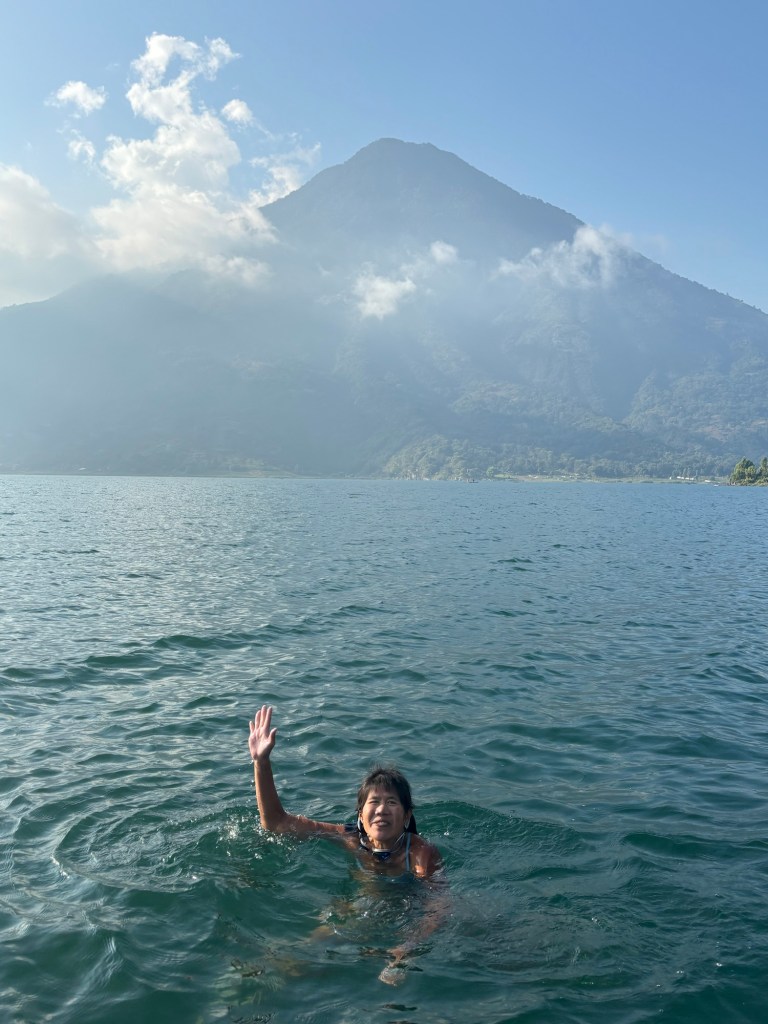
Diana swam in Lake Atitlin of course – despite Chakonis, the dragon like creature that lives in the depths and lures people to the middle before it takes them under…
Discover more from Diana & John's Biking Adventures
Subscribe to get the latest posts sent to your email.
 Diana & John's Biking Adventures
Wow! Amazing experiences & observations. If you pass Cervecería 14 outside of Antigua (Km 51.5 RN10, Camino a San Miguel Dueñas, Cd Vieja, Guatemala) be sure to stop . It’s our favorite brewery!
LikeLike
I don’t think we passed it today, but we’ll be looking over the next few days. Who is this by the way? 😁
LikeLike
Awesome journey. Great perspective on life in the USA and how good we have it. Happy Thanksgiving my friends 😊
LikeLiked by 1 person
that’s gotta be one of the prettiest lakes on the planet! -Jacob
LikeLike
Yes! And it got even better today. So crazy the views we had this morning! Hope you’re feeling better!
LikeLike
The two of you are inspirational, but the only time I’ve been on a bike recently is in my dreams. So, I will have to live vicariously through your adventures. I can’t imagine the beauty, the challenges, the different culture, the language barriers. This is an expedition beyond my wildest dreams. Thank you for sharing it with all of us. I’ll be looking for currency bearing your images.
Kathy Boecher
LikeLike
Thanks Kathy! We – and especially Diana – love hearing from you. Glad you’re enjoying the blog!
LikeLiked by 1 person
John, you’re taking me back to 1990, when I traveled through much of Guatemala, including Lake Atitlan. The civil war was still being fought. Some areas, such as the southern end of the lake, were no-go zones. The army was ubiquitous. But the beauty and hospitality of the people was the same. You’ll love Antigua, my favorite city. Your elan is an inspiration. Continued safe travels…. Floater
LikeLike
Good to hear from you Floater! That’s crazy that you were here in 1990 – while the civil war was still going on. Would love to hear more about that trip some time!
LikeLike
Great pictures-really looks idyllic! And kudos to the climb you did to get there-worth the climb for sure.
A little news from our neighbors to the South in Mexico (to your north now)…The new Mexican President bristled at Trump’s proposed %25 tariffs on all goods from Mexico (and Canada)-she suggested dialogue between neighbors as opposed to threats-sounds good to me.
A quick quote from one of my favorite travel writers, Rick Steves…”To me, understanding people and their lives is what travel is about, no matter where you go.” Thanks for sharing your travel and impressions with us!
LikeLike
Dialogue? What kind of radical idea is that?!? 😁
LikeLike
We very much enjoy hearing about your travels. We love challenges.
Rock and Jane
LikeLike
Diana hopes that you’re staying healthy and well and enjoying family time at your beautiful cabin in the north woods!
LikeLike