Ibarra – Quiroga, Ecuador
A thoroughly civilized day.
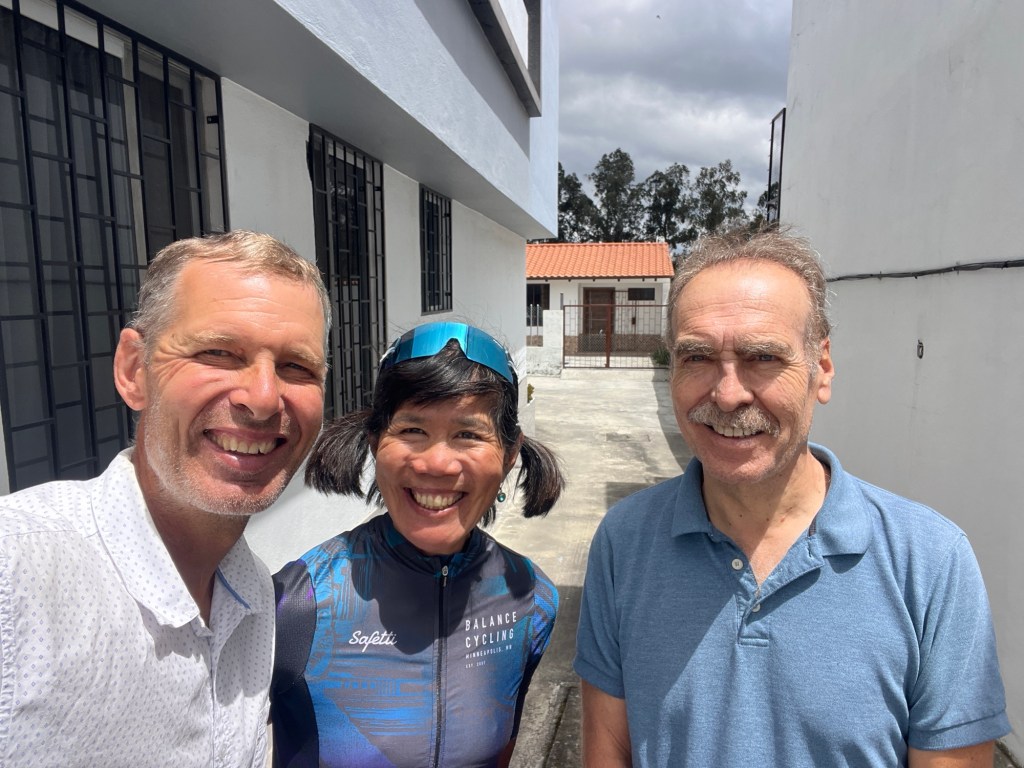
- Pancake breakfast with Warm Showers hosts Elaine and Marian.
- A tour of Crecer – Elaine’s non-profit facility in Ibarra. (More on Crecer later).
- Bagels, a loaf of real bread, and a good donut in Ibarra. (None of these things sound like a big deal. But after several thousand miles of Latin America you can’t help having some longings . . .)
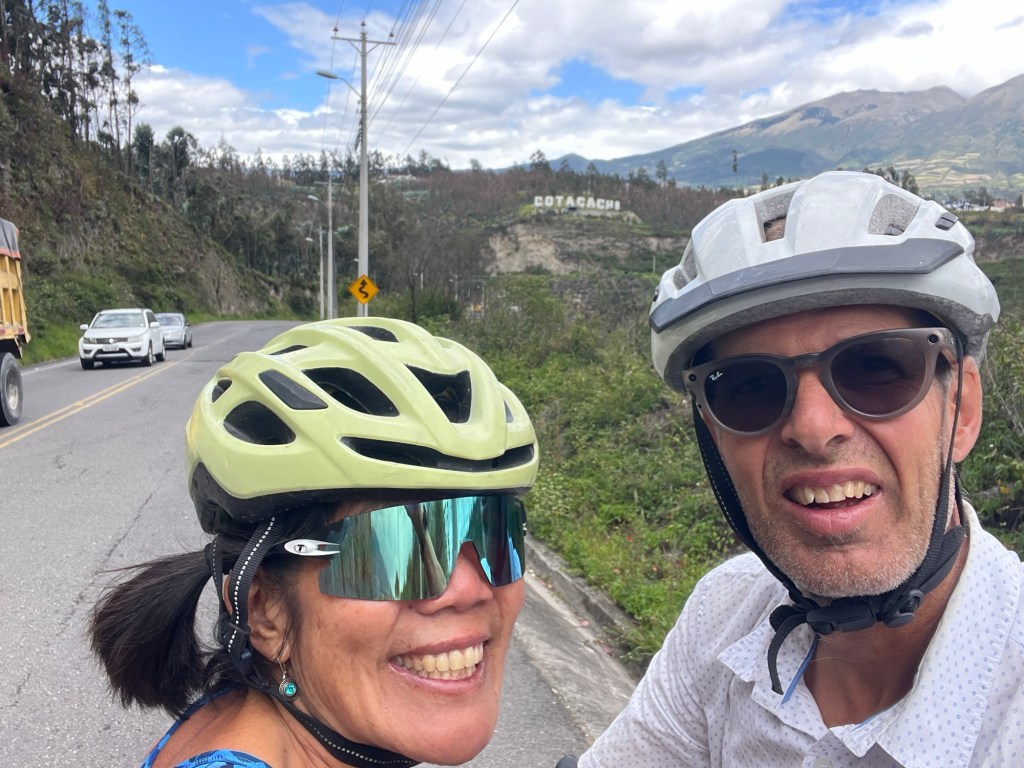
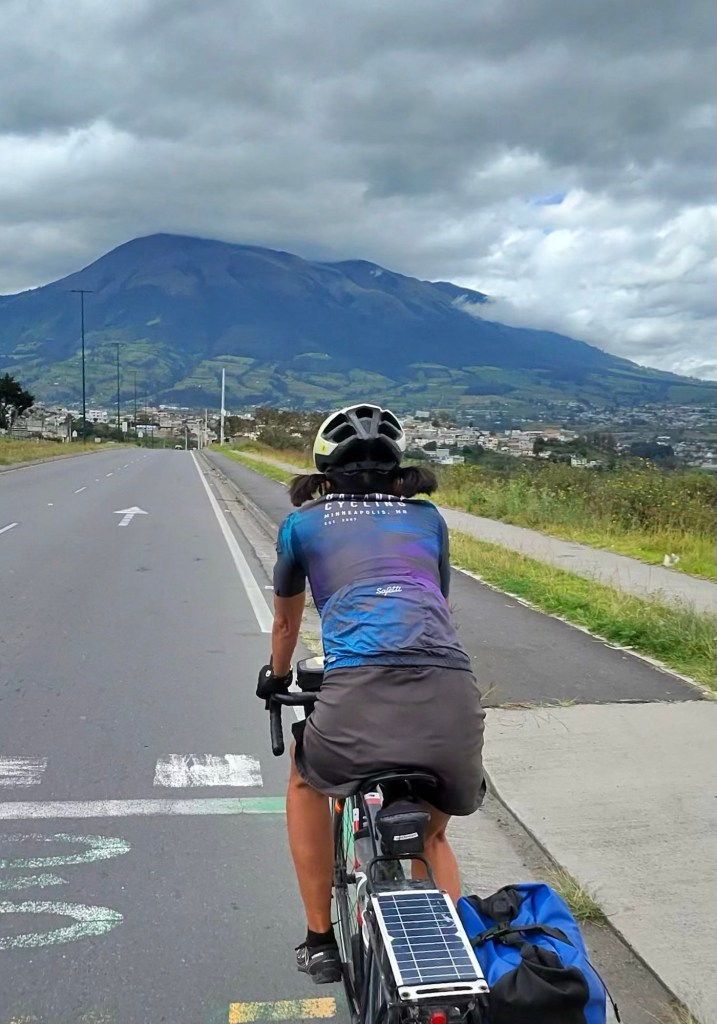
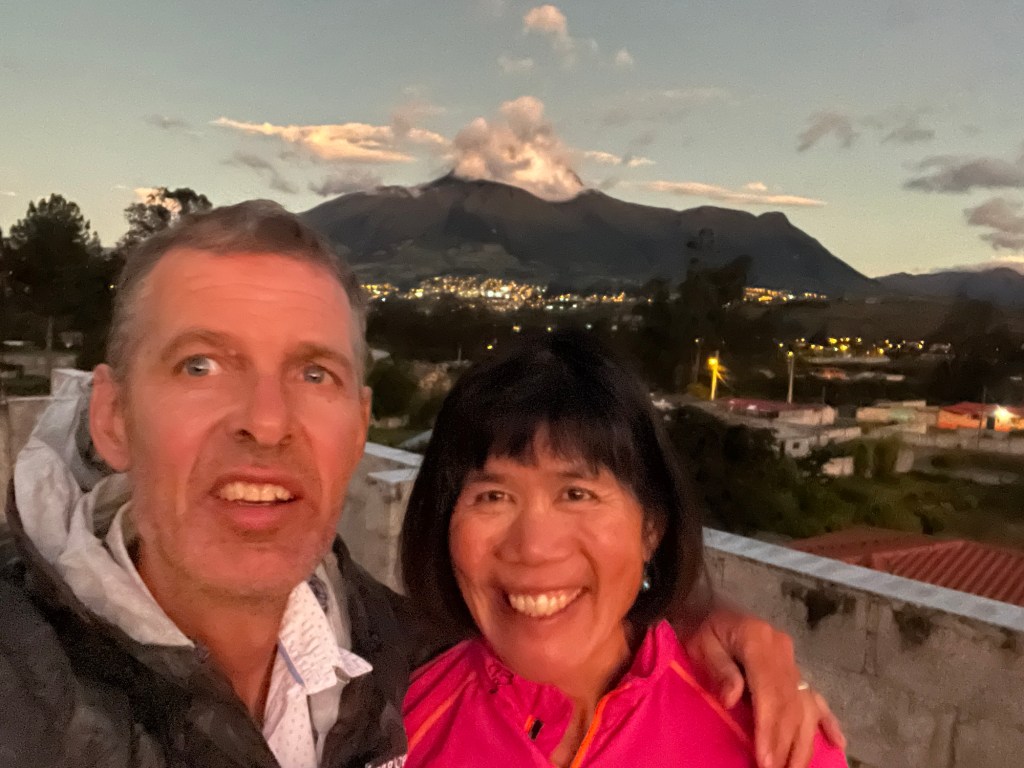
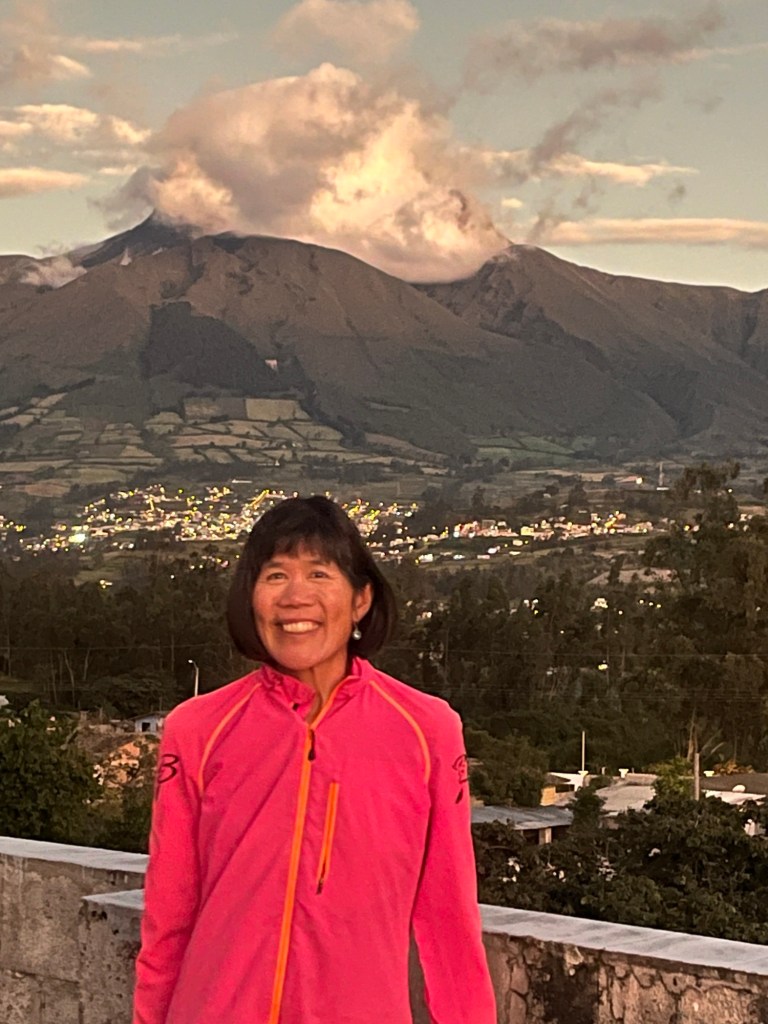
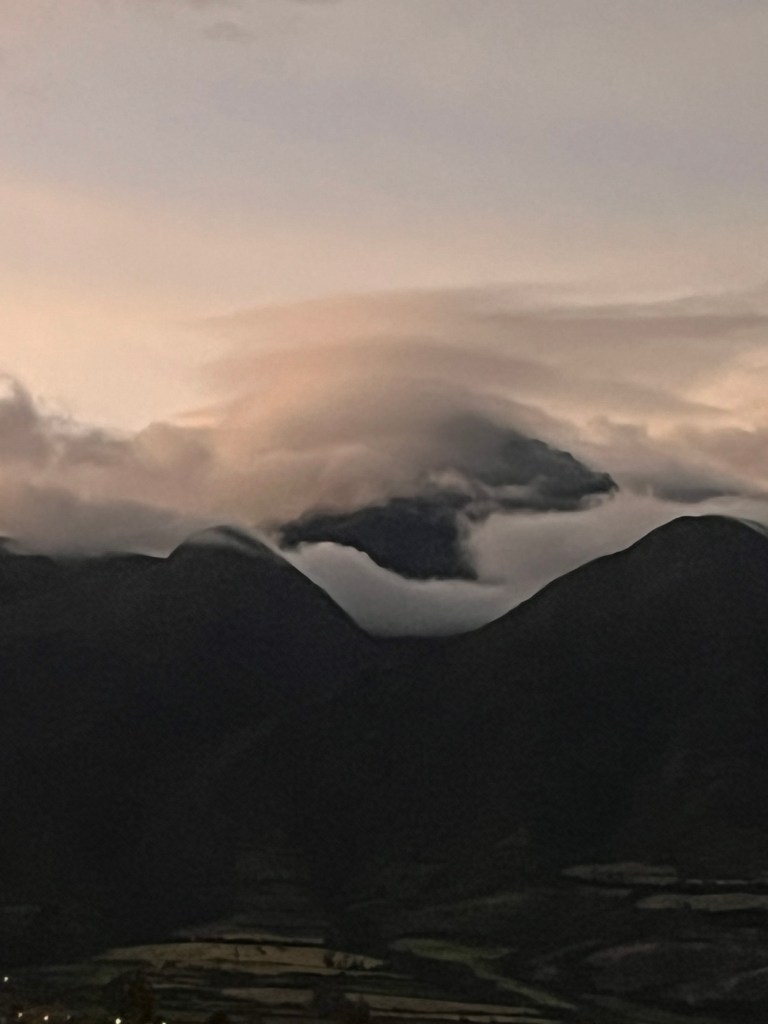
- A 20-mile ride through a forest of volcanoes to our air-bnb at the foot of the hill leading up to Laguna de Cuicocha – the crater lake we hike around tomorrow.
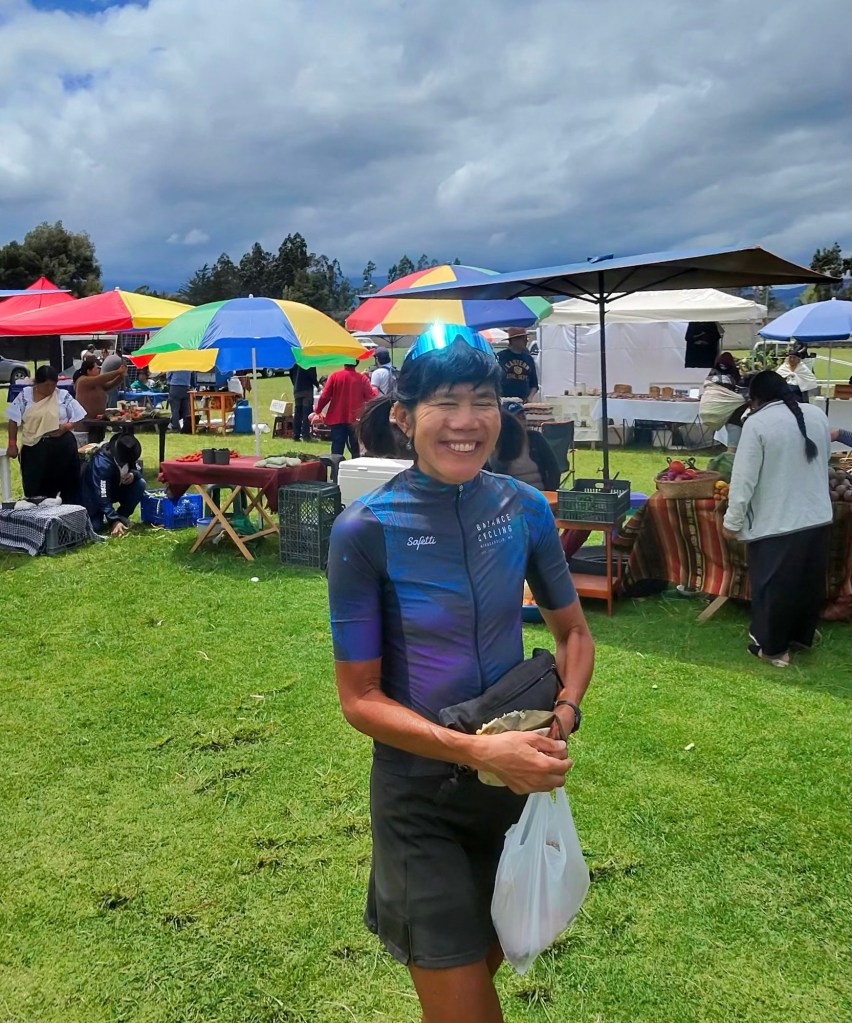
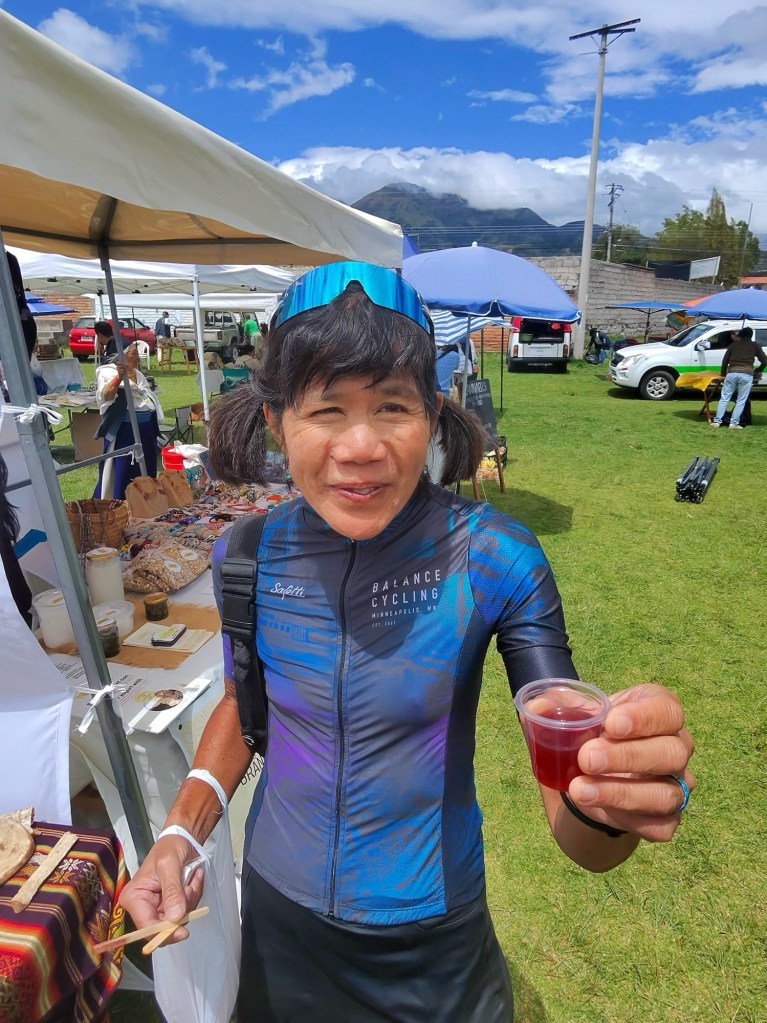
- A stop at a farmer’s market in Cotacachi – kind of a hip town where there are apparently a bunch of American expats. (Diana ended up meeting one while getting her hair cut this afternoon. Lorie is from Florida. She just woke up one morning and decided to move here 12 years ago. She might move with her friend to Argentina – but not without her two cats, three dogs, and two birds . . . Diana thoroughly enjoyed meeting her – though Lorie refused to have her picture taken for the blog because she was in the middle of her hair styling . . .)
- A grilled cheese sandwich made with the sourdough/rye type bread we purchased in Ibarra this morning. (Can I just say how good that was. I know everyone wants to hear about all the native foods we’re eating – and we are – but a simple grilled cheese sandwich with a little slice of tomato – amazing!)
And looking forward to making our own dinner from the farmer’s market ingredients.
Okay, let’s focus on Elaine’s non-profit for a minute because it provides at least a small window into Ecuadorian life more generally.
Elaine is an occupational therapist; she even has a PhD in the topic. I’m still not real certain what occupational therapy is – but I think the idea is to help people – many of whom have some type of disability – develop their skills to do the best they can in whatever they choose to do in life.
Elaine was doing this work in Maryland while she was raising her kids – but my sense is that she has always been in interested in Latin America and places like Ecuador. When the kids were young they hosted five different exchange students – I think four out of the five were from Latin America.
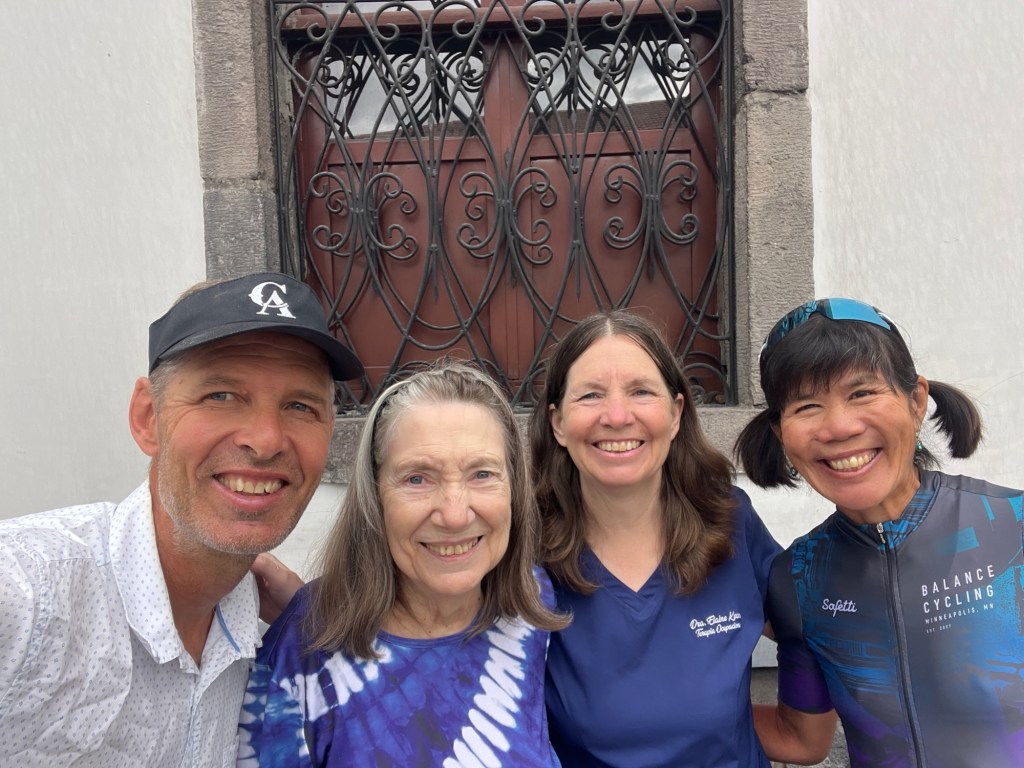
As Elaine puts it, her empty nest project is this non-profit: Crecer – meaning “Grow” in Español. Crecer helps around 70 people and families – with about 60% of their clients being children. Many of Crecer’s clients are on the autism spectrum.
Elaine explained all this to us over dinner and breakfast – but I didn’t really understand what she was talking about until she showed us around this morning. The place is kind of like a combination of a school and a clinic. There’s a group kitchen space. A work space that looks a little like an arts and crafts room at a school. There’s a room that looks like the school nurse’s room where they can work on things like getting in and out of bed. And there’s some office space – but the whole facility looks like it does double duty.
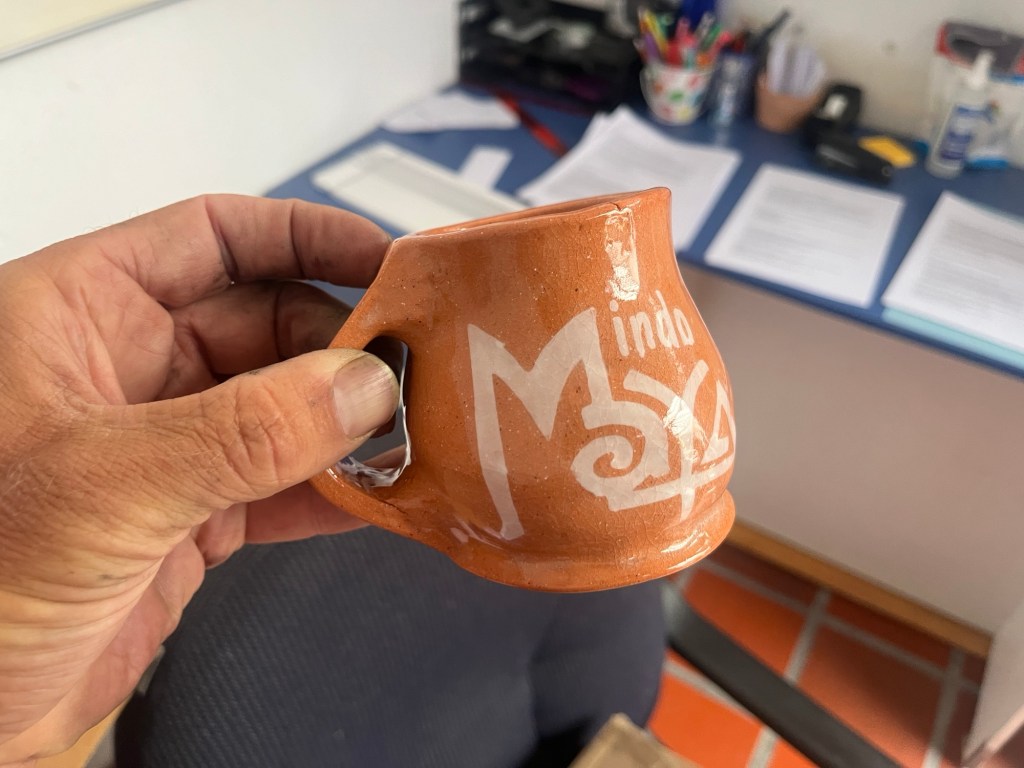
Two men arrived while we were at the facility. Elaine explained that both of them are on the spectrum and would have a hard time working in regular jobs. As I understand it, Elaine has them making ceramic mugs out of clay for a nearby coffee company; the company pays Crecer for the mugs and then they give the mugs out at the end of their coffee tours. In this way the men have a job to do and they make a little money. I have always loved this type of win-win creativity; kudos to Elaine for making this happen . . .
A big part of the model for the place are occupational therapy students – both local and international – that Elaine has helping at the facility. I guess she has partnerships with at least 15 different U.S. universities. The students gain some valuable practical experience and help keep Crecer running smoothly.
I tell you all this for a few reasons. First, we were very impressed by the facility and by Elaine’s dedication to her clients and the Ibarra community. Second, I think it’s sometimes easy to feel like everything is different in different parts of the world.
Hearing about Crecer and seeing Crecer’s clients at work helps you see how much we all have in common. Just like in America, families in Ecuador have kids with autism or other disabilities. Just like in America, families have to figure out how to negotiate life as best they can. And, just like in America, remarkable individuals like Elaine help these families have a little bit of a better life. These points are obvious, I guess, but it’s easy to lose sight of our commonalities sometimes . . .
Finally, I mention all this because I figure there are probably a few members of our blog community who might want to learn more about Crecer’s work – or maybe make a contribution to the cause. Either way, I’m sure Elaine would love to hear from you . . .
Changing gears, I wanted to take a minute on Ecuador more generally. According to the Ecuadorian constitution all underground resources belong to the state. Specifically, the petroleum industry is owned by the state. And this is where the government generates much of its revenues. Of course, that makes you wonder about what is to come here. I mean, I think, I hope, that the use of petroleum products declines around the world in the next 20 years. If I’m Ecuador I’m investing in new ways to grow the economy – maybe by investing in educating my people . . . before the party is over and all that oil money dries up . . .
On a related note, I guess there were daily electrical blackouts in the country in 2024 – ending just over a month ago. Something like 70% of Ecuador’s energy comes from hydropower – but there was a huge drought in Ecuador that resulted in less water to produce power. Not hard to put these themes together . . . Selling oil is great for now – but burning oil is causing climate change, which is causing things like droughts in Ecuador. One of the good things about this whole trip is that we can see first-hand how we’re all in this boat together on this planet . . .
But the other big Ecuador thing to think about is the whole narco problem. Ecuador’s neighbors, Colombia and Peru, are the two biggest producers of cocaine in the world. But the U.S. and Colombia really focused on cracking down on the cartels in Colombia – which was, I guess, successful for Colombia. Unfortunately, the cartels mostly just moved next door to Ecuador – where there wasn’t much of a developed police presence to combat them.
The result? Lots of bad stuff bubbled up last year and now the government is trying to decide whether to crack down in the same way that El Salvador did. Which basically would mean indiscriminately locking up gang members without necessarily any due process. It sounds like people in Ecuador are okay with this – they just don’t want to live in fear . . . We’ll see – because national elections are coming up on February 9 . . .
Just to be clear, we haven’t seen any of this. We hear it is the worst on the coast in Guayanquill. We aren’t planning to go there . . .
Tomorrow we head up the mountain for our hike around Laguna de Cuicocha. Then we come back down and ride to Otavalo, where there is apparently a big market with lots of indigenous craft stuff.
And then on to Quito. Thanks to Margit B for her introductions with yet another friend there. Looking forward to it . . .
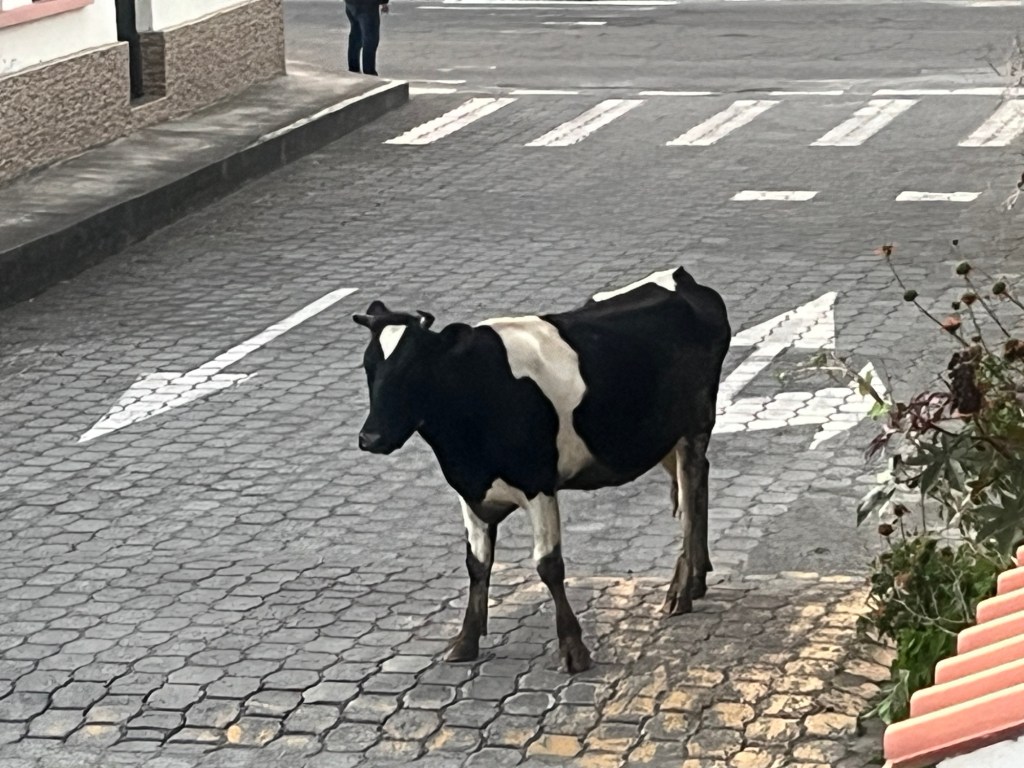
P.s. – Over dinner we started hearing some strange noises outside. We finally investigated – only to find a lost cow lowing for attention right in the middle of the street. Latin America is not boring . . .
Discover more from Diana & John's Biking Adventures
Subscribe to get the latest posts sent to your email.
 Diana & John's Biking Adventures
I’m curious what more you learn about conditions for Ecuadorians. They make up a huge percentage of newcomer immigrants in Mpls. What do you about what’s driving it? Will Ecuador take them back?
P.S. your blog is spectacular.
Sue Smukler
LikeLike
You are soaking it all in…soon you’ll get used to the roosters crowing every morning. So envious…enjoy each day!
I want a chanco (roasted pig) photo!
Mark
LikeLike
Gorgeous.
Laura B
LikeLike
That is such a great story about Elaine and her business, it’s these kinds of things that you two will always remember about the trip. Sure the upward miles, challenges with cultures, minimal accommodations, etc. But the interpersonal relationships made along the way that make us happy to be humans knowing there is something people do to love on one another will always stand out.
John Filander
LikeLike
Amazing photos and it was cool to learn about Elaine and her nonprofit. You will LOVE Otavalo! Corey and I were there a very long time ago (1995?). The market was beautiful, and as a knitter, I was so impressed with all the vendors and their hand-knit sweaters. Got one for Corey, and as I was leaving, the woman motioned for me to come back get another one – same design and colors – toddler size. Wink wink. Have a phenomenal time! LOVE Ecuador.
LikeLike