Jumilla – El Palomar, Spain
It’s not necessarily popular to say that Europe was the driver of modern civilization. But I think it’s fair to say that the West drove scientific thought and advances for a long time. (Yes, I agree there are exceptions. We can point to lots of cultures being advanced in a lot of things. The Chinese developed gun powder. The Incas did astronomy. Native Americans “discovered” America long before Christopher Columbus. Etc. But in terms of putting it all together and really advancing the ball I don’t think there is much question . . .)
Don’t worry, though. I’m not arguing that there was some genetic superiority or anything.
Far from it.
I think the reason Europe was able to put it all together had to do with the specific conditions found on this continent. A temperate climate. Just the right amount of precipitation. Not oppressively hot and humid. Really nice conditions for growing all kinds of fruits and vegetables. And, at least in Western Europe, not so cold in winter that it became impossible to do anything productive.
In other words, a climate that lends itself to maybe an easier life than in many other parts of the world.
We’ve already borne witness to a lot of this in our short time in Spain. Fruits and vegetables growing everywhere. Just kind of a fertile landscape that would be the envy of many other parts of the world. And great variety too. Apples, olives, peaches, plums, tomatoes, almonds, grapes, grains, livestock – all grown within a short stretch on the Spanish planes.
I guess my sense is that, rather than give credit to the Europeans for producing Newton and Copernicus and Aristotle and Einstein, maybe the question should be why it took them so long?
Probably the answer to that has to do with another theme we’ve been observing: the feudal system that reigned supreme for so long around here. As we’re biking along we keep seeing evidence of this old way of life. Seems like every town we bike past has a big castle or edifice up on the hill – overlooking, and, I guess, protecting, the town.
It’s easy to imagine what it looked like in the past. Some duke “owned” all the land that they could see – and all the poor people who worked the land had to pay homage to him. Worse, they were required to go fight pointless and bloody battles for his liege.
Don’t get me wrong. It’s amazing to see these shrines to the past. But it wasn’t exactly a system that helped people get ahead in the world.
It was only after Europe began to shed this backwards way of life that the enlightenment came along, and, with it, some new ideas . . .
Alright, that’s enough postulating on history for today.
Our ride . . . Not a fireworks display of amazing sites from start to finish. When we headed out from Jumilla it was cold and dreary – with a misty fog hanging over the mountains.

Our first job . . . A slow, grinding ascent; we probably went up for about ten miles.
Really foggy and cold at the top.
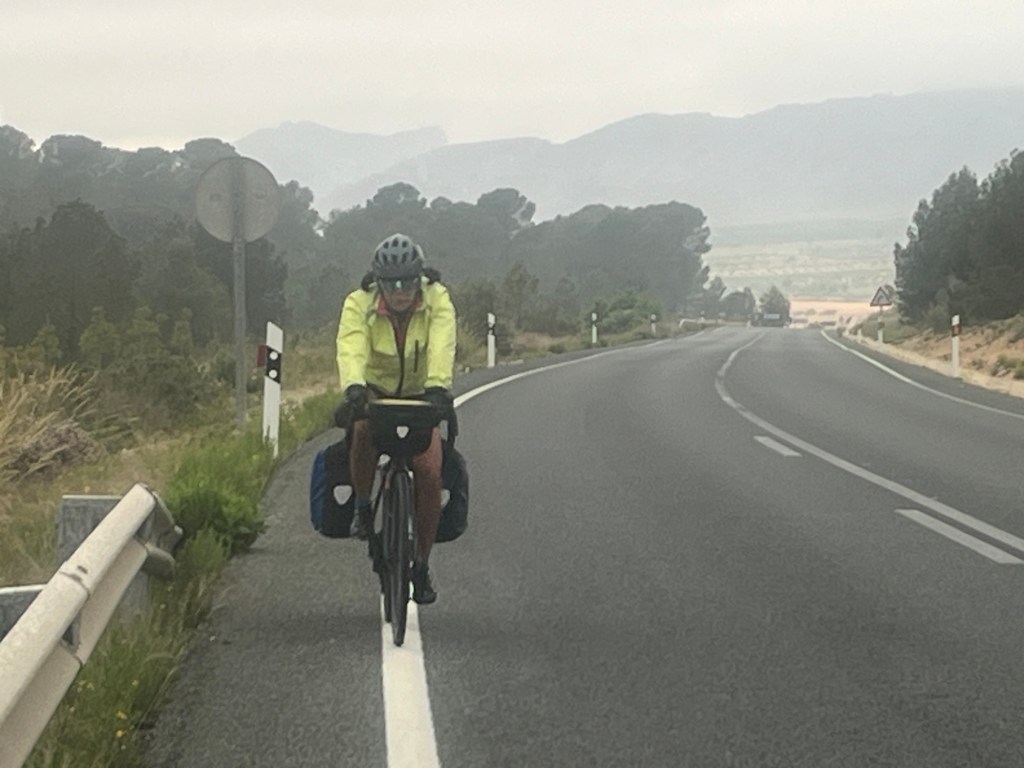
But we finally came down, and after a little wrong-headed escapade on an ill-conceived bike path, we enjoyed lunch in the nice town of Villena.
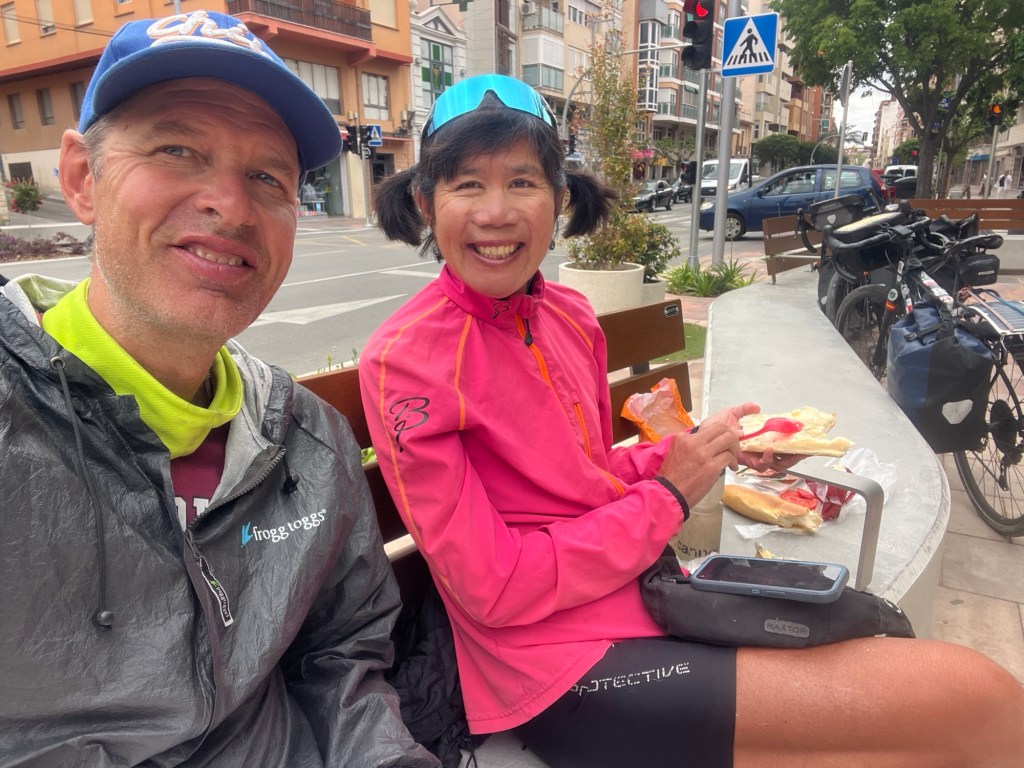
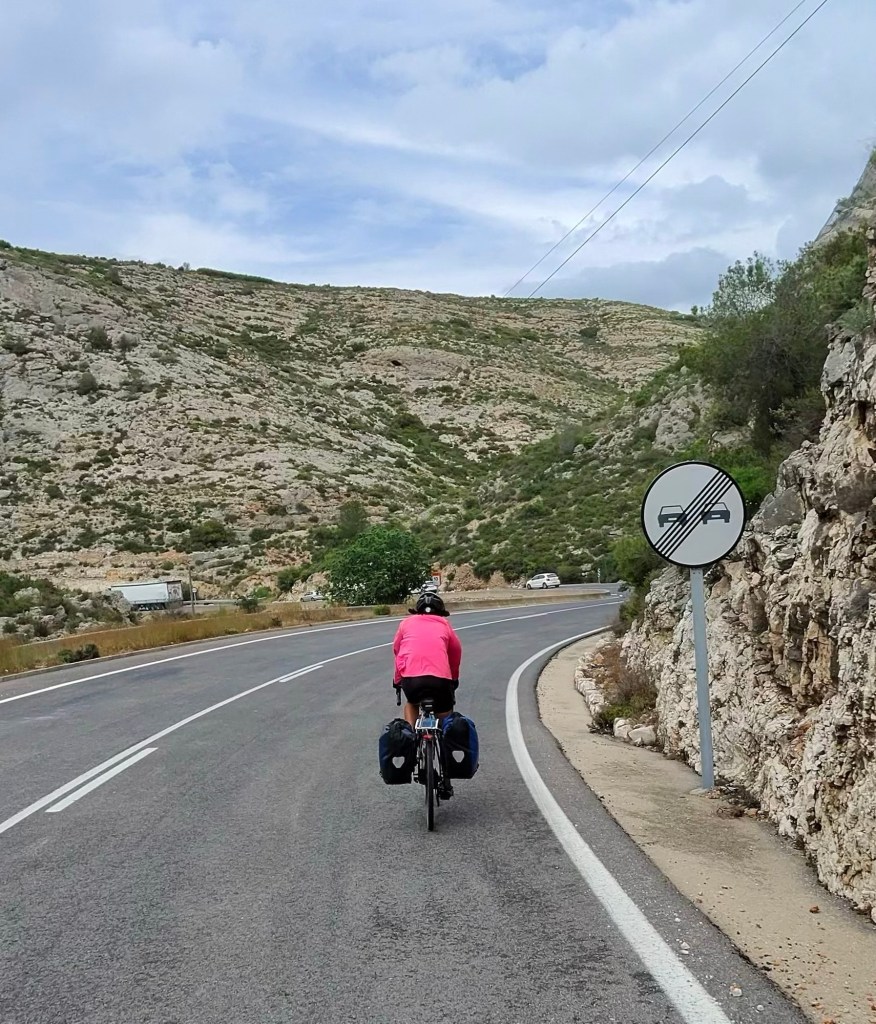
We ended up basically repeating this pattern in the afternoon. Long climb followed by descent to our destination – closer to the coast – in the town of El Palomar.
As we finished this second climb we were commenting on how it had not been a highlight day. Not a bad day. Just not a highlight day.
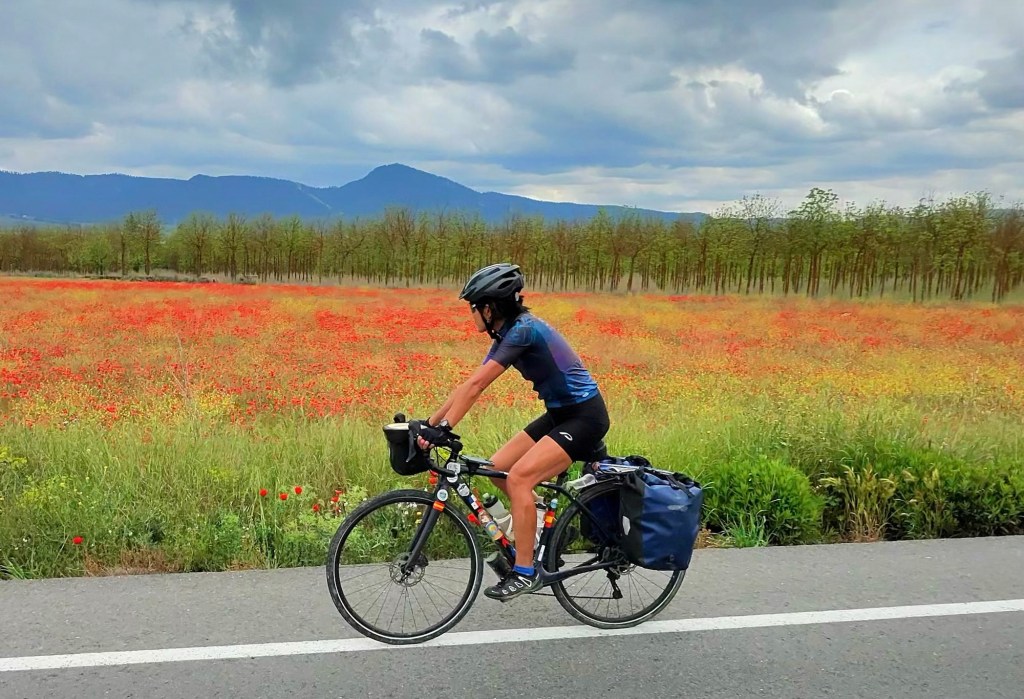
But then we started to descend from the fertile plane that we were in.
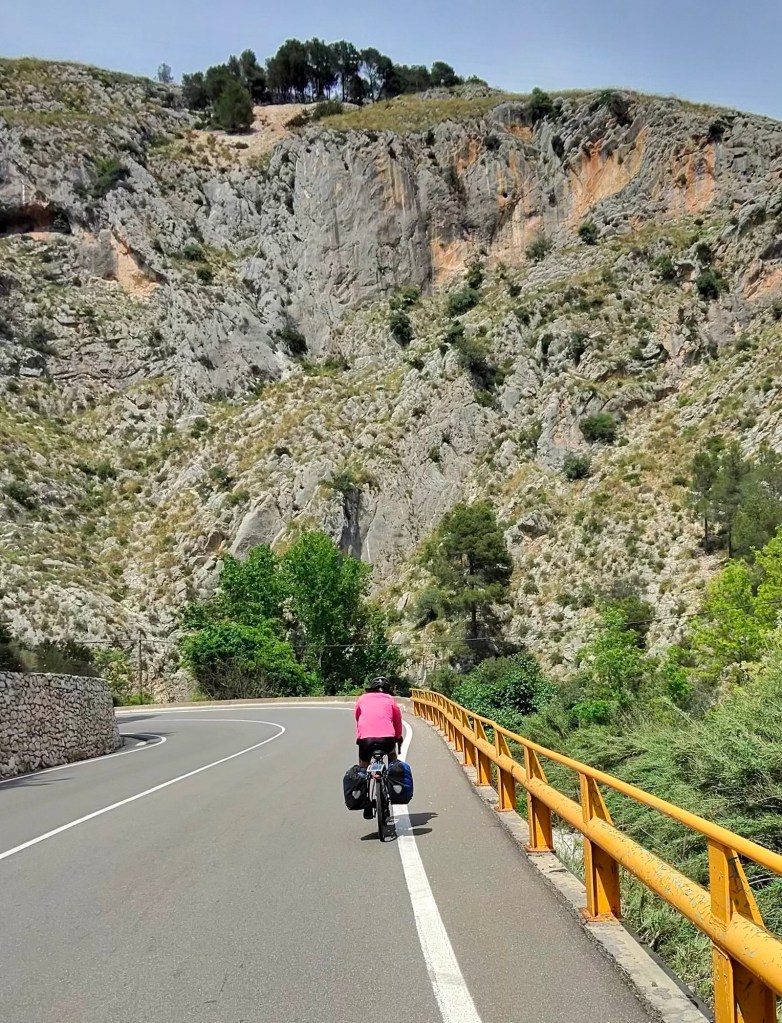
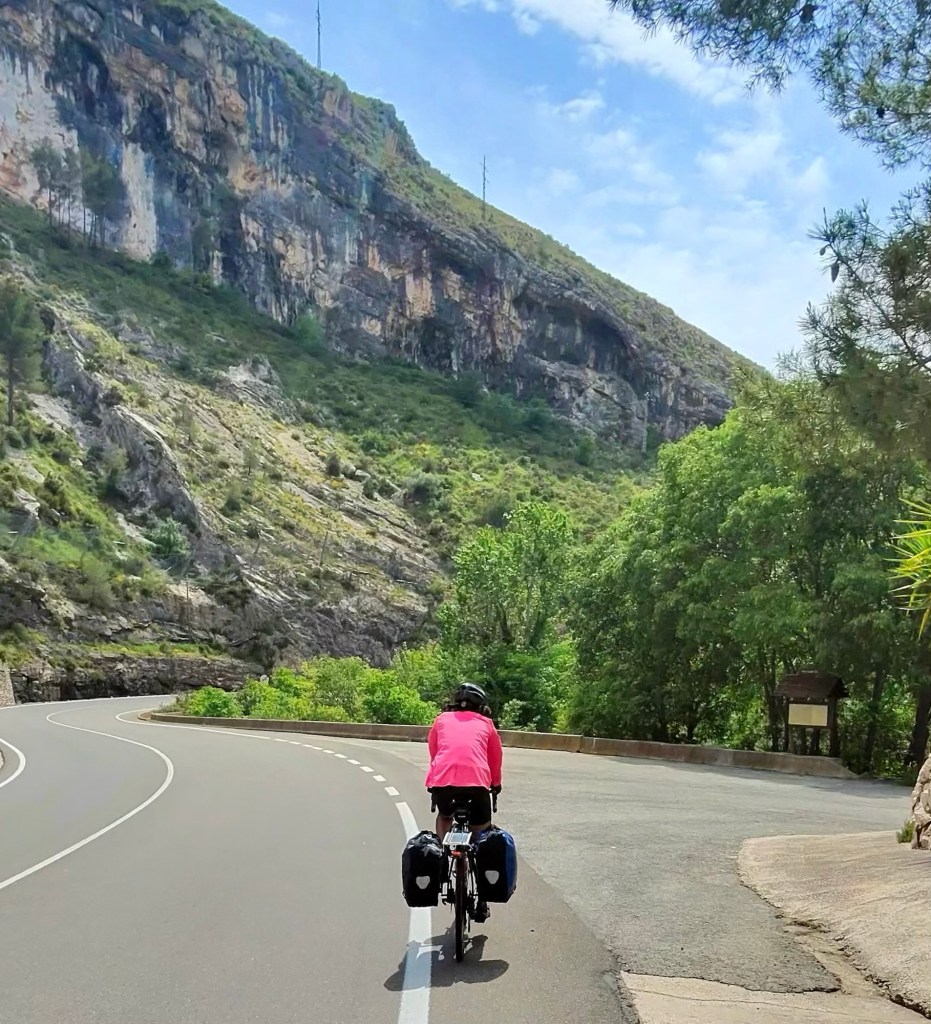
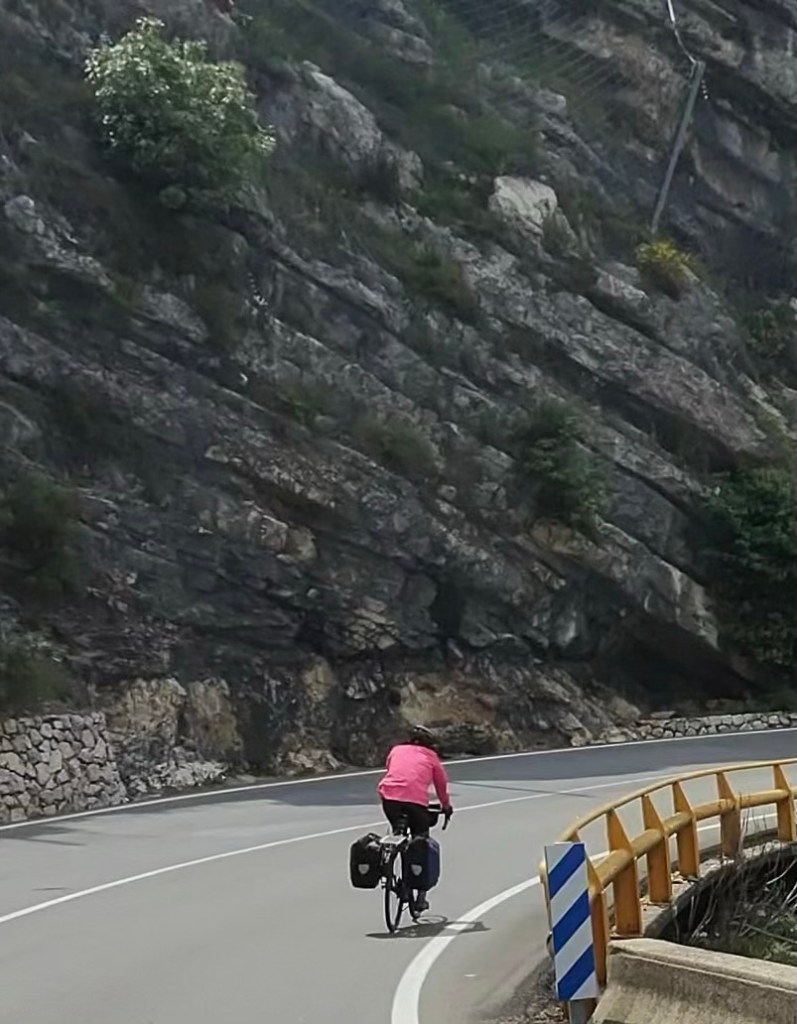
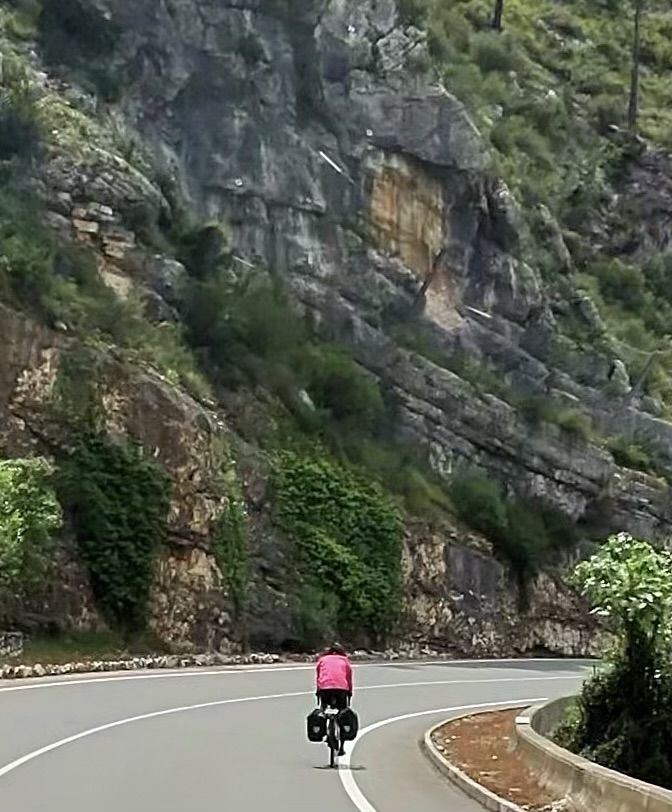
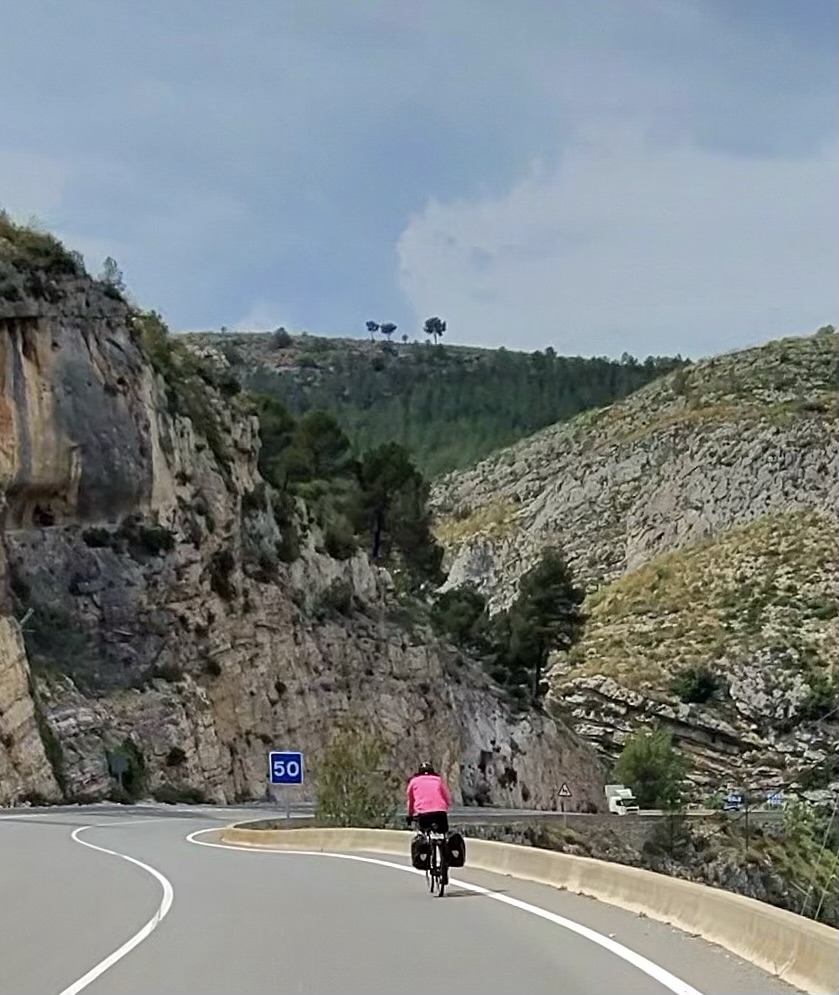
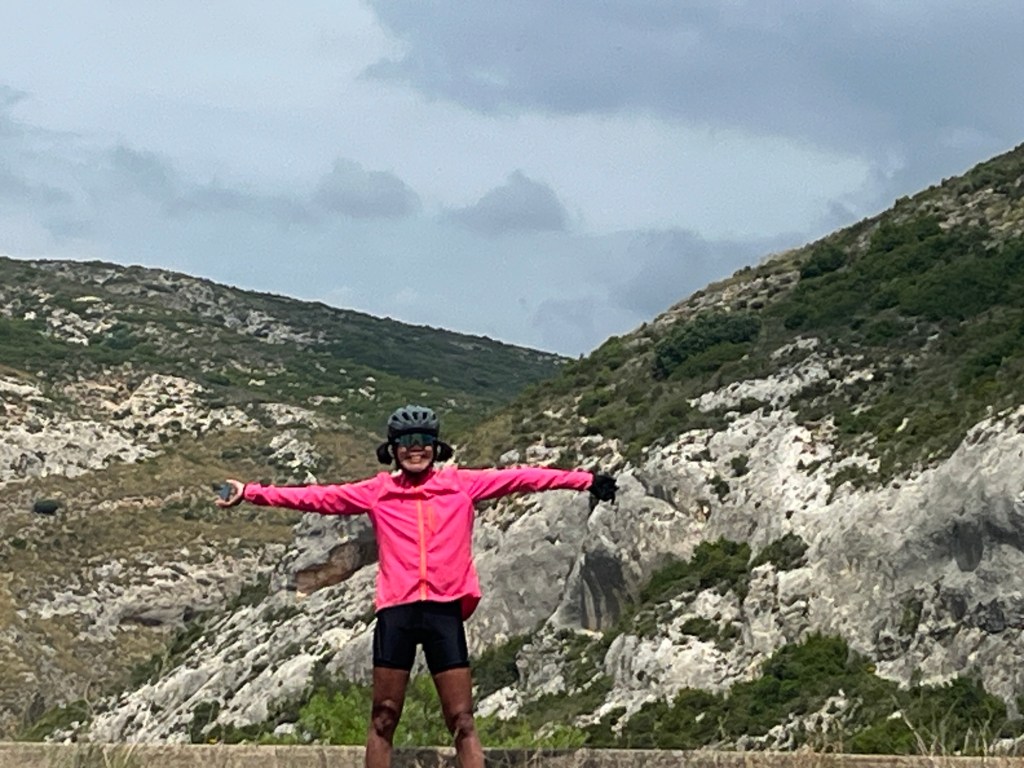
And all of a sudden the terrain became magical. We’re following a big rocky canyon that’s been carved into the earth over millennia. The day’s fireworks display had been kind of just okay for a while, but the grand finale was amazing.
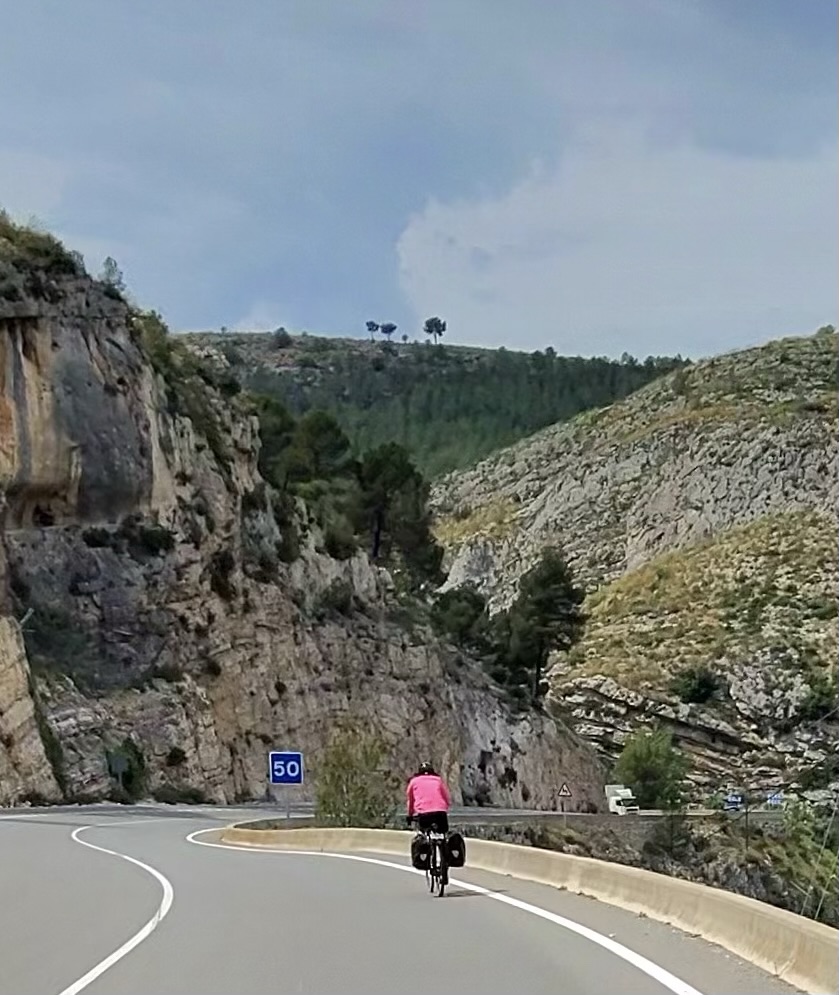
After descending we finally found our way to a campground. It’s not picturesque. Basically a gravel parking lot with a few newly planted trees. But there are bathrooms, hot showers, and, after a little drama, a “grill” for making dinner.

I’ll just share the highlights . . .
This is one of those campgrounds where pretty much everyone else has a camper vehicle of some kind. There are some Sprinter van types, and some who look like they pretty much live here.
You know the ones. They have a satellite dish on the roof. They have two dogs barking at anyone who passes near their encampment. They have music, tables and chairs, and probably a bean bag toss in their “yard.”
When we first enter the grounds – which are secured behind a big electronic gate, we ask the groundskeeper about a grill – because the website said there was a grill – and, relying upon that information, we stopped and bought steaks and potatoes and stuff. He tells us that the grill is on the other side of the bathrooms.
But when we look there all we see is a stone table of sorts, with a sloping roof over the top. There is soot, so it’s clear that someone has made a fire there at some time in the past, but this is not a grill in any American sense of the word.
We start talking about Plan B.
Diana suggests making a steak soup surprise on the stovetop. And we agree that maybe cooking at European campgrounds is not in the cards . . .
Kind of a bummer, but what can we do?
But then the campground host person comes round to collect her rent. When Diana asks about the grill she reiterates that the grill is behind the building – but she adds that they will provide some kind of grate. That’s good – but what about fuel?
“No. No carbon (charcoal).”
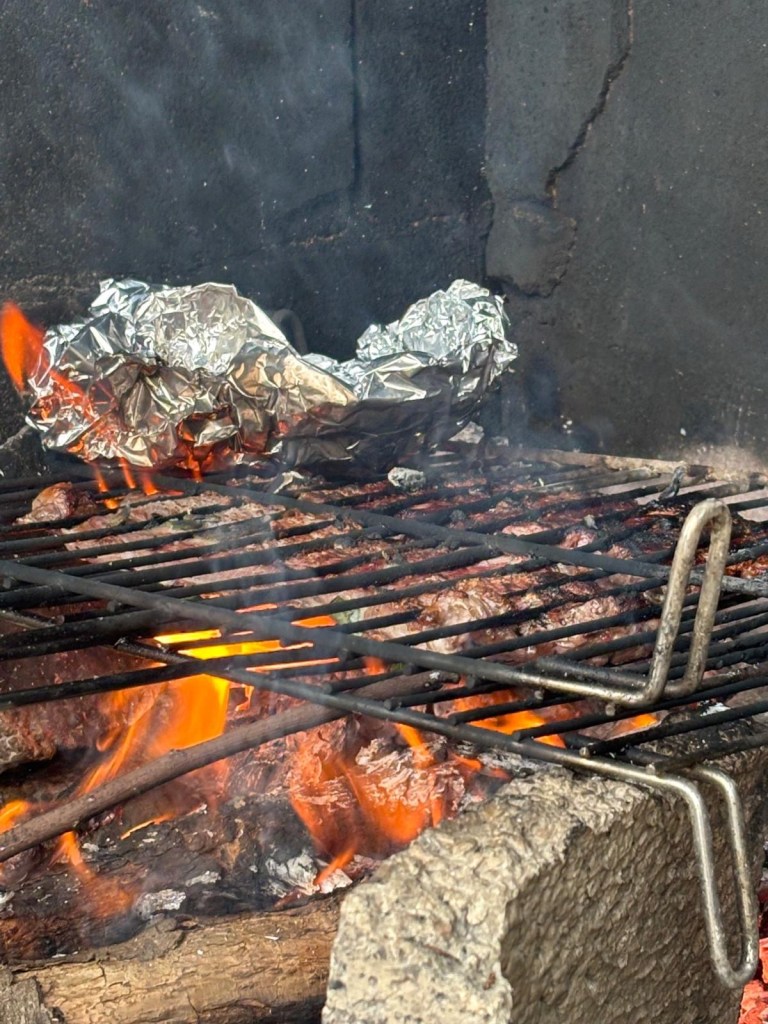
But then she points to the other side of the big electronic gate. This is where our universal language skills come in. She’s talking in Spanish but whatever she says, her words clearly mean: “Collect sticks . . .”
Okay. Now we’re talking. Collecting sticks is well within my limited skillset.
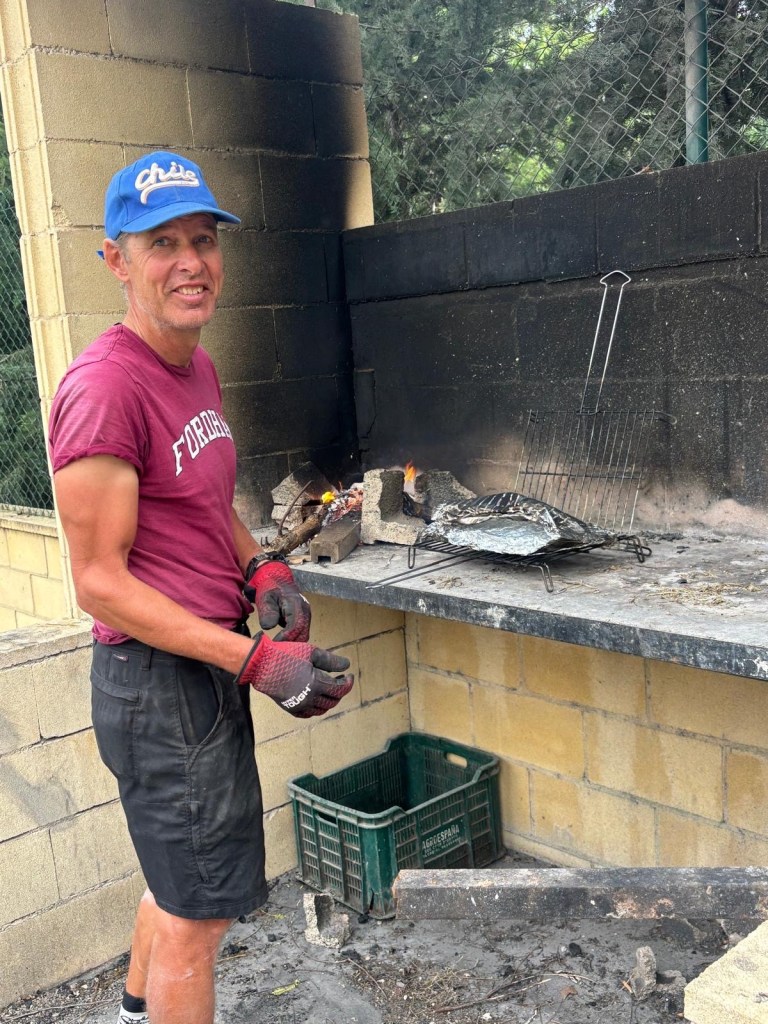
When I return with my firewood, the neighbor with the two dogs, the music, the satellite dish, and the bean bag toss approaches. He has a nice grate thing for us.
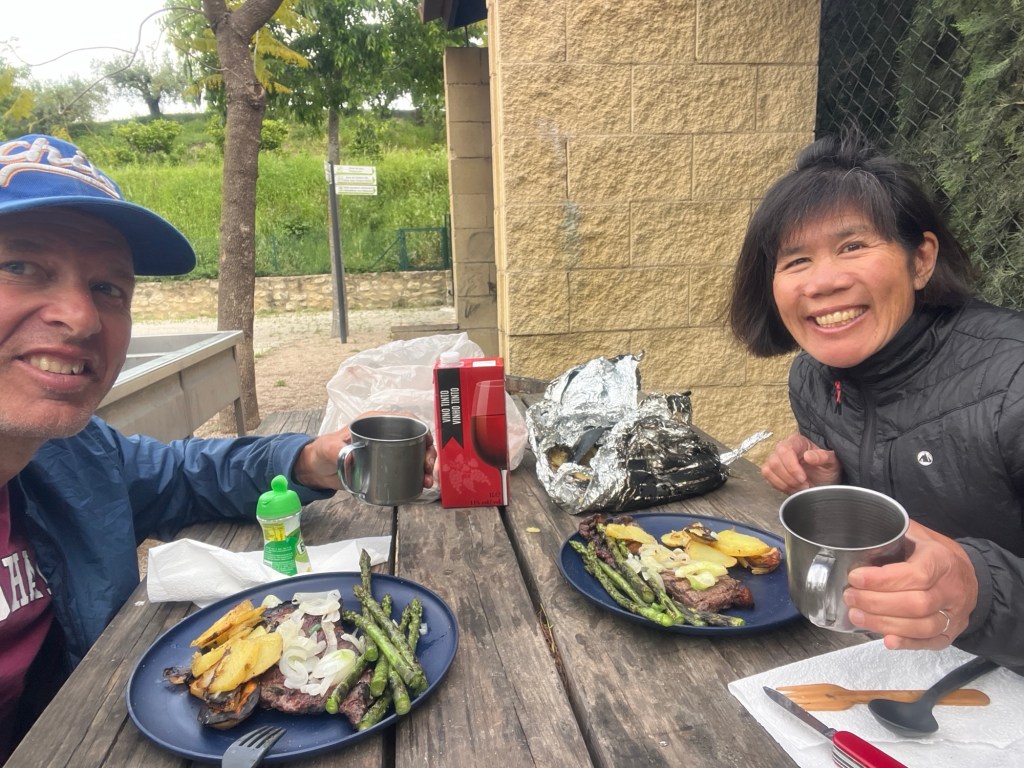
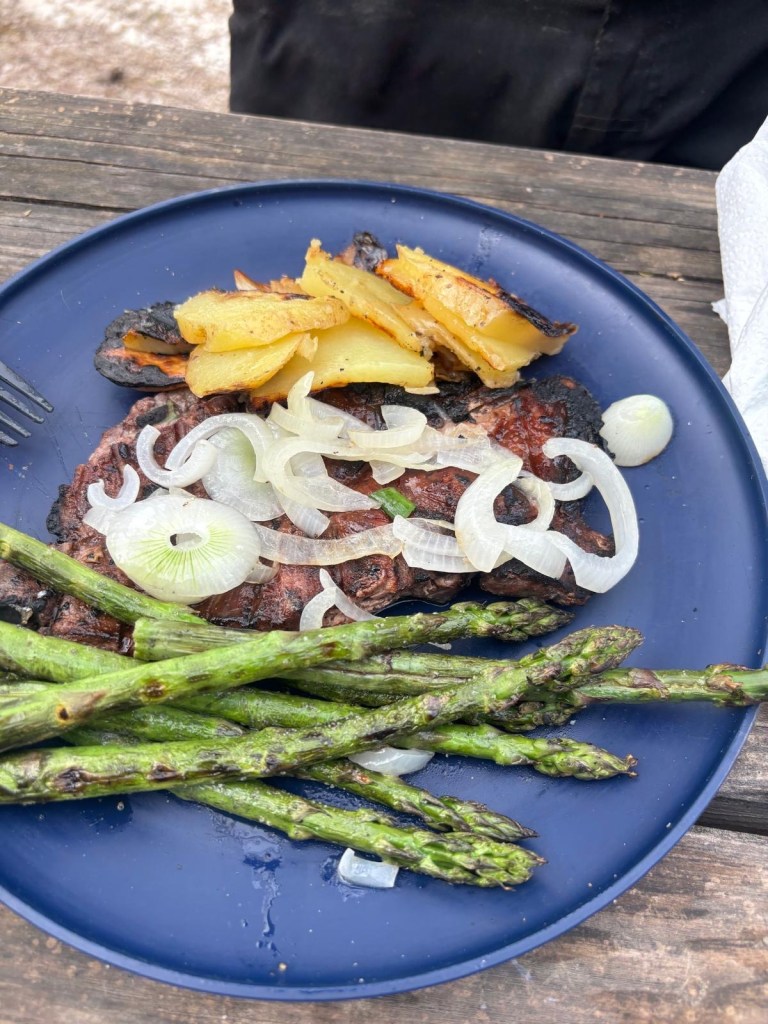
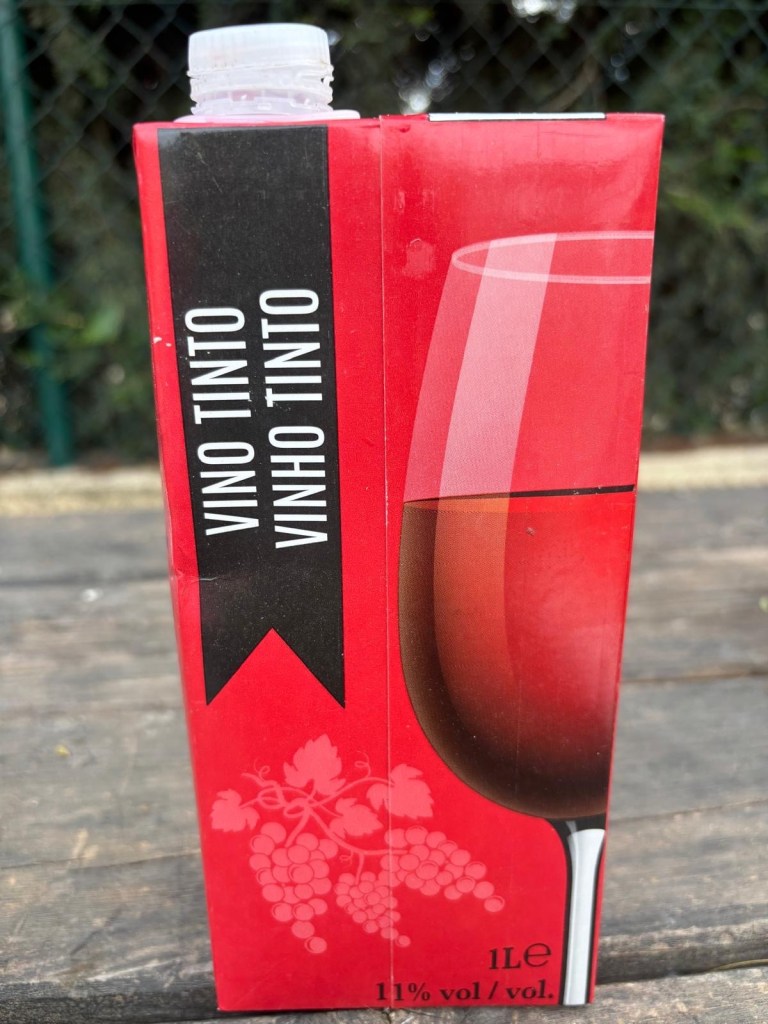
Within half hour we are eating. Steak and potatoes. Fried onions. Grilled asparagus. Boxed wine (99 cents at Aldi’s).
One of the best meals we have had in a long time.
So now we’re all settled into the tent for the evening. We’re a little nervous because Campground Lady told us it was going to rain hard tonight. But I’m pretty sure that is malarkey. Because our resident meteorologist, Dr. Liu, has already covered that ground. According to her, there are severe thunderstorm warnings, with hale and everything – starting at noon tomorrow.
That’s what I’m counting on . . .
Our plan? Get up early and bike as fast as we can – which is not very fast with Old Dan and Little Ann fully loaded – and hope we can make Valencia before all Hell breaks loose . . .


Discover more from Diana & John's Biking Adventures
Subscribe to get the latest posts sent to your email.
 Diana & John's Biking Adventures
John,
Dang, how to you keep those biceps looking so buff after biking for the last nine months?
dallas
LikeLike
Ha. Funny. I’m sure an illusion created by the camera. I’ve always been a weakling…
But I do to try to do my 50 pushups most days. Trying to make sure my back doesn’t blow up…
LikeLike
For purple mountain majesties Above the fruited plain – not plane
LikeLike
I was wondering about that. Diana didn’t proof this post; she’ll be mad at me for sure…
LikeLike
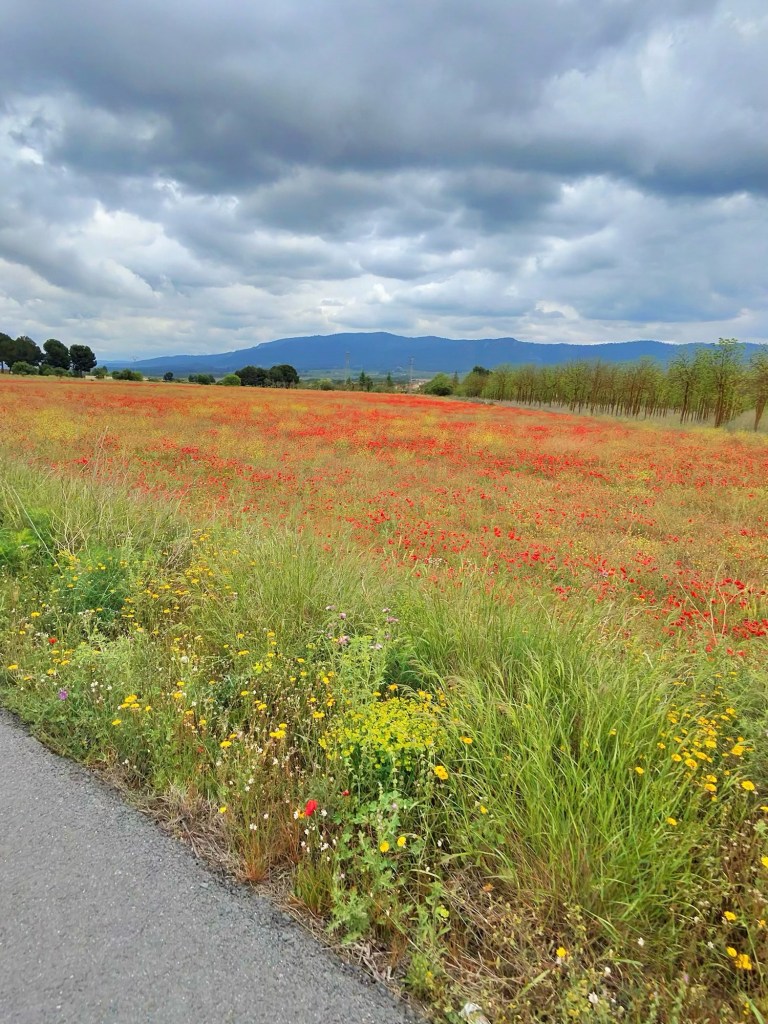
Look at those poppies! Beautiful!
-Betsy T.
LikeLike
Yes. They were amazing. Good eye to identify them…
LikeLike
Everything sounded cool 😎 until you went to Europe, now it sounds like you are playing a game of Risk again. 😀😃🙂
LikeLike
Risk is fun. But really, Risk didn’t pay much attention to Europe. Just split everything up into western and Eastern Europe…
LikeLike