Bucharest – Alexandria, Romania
When we think about Romania I think maybe all of us think of a dark and forbidding place – probably with big, gloomy castles where vampires lurk. Maybe the Munsters were from Romania too?
Turns out there’s a reason for these stereotypes. It’s not that there really are castles like this. There might be. But, I think, the bigger thing is that Romania has kind of a dark, forbidding history.
The Romans conquered the area and made it a province of Rome in the second century AD. They introduced Roman language and culture – which is why Romanians speak a romance language. (Interesting though, their language is Latin-based, but because of their location in the world, they speak with a Slavic accent). It’s also the reason that the Romanians adopted Christian Orthodox religious views.
Now, Romania was not Romania until much later. Instead, there were three different principalities: Wallachia – which was the southern part of present-day Romania – where we are now. Moldova – which was more to the east, essentially where modern-day Moldova is today. And Transylvania – more the northern and western parts of modern-day Romania – on the other side of the Carpathian Mountains.
Once the Romans started fading from the scene, the Ottomans started moving in and exerting control. This was in the 1400s – and they stayed around in some form or other until 1878 – when the Wallachia and Moldova parts of Romania declared their independence.
At that point Transylvania was still part of the Austro-Hungarian Empire, but after World War I it became part of greater Romania.
I still don’t exactly understand Moldova and why it’s now a separate country. They speak Moldovan there, but linguists say that Moldovan and Romanian are identical languages – the only difference being that the Moldovans still use some Cyrillic in their writing.
See – it’s just kind of difficult to wrap your head around Romanian history
Let’s move to the more interesting parts . . .
Vlad the Impaler.
This is the same dude that Bram Stoker based his novel, Dracula, on. Both the vampire of literary fame, and the real Count Dracula – also known as Vlad the Impaler – were pretty interesting – but let’s focus on what our walking tour guide told us about the real guy.
First off, I guess he never set foot in Transylvania. At age 19, his father, who was the king or grand duke or something, was poisoned by some other noblemen. Vlad was not impressed. When he figured out who did it, he invited them all to dinner, and then, at the dinner, poisoned them. Once they were dead Vlad had them all impaled, and put them on display – so as to dissuade any more such rebellions.
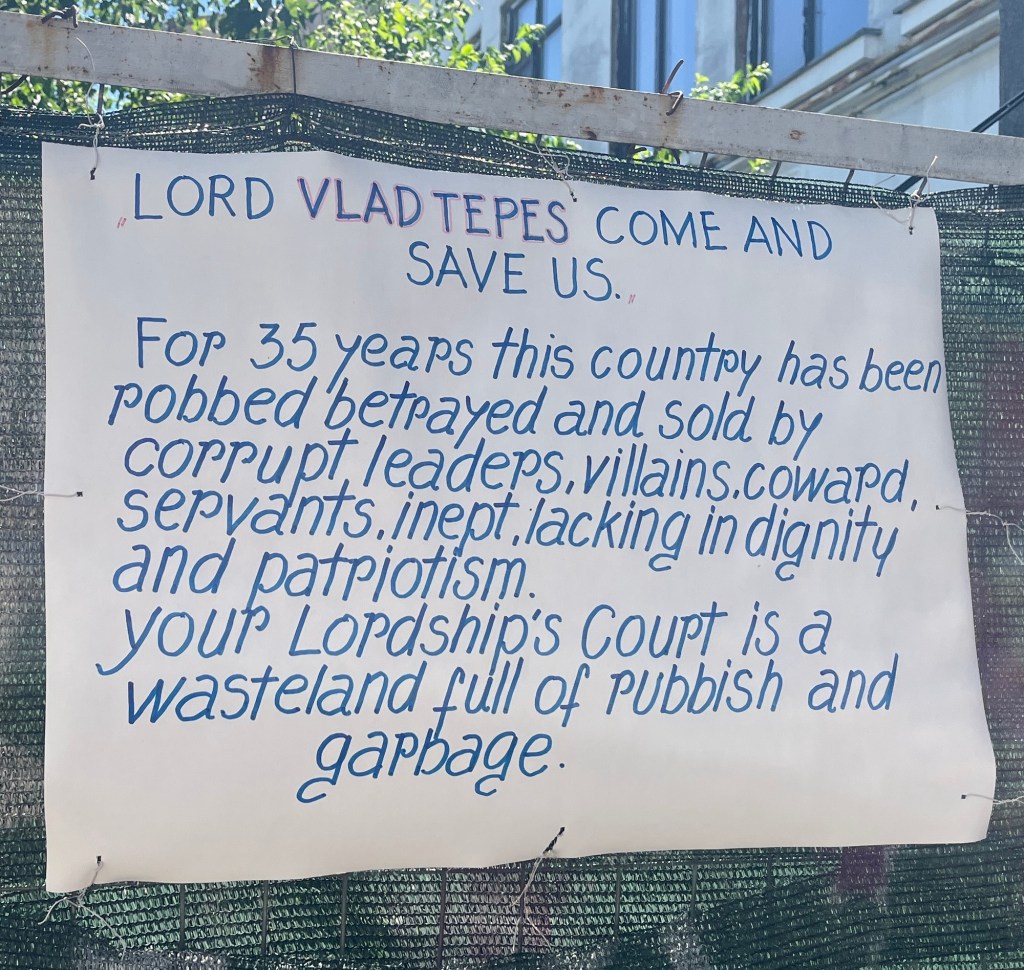
I guess, in the eyes of present-day Romanians, Vlad was a good ruler. There wasn’t much corruption or theft or anything under Vlad. That’s because he kind of had a simple rule: break the law in any way, and get impaled. There were no other punishments. There was no commuting the sentence. Vlad just kept it simple. To this day, Romanians invoke Vlad whenever they call for good government.
Around the same time that Vlad came to power, the Ottomans were taking over, and they came with a huge army – like 100,000 men – in order to subdue Wallachia and Moldova. Vlad only had something like 30,000 men, so he used what amounted to gorilla tactics – attacking them at night and in small skirmishes. He also used what amounted to a scorched earth approach to his retreats. He would burn the crops, take the livestock, and poison the wells – so that when the Ottomans came they would have nothing left to live off of.
One day he lured the Ottomans through a forest. Now, this was no ordinary forest. It was a forest of impaled people. The Ottoman soldiers became a little disconcerted by this and many of them deserted.
Oh, and Vlad had another tactic designed to freak out his enemies. He would occasionally drink the blood of the dead. This, combined with the impaling, was probably what inspired Mr. Stoker a few hundred years later . . .
In the end, all of Vlad’s impaling and drinking of blood and stuff was not enough. The Ottomans eventually came with a bigger force and Vlad was killed. The Ottomans beheaded him and impaled Vlad’s own head and put it on display in Constantinople.

Nonetheless, Vlad is kind of a national hero in Romania. He chased off the Ottomans, at least temporarily. And Vlad is often invoked to take care of modern-day corruption and law breaking.
He probably wasn’t as bad-ass as Dracula, but he was a pretty interesting guy nonetheless . . .
Let’s skip ahead . . .
Here’s the short version of the next 500+ years . . .
Romania is part of the Ottoman Empire, but gains its independence in 1878, after Russia and the Ottomans had some kind of a war. After World War II, Romania finds itself part of the Warsaw Pact and became a socialist republic. In 1965 Nicolae Ceaucescu becomes the grand poobah. Ceaucescu is a pretty bad guy. He knocks down churches, and the people of Romania end up in daily ration lines just to get food.

Now, let’s skip to 1989. All the old Soviet Block states are falling apart. Most of the “revolutions” are bloodless. But Ceaucescu is clinging to power, and eventually things come to a head. Ceaucescu turns his tanks on the people, but eventually everyone, including the military, turns against him. He tries to flee, but doesn’t get very far. There’s a pretend trial on Christmas Day and then he and his wife are executed.
A little side note to this . . .
I think it was the summer of ‘89 that I spent working with a young man named Peter. Peter was probably a few years older than me, and he was from Romania. We were working for a woman who called herself a “landscape artist.” We were the ditch diggers and tree planters of the operation.
Peter and I had plenty of time to talk. I guess Peter was a pretty good soccer player, because he said he played professionally in Romania. But he was not too enamored with Romanian soccer. He said that everything in Romania was corrupt, including the soccer. The way he told it people would intentionally throw the games in order to get a payoff. Did not sound so good . . .
After the revolution it took a while for Romania to put its house back in order, but eventually, in 2007, Romania ended up joining the EU. According to our tour guide, things have begun getting better in Romania since then . . .
How’s that for a history?
Oh, by the way, it doesn’t seem like things are getting better that quickly . . . In 1991 there were 23 million people in Romania. Today there are about 19 million. Combination of low birth rate and people leaving. So there’s hope for the future – but it is still pretty tough here . . .
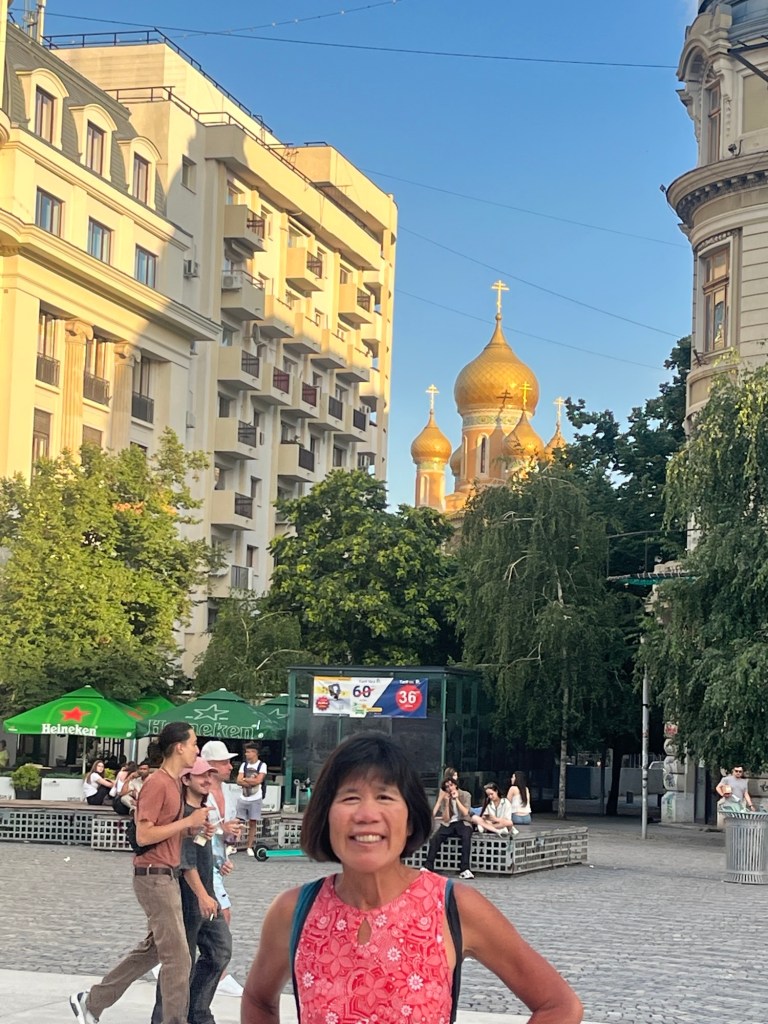
You can see some of this complexity in Bucharest. On the one hand there are beautiful old buildings.
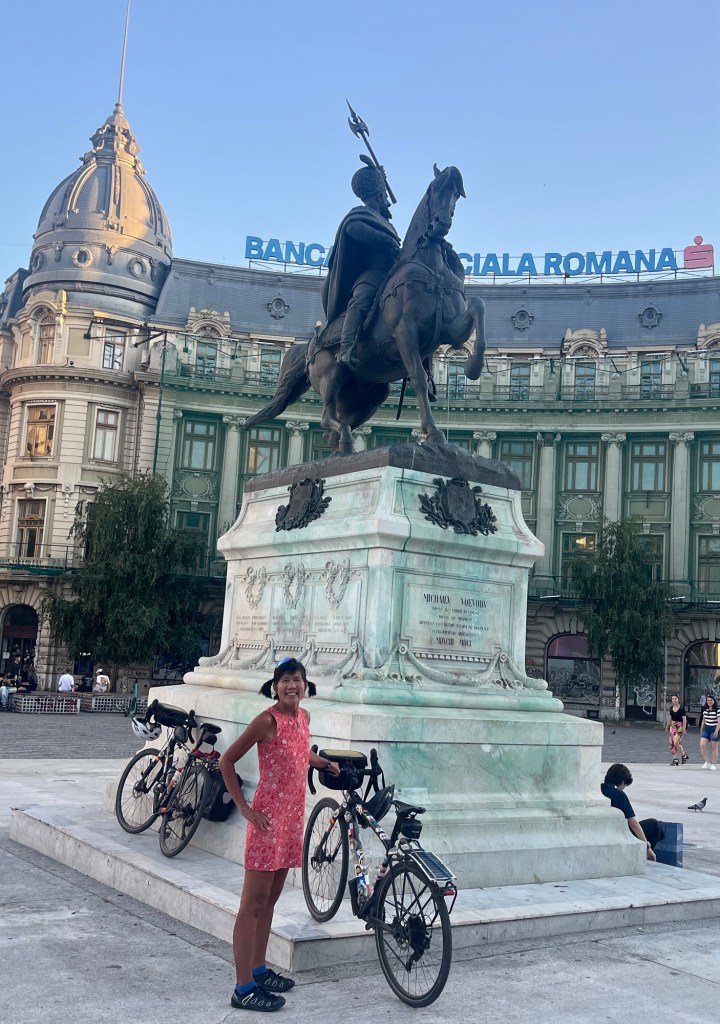
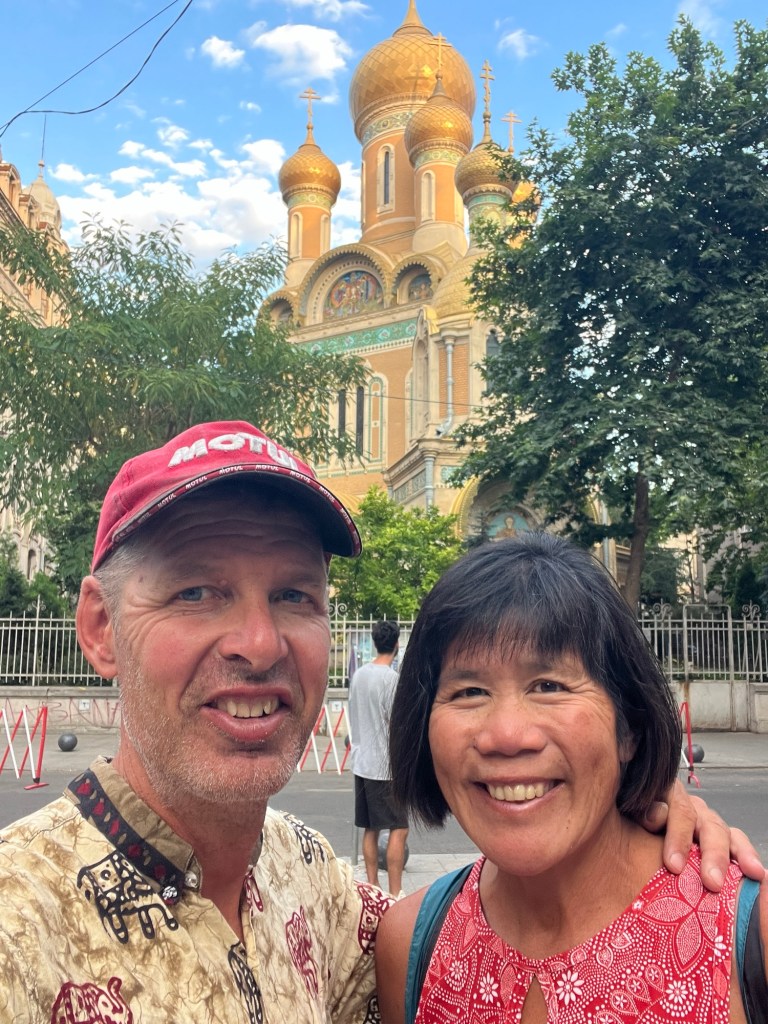
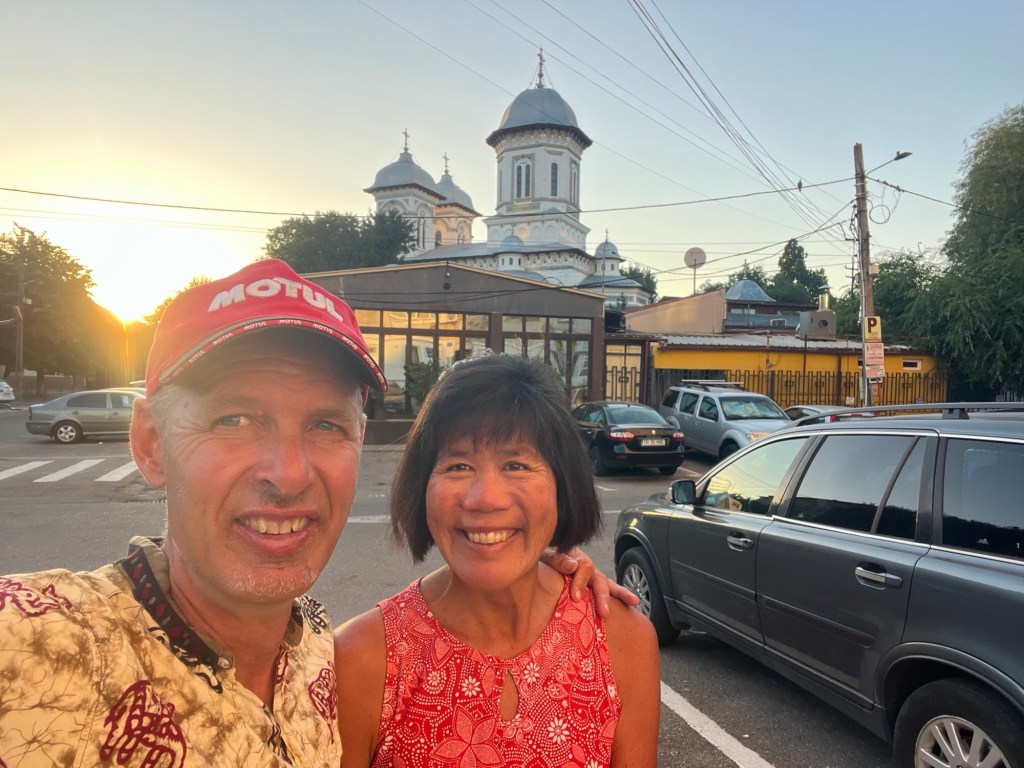
Cool old orthodox churches.
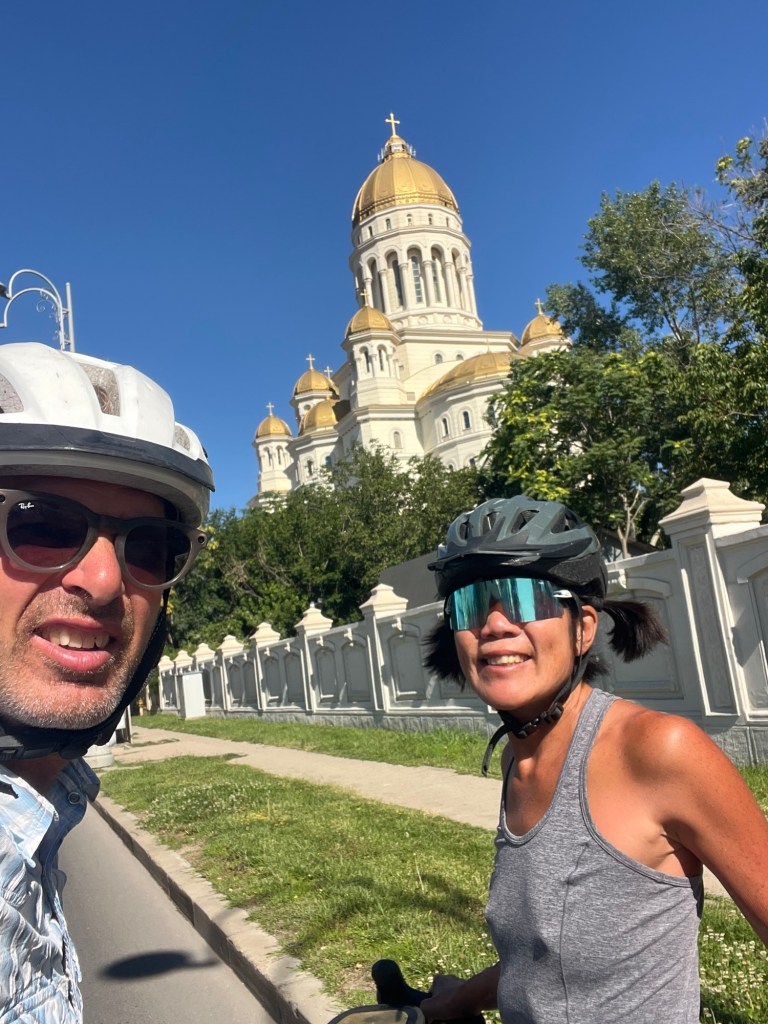
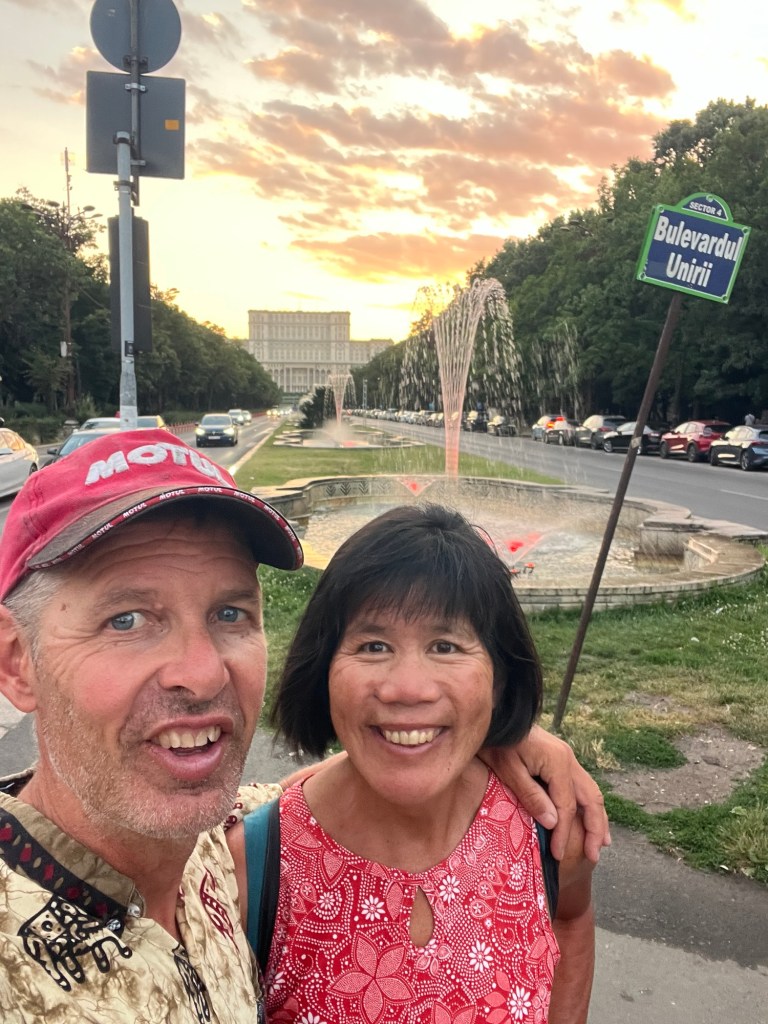
Big palaces and state buildings.

But there are also endless rows of drab apartment buildings – very Soviet in style.

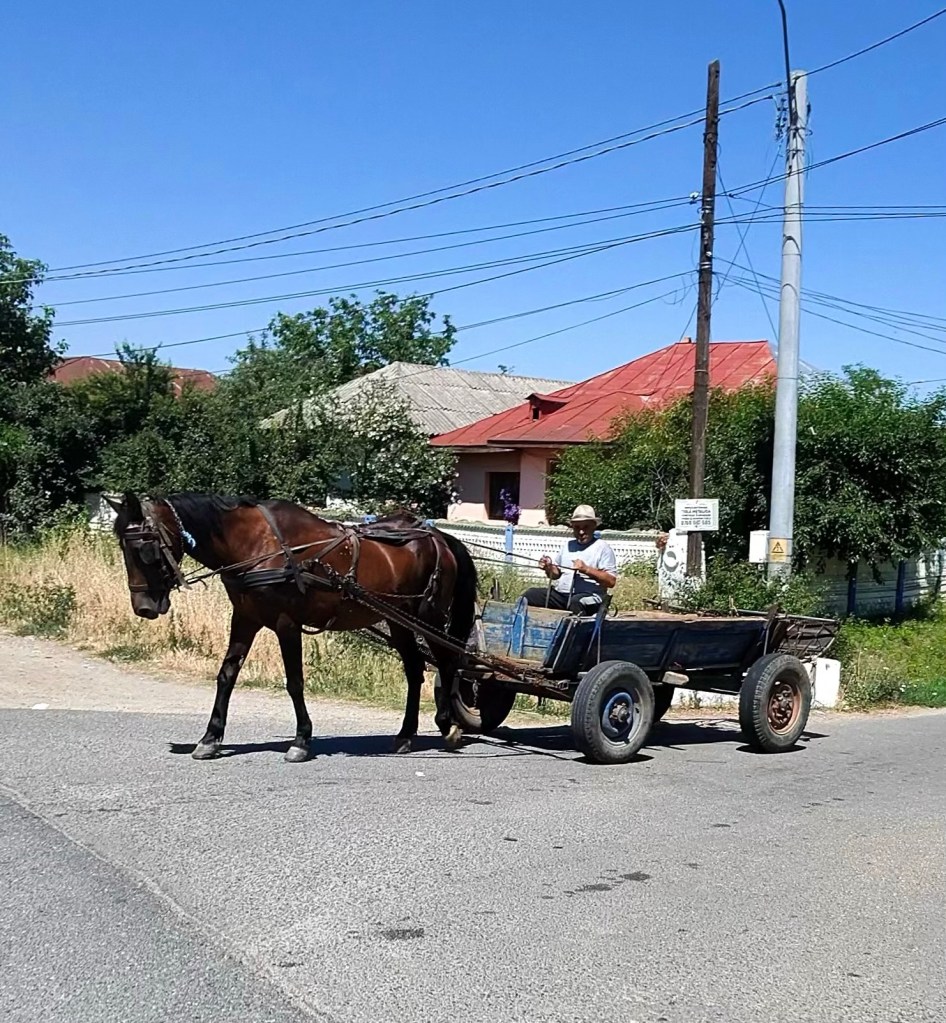
There are old street cars and trams that look like they are left over from the 70s.
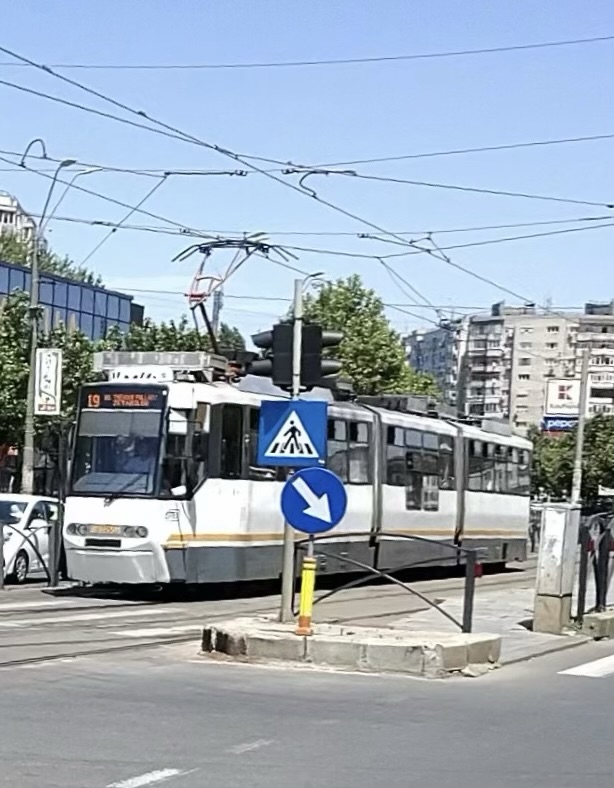
And there just aren’t that many people around – especially compared to other European cities.
With all that said, we kind of loved Bucharest. It feels much more like it’s yours to discover – as opposed to the more typical European tourist cities, like Florence, Pisa, and Nice – where it feels like you are just one of the millions cycling through to see the same things and check off the same boxes.
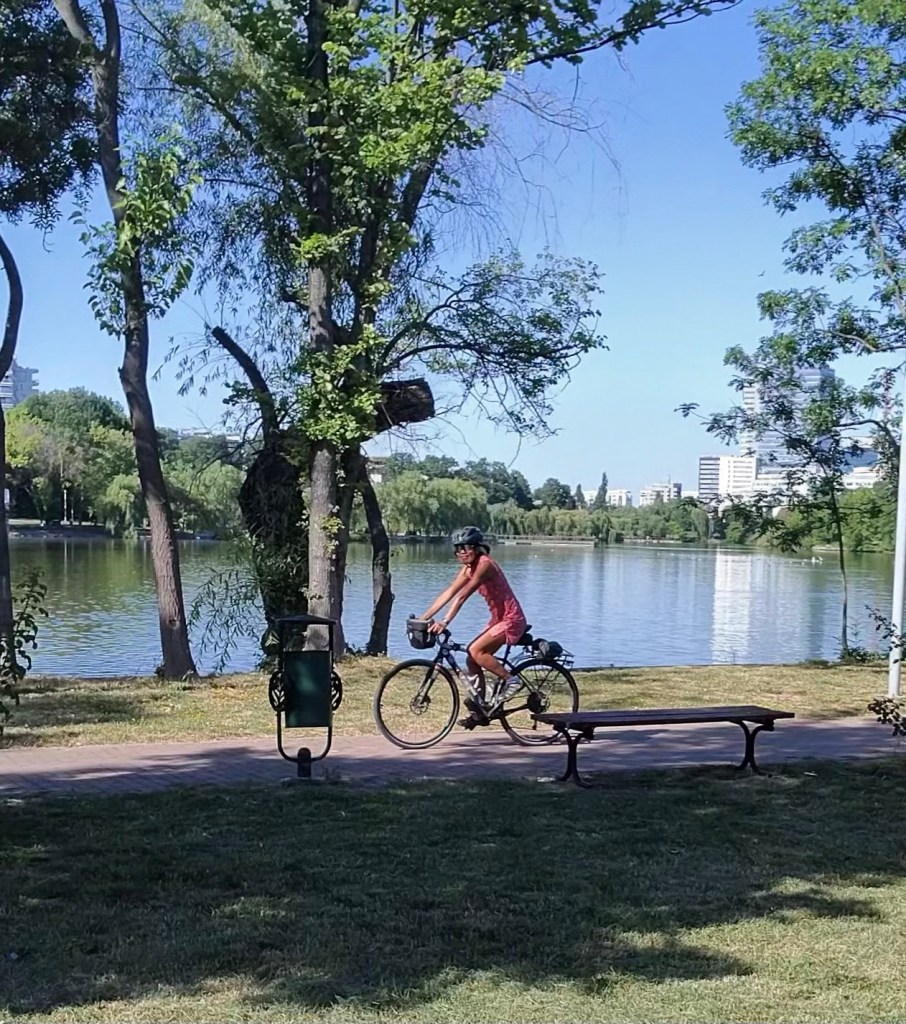
Yes, it’s true that it’s not quite as posh. But there’s the same sense of history, it’s easier to get around, and thing aren’t as ridiculously expensive. We also biked through a nice park – with lakes that were evocative of Lake of the Isles in Minneapolis. Yes, the lake water looked horrible – that unpleasant green color that comes with warm water and too much runoff. But it’s just nice to see some grass and trees and lakes in a city. (Diana was not as enamored with the green space – she said it was kind of unkept and sad . . .)
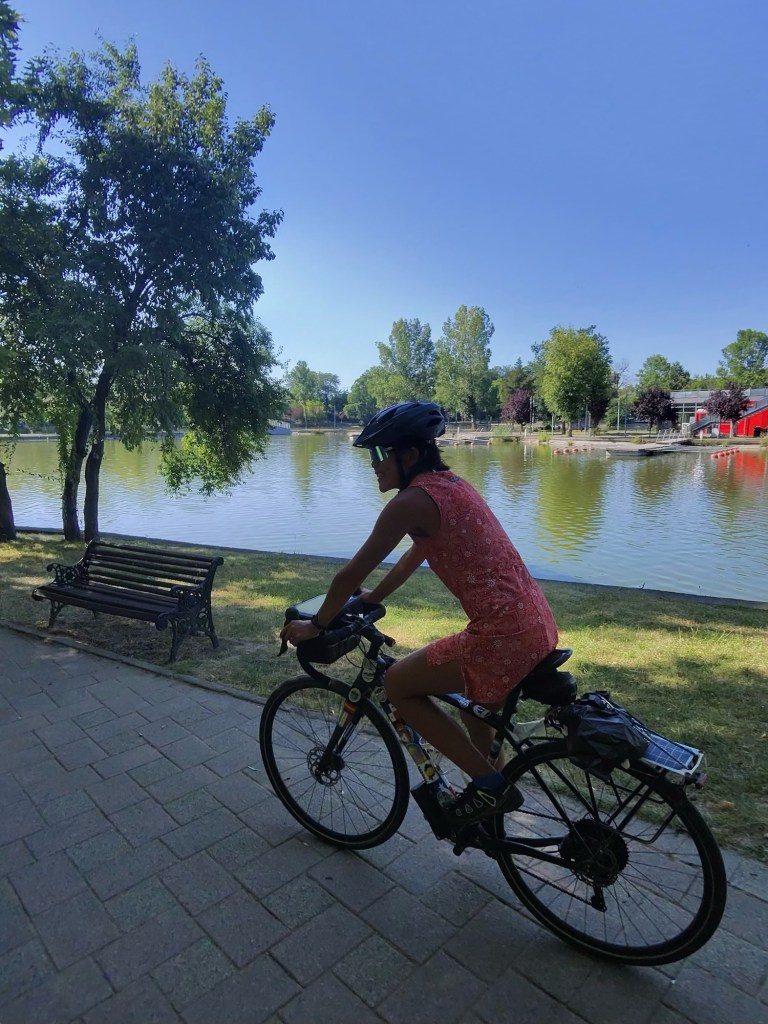
I guess it makes sense to see some Minneapolis-like parks in this part of the world – because Bucharest is at basically the same latitude as Minneapolis. Probably warmer here – but same general idea.
Two more things to relate . . .
On the tour we met a number of fun people – but a Canadian couple was the most notable. Andre and Adriana. They met and live in Toronto, but they both lived in this part of the world until they were ten or twelve years old. Andre in Serbia, Adriana in Romania. They have two cute little girls and they come back to the Baltic countries every summer.
Adriana talked about how terrible Communism was for her family. Long lines for bare necessities. Couldn’t travel. Abysmal salaries, barely sufficient to pay for heat. In fact, Adriana related that even with both her parents being engineers, their entire salaries went to pay for heat, with basically nothing left over.
She said her family had been fairly successful before the war, and they were basically persecuted for their success after Communism came along. They tried to stay after the revolution in 1989, but the country was too crazy during the ‘90s and they ultimately fled.

Very similar to the story that Diana’s parents told. They lived in middle class families in China; they were forced to flee to Taiwan, and, ultimately, to the United States, once the revolution took hold. I think, in fact, that Diana’s Dad lost several family members to the revolution. He didn’t like to talk about it much, but it showed up later in his intense hatred for the Communists.
On this note, our tour guide told us how, after the revolution came, the Communists took ownership of the bigger houses. They might let the original owners keep a room, but they would rent out the other rooms and keep the rent for the State. They are, I guess, still sorting out who the original owners of some of these houses were.
All this is reminiscent of one of my favorite books: Dr. Zhivago. Same basic idea, but in Russia. The main character, Yuriy Zhivago, marries Tonya Gromeko, the heiress of a fairly wealthy family in Moscow. After the revolution, their house suffers the same fate – with many of the rooms rented to strangers – and I always remember Dr. Zhivago’s words to the Communist Party authority after he understands what has happened: “Yes, it is more just . . .” (The movie is great as well, by the way. Don’t tell Diana, but I’ve always been secretly in love with Julie Christy, who plays Yuriy’s mistress, Lara . . .)
Well, just or not, I guess it takes a few days to recover from the kind of totalitarian state that Romania was.
Alright, on a more positive note . . .
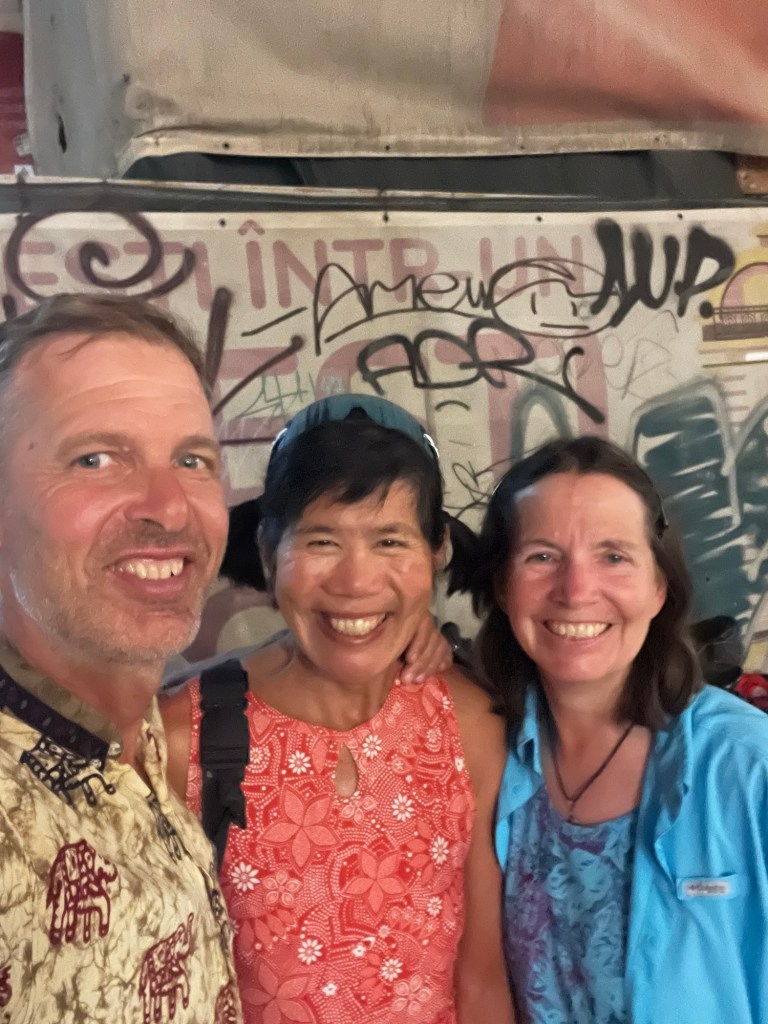
Thanks to Diana’s Strava posts we were able to connect with a friend we met in Ecuador earlier in the trip. Elaine hosted us through Warm Showers when we were in Ibarra. She’s on her own bike tour along the Danube, and saw that we were in Bucharest. Pretty fun to connect with friends half way around the world . . .
One last thing. I think we’ve pretty well adjusted to our fate now as far as Schengen goes. We’re heading to Serbia and excited to spend a little extra time there. And then, after we meet our girls in Hungary, we’re planning to head across Germany to Amsterdam, and we’re excited about spending more time biking through the British Isles as well . . .
By the way, one of our readers, Miles from Minneapolis, pointed out that Great Britain never actually was part of Schengen. Even before Brexit. I guess it was great for British snowbird types. Because Britain was in the EU the British could spend six months each year in the South of France or Spain without worrying about the 90/180 rule. 0Now, post-Brexit, they are treated like everyone else . . . Miles seemed to imply that maybe some of the people who voted for Brexit didn’t quite put this all together until it was too late . . .
Oh, the riding. It is getting HOT. We’re planning to get up early, ride a little shorter, and find hotels with air conditioning, and, hopefully, a pool as well. I didn’t realize it, but I don’t think weather like this is that uncommon in this part of the world in July . . .



Discover more from Diana & John's Biking Adventures
Subscribe to get the latest posts sent to your email.
 Diana & John's Biking Adventures
We spent three weeks driving around England and Wales and loved it. For sight seeing I recommend getting an English Heritage or National Trust pass that gives you entry to all kinds of museums and castles and stuff if you have time for that. The roads in England were VERY narrow, often with a hedge or wall right next to the road even when the speed limit was 50 mph. We found that the British were excellent drivers, probably because they had to be. The roads in Wales were wider with less traffic, and very scenic with lots of sheep, mountains, forest…
Angie R
LikeLike
Good to hear from you Angie. Hope you had a good winter. And thanks for introducing us to your friend Tim. Seems like a great guy.
This is super helpful. Makes me excited for our next phase!
LikeLike
Loved my couple of trips to Romania (Habitat builds), with 3 days in Bucharest on the first trip. Really want to return someday. Interesting historical note that when they became an independent nation in the late 1800’s, they went looking for someone to become king and recruited a German prince for that role. They offered to build him a palace in Peles which you should visit if you get the chance. So ornate with such a weird mixture of styles as it took them about 30 years to complete. It’s not far from Brasov which may also be worth a visit.
LikeLike
Yeah. So crazy that any country would consciously decide to become a monarchy and then recruit their king from outside the country…
LikeLike