Stare Kupiski – Suwalki, Poland – Marijampole, Lithuania
There’s maybe been a convergence of two important topics: my Grandpa and my grandparents, and grandparents in Poland generally.
Last post we talked about my Grandpa’s pancakes, and about my grandparents proclivity for blueberries.
And then, in Poland, we’ve been noticing lots of grandparents with their grandchildren. Either that, or there are some REALLY old parents around here.
Kind of came to a head yesterday morning. We stayed in a hotel last night because I was feeling under the weather. Definitely what we would call a Mom and Pop type place in America. The “bed” I slept in was really a folded down couch with a blanket over the top. The “storage room” for our bikes was really the caretaker woman’s garden closet – with stuff everywhere. Some of the other guests were more like cousins or something – eating dinner right outside our window.

This morning the innkeeper, who was very cheerful and talkative – even though we couldn’t understand a word she said – made us breakfast. Her helper? Her seven-year-old grandson, Philipo. Cute little kid. Couldn’t speak English – but had mastered “Bye, bye.”
“Is there any salt?”
”Bye, bye.”
“Where is the coffee?”
”Bye, bye.”
He had that one down pat.
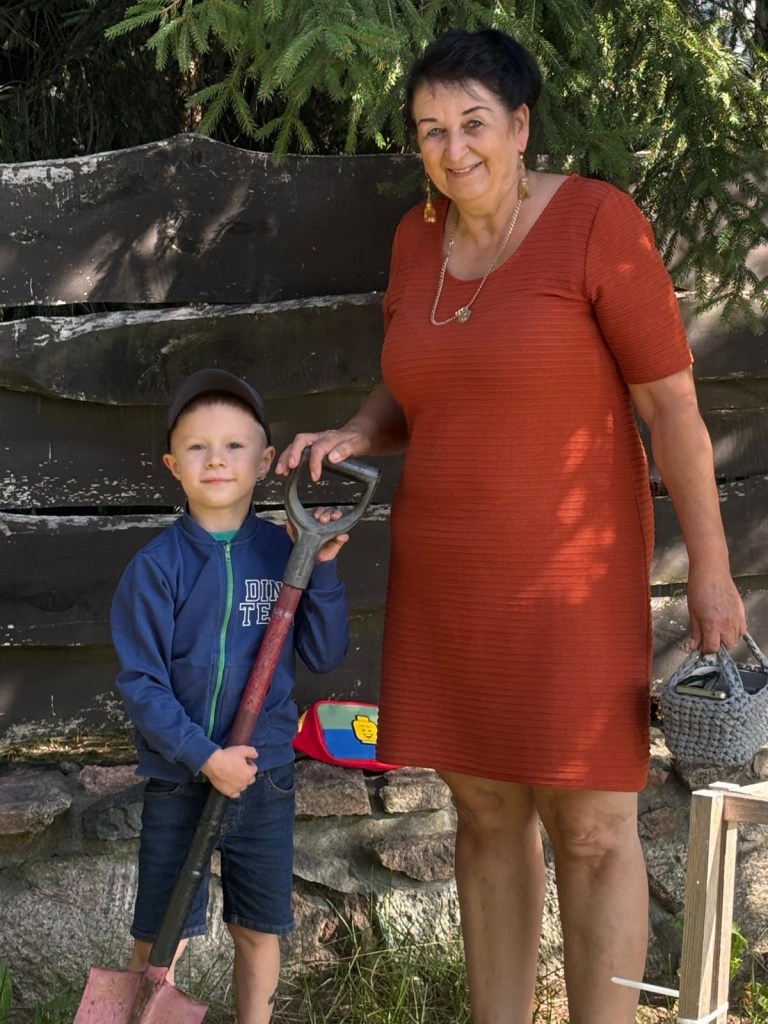
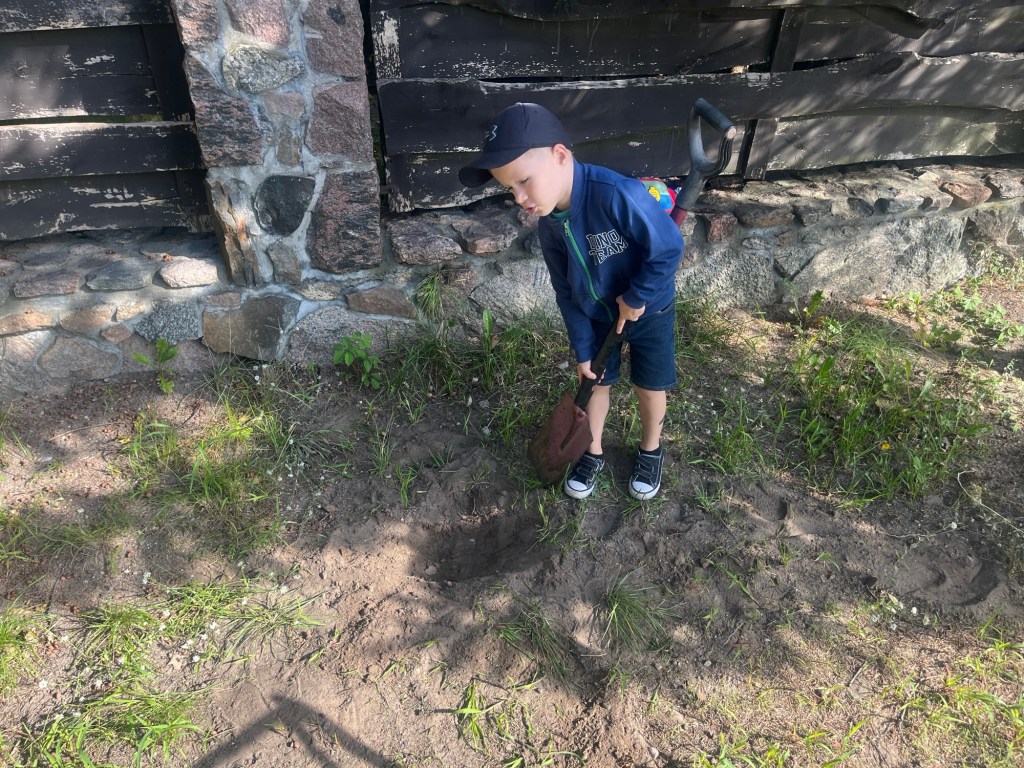
Later, he was helping his grandma dig a hole in the garden. Maybe to plant something. Maybe to just take up time. Doesn’t matter. Philipo and Grandma were clearly enjoying each other’s company.
And the whole experience had me reflecting on my experiences with my grandparents growing up. If you’ve been reading the blog you probably know those experiences had a profound effect on my life.

I used to spend good chunks of the summer at the motel in Duluth, following my grandparents around. I would “help” with the gardening, cleaning the rooms, folding laundry, making coffee and pancakes (or, more likely, doing the dishes) – and later, with answering the phones (“Hello, Willard Motel, may I help you?”), making reservations, and checking people in.
All very valuable experiences for me.
Google tells me that Polish grandparents spend about nine hours per week with their grandchildren – which is about three hours more than the average in other countries. Google also says that Poland is a good place to start a business and that Poland has a very high percentage of people who work in micro businesses – that is, businesses with fewer than ten employees – like the motel.
Which all relates – in my mind – to an article by David Brooks, who is one of my favorites. This article was about the concept of flourishing – based mostly on how people felt about their lives and their futures.
Poland did very well on the flourishing index. And that seems to correlate with what we are seeing and feeling and hearing. Talking with Poles, there seems to be a general sense that the country is, of course, going in a positive direction, and that things are better now than they were only a few years ago.
We talked to a couple who moved to the Netherlands about fifteen years ago because they wanted to raise their children in a place with a higher standard of living. They said that now they wouldn’t need to do that because Poland is doing so well.
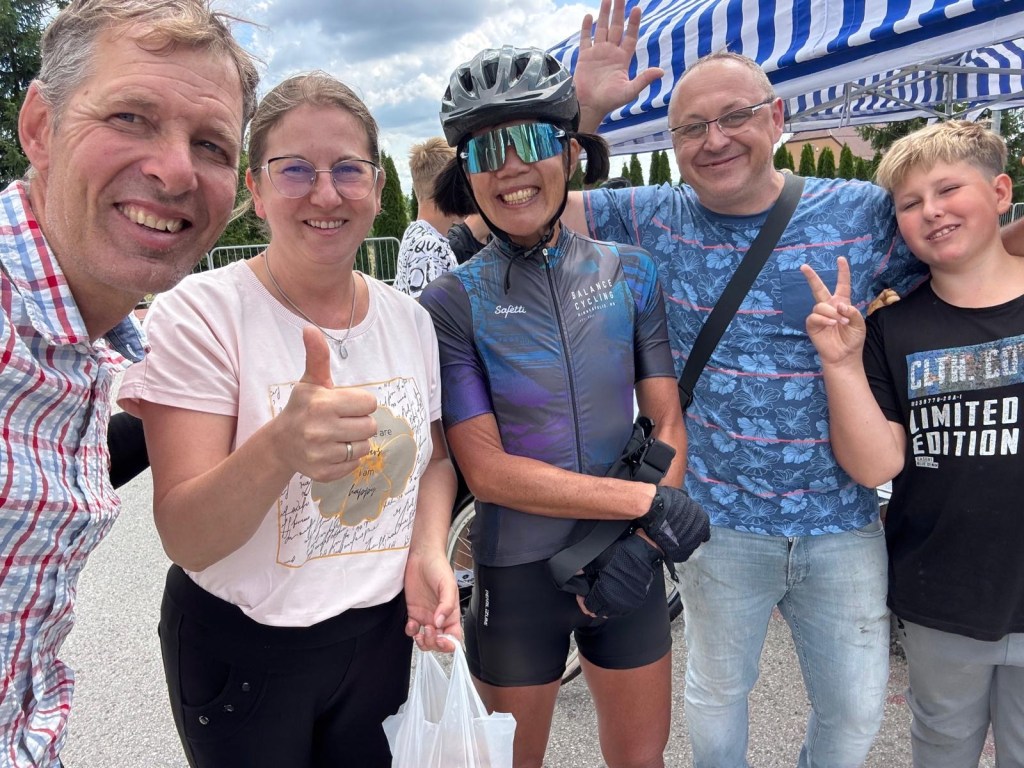
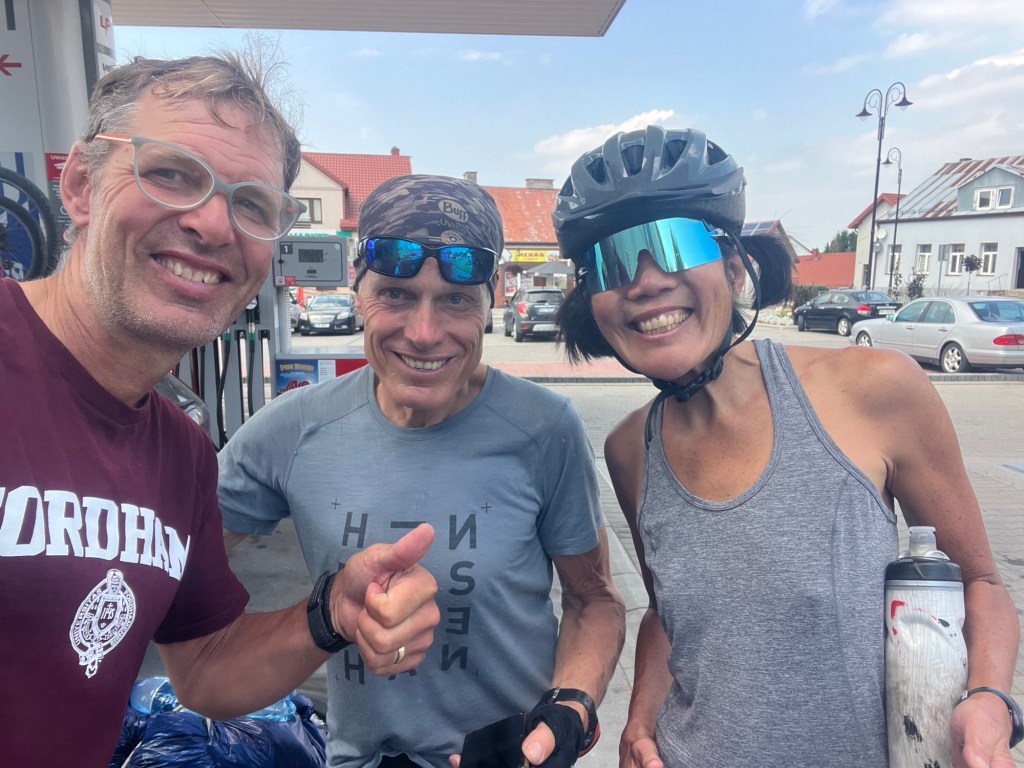
Similar story with Aga’s friends Gosia and Wojtek, whom we met in Warsaw. Talking to them, there is an almost palpable sense that Poland is heading in the right direction. Yes, Poland just elected their own version of Donald Trump, but my sense is that the people in Poland are more or less on the same page. And it doesn’t hurt that it is very homogeneous country. Pretty much everyone is ethnically Polish and, at least culturally, Catholic.
And now we have a new point of comparison. We just crossed into Lithuania. Instantaneous difference. Poland’s well-kept houses with a fresh coat of paint, a new roof, and a recently mowed lawn have given way to smaller and older homes with dilapidated siding, moss-covered roofs, and overgrown yards.
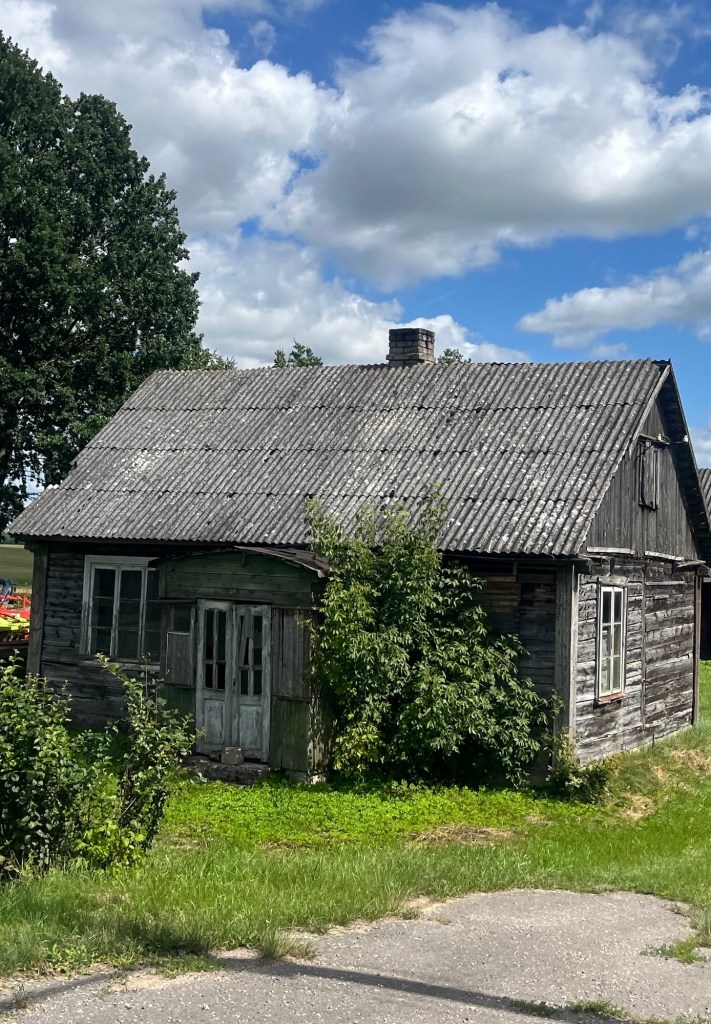
Probably the big reason for this is Lithuania’s declining population. They went from 3.7 million people in 1990 to 2.8 today. No wonder the rural areas are suffering; there’s no one left. In that regard I guess it’s like Bulgaria or Spain; whereas Poland has managed to maintain a pretty stable population.
Back to grandparents and small businesses. Not sure these categories directly relate to the flourishing survey, but I believe they do make a pretty big difference in the trajectory of a country. When kids have an opportunity to spend time with their grandparents they have more of a sense of who they are in the world and where they came from. And when kids are connected to small businesses or family farms it gives them all this important context for everything they learn in school. Even better if those businesses are in a rural area – where the kids might have an opportunity to play in the creek, explore the woods, or see and interact with things like farm animals in real life.
It feels like Poland has a lot of opportunities like this – and I suspect it’s one of the reasons that Poland appears to be doing so well. Last night we were able to connect with our Minneapolis friends Piotr and Laura. Piotr’s been making regular blog appearances since we arrived here because his family is from Poland. Talking to him last night, he told us that he used to spend significant chunks of his summers in Gdansk, staying with his grandparents. Same type of experience. And, I think, he gained that same sense of who he is in the world – something that has served him well throughout his considerable travels.
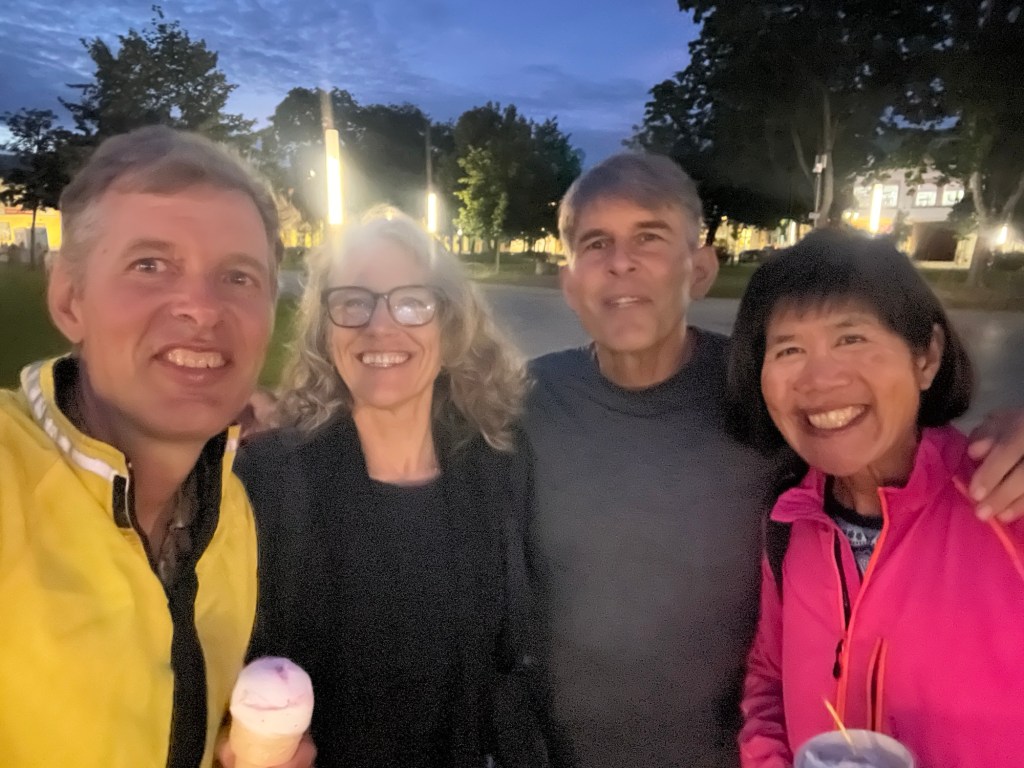
Piotr had more to say about his grandparents . . . Turns out that, similar to our friend Aga, Piotr’s grandparents acquired housing in Gdansk just after the war. Gdansk had been part of Germany prior to the First World War, and then was a free city – Danzig – with a mostly German population, between the wars. Like today’s western Poland, the Germans were expelled and people like Piotr’s grandparents moved in – one set from Warsaw, and one set from Russia (they were apparently Polish nobility, who had been living in Russia).

And then, just to complete all this history on how this part of the world was shaped, there’s Kaliningrad. This is a part of Russia that the Soviet Union just manufactured after World War II. There used to be another German town called Konigsburg – to the east of Gdansk. But I guess Russia wanted another port on the Baltic (they already have St. Petersburg) so they expelled the Germans and installed Russians in their houses.
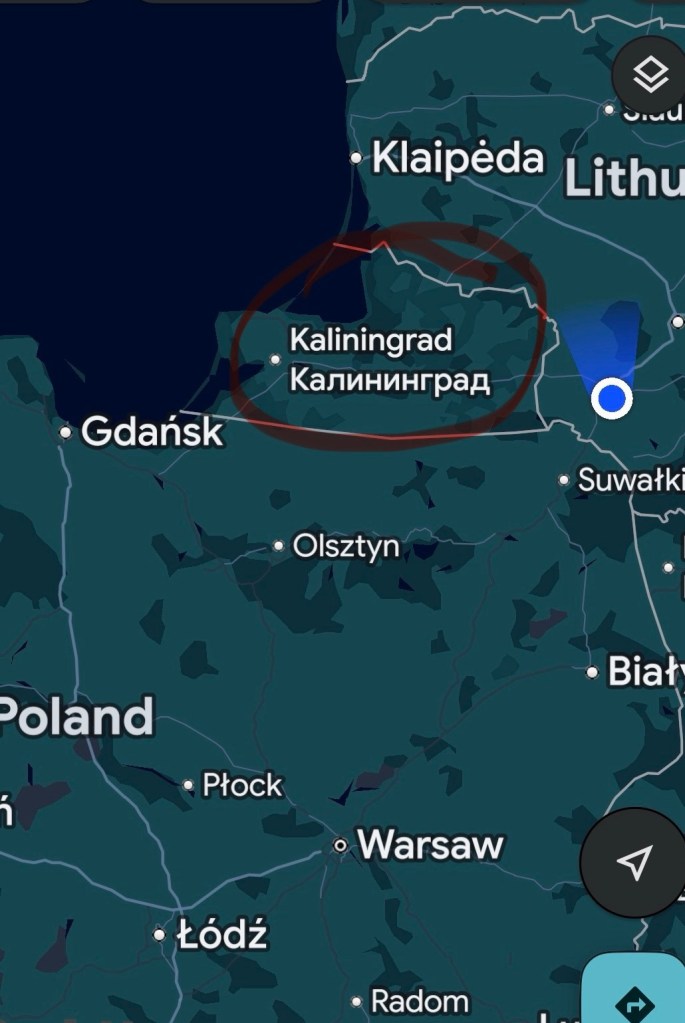
I never even noticed Kaliningrad on the map until we were planning for this trip. It’s not very big – and it’s not even physically connected to Russia. But the more you learn about how Russia (then the Soviet Union) behaved after WWII, the more it feels like what Russia is doing with Ukraine is just typical behavior. They’ve been making land grabs into Europe for hundreds of years . . . feels like nothing’s really changed.
And this might explain why the Poles seem so nervous about Russia even now. We’ve had a few different people tell us they think Russia is planning to invade Poland within the next few years. Doesn’t seem very realistic to me because, with NATO around, that would pretty much start a huge conflict. Not sure Russia is at all ready for that . . .
A little more on our trip . . .
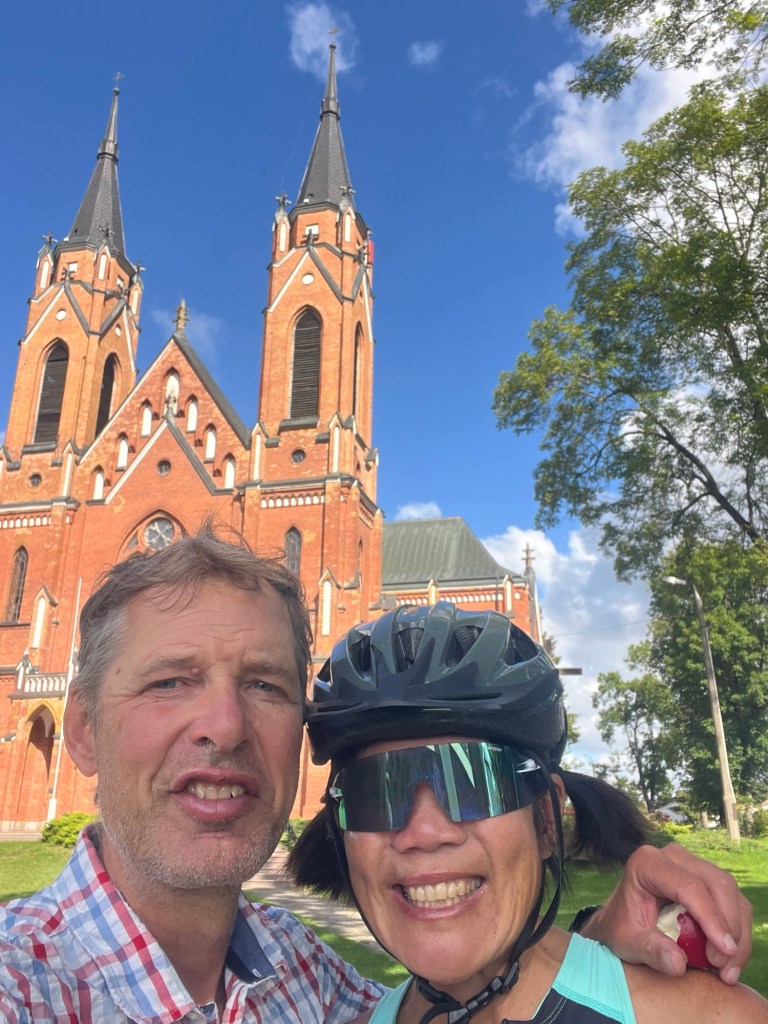
As promised, the biking has been flatter. I would say we are now officially huge fans of Poland. With the mix of forest and farms, and lakes and streams, and with kielbasa around every corner, it just feels like the European version of Minnesota and Wisconsin – except with impressive churches, castles and palaces.
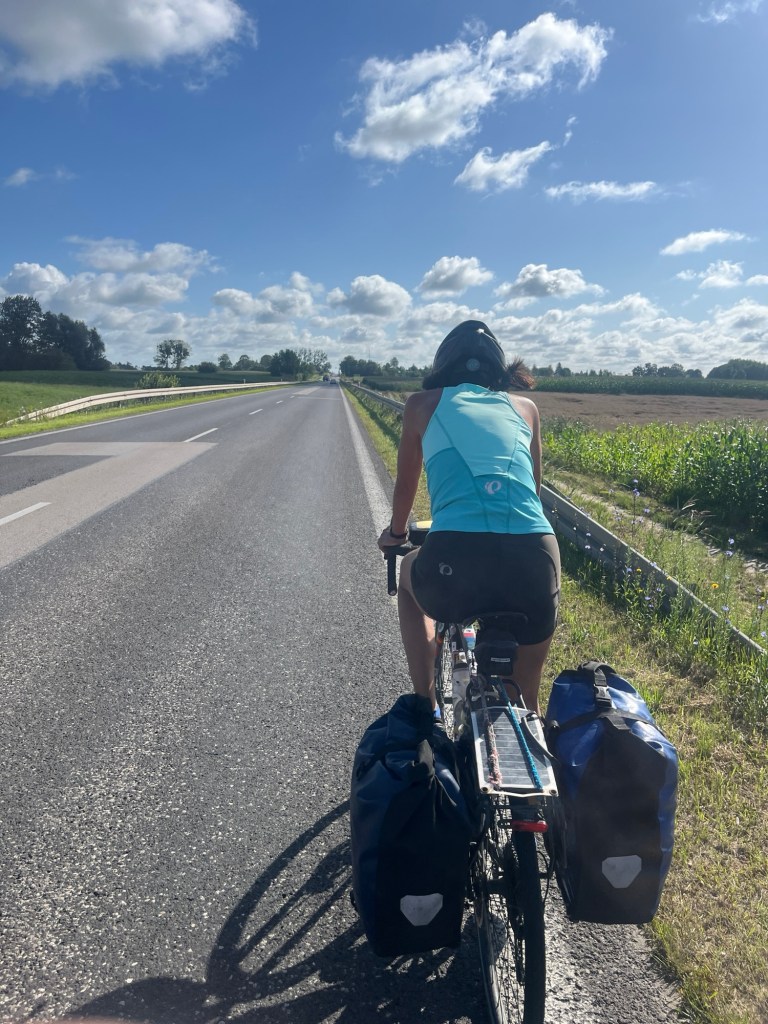


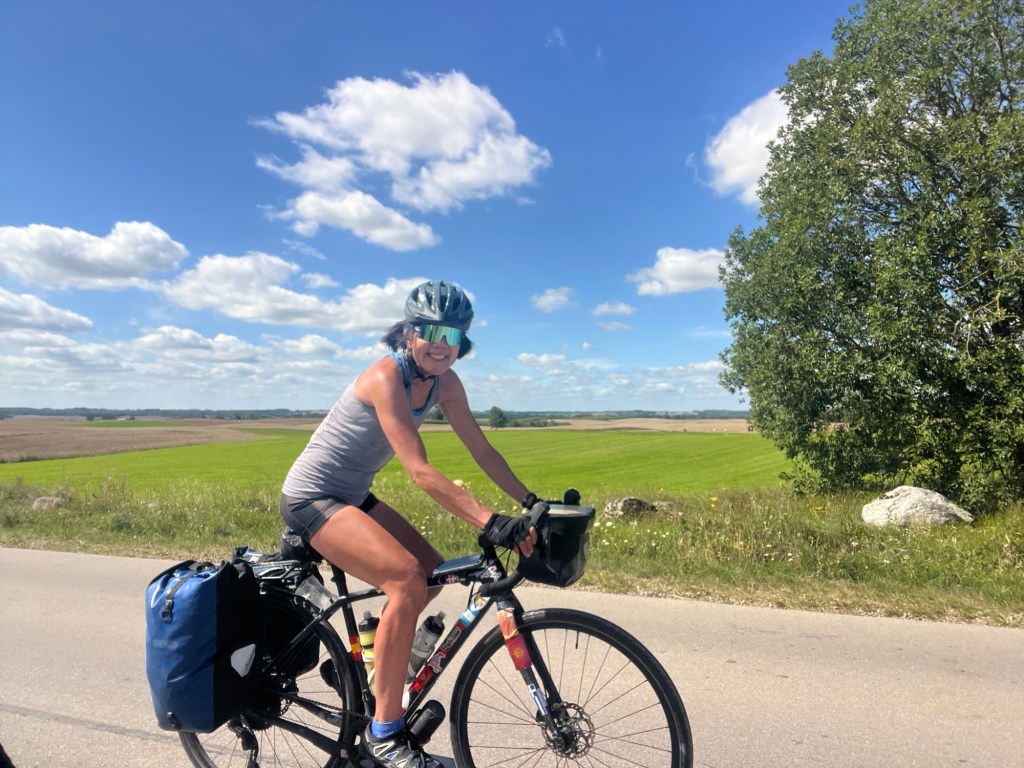
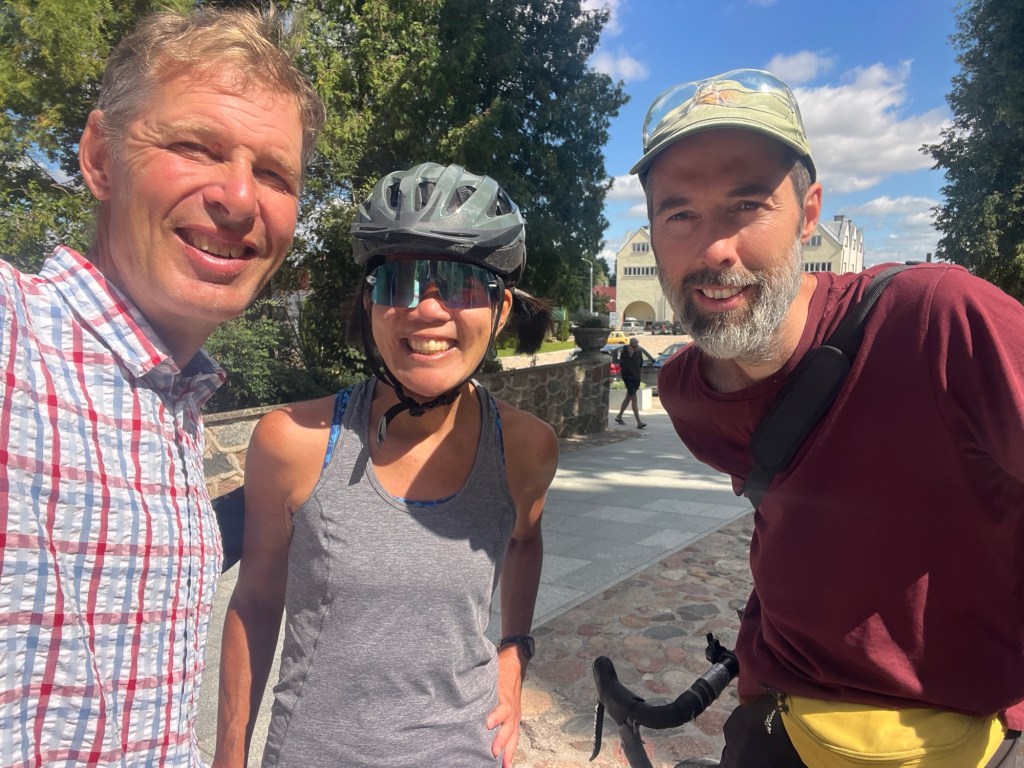
So far, Lithuania has been okay, but, as noted, it’s a little bit more dilapidated – and the campground owner we encountered today was kind of a jerk. First off, he wouldn’t let us or the tall and engaging Dutch couple that came in right before us camp with a view of the lake. Then he got on my case because I set up the tent about 5’ from his recommended site. Now, at this point Diana thought I was being overly critical. But then she ordered bread from him for the morning – and she ended up the new target of his vitriol – because he “came in early just to bake the bread for [her] and then [she] wasn’t even ready for it.”
He was a charmer.
So with our very unfair small sample size we are, so far, not super impressed with Lithuanians. (Note that this conclusion has already changed. We’ve met some very generous and kind Lithuanians today. Once again, there’s always one bad apple…)
Connecting with Piotr and Laura was great – and I was even able to make blueberry pancakes again for breakfast. Almost felt like normal people again for a day . . .
We’ll be in Lithuania for a few more days as we head north toward Riga, the capital of Latvia. We are now at about 53 degrees north latitude – the equivalent of way up above the Canadian border . . . In fact, we are about as far north as Ushuaia is south.
Any thoughts on the Baltic states? Things we absolutely shouldn’t miss?



Discover more from Diana & John's Biking Adventures
Subscribe to get the latest posts sent to your email.


Joh
LikeLike
John and Diana
Mark and I had a 10 day trick to the Baltic States at the end of June into July. While I can appreciate your comparisons to other countries, we found the Baltic people to be overal lovely and generous. Part of the reason for our trip was Lithuania was where all my great grandparents were from that settled in the Duluth area of Minnesota. While I do not recommend seeing the results of the Nazi occupation there were significant differences between the three countries in how they handled and now remember that occupation. Your thoughts on the countryside of Lithuania makes sense given their occupation from the Russians, then the Nazi’s and then the Russians until they all received independence in the early 1990’s. They had no independent governments and what they are doing today is pretty amazing actually as they build up their counties.
Watch for the Baltic Way foodprints and learn about how the three countries worked together for independence yet have clearly kept their own governments and languages. Each of the three countries were amazing in their history and culture and yet as you note, the fear of Russia is prevalent for them. In Estonia the Ukranian flag is found almost everywhere and a bit more subtle in their other two countries but clearly prevalent. Food, maybe not outstanding but based on their histories, very staple. The Baltic Way was hand holding across the three countries to show their goal for independence and done between all three capitals.
Lots of remaining history. For you two I don’t recommend seeing the memorials to the killing camps. Lithuanians participated in killing almost all of their countries 250,000 Jews in 1941 out in the forest area outside Vilnius that used to be the picnic forest for many of the people they killed. Estonia commemorates the burning of the Jewish synagogues on July 4th with a Day of Remembrance for the country. Not much left of the Jewish heritage but outside the major cities there are the same houses the Jews lived in still housing many of the rural communities.
Maybe a little more in depth but my hope is that these three countries are able to remain safe and independent. Loved the grandparents story. I just myself came back from a week with the Duluth granddaughters in Amsterdam and Zurich. Their choice of cities for Charli’s Duluth East graduation present.
Warmly, Ghita
LikeLike